President Donald Trump declared Wednesday that the ongoing conflict with Iran would conclude "immediately after our election," a stark prediction delivered just weeks before Americans head to the polls for crucial midterm contests. The President’s assertion suggests a belief that a change in the political landscape in Washington could directly influence the trajectory of the protracted hostilities.
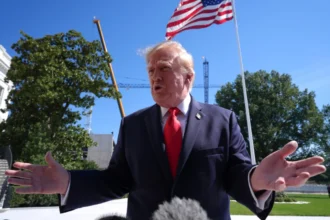
Trump, speaking to reporters before boarding Air Force One for a trip to Dallas, Texas, elaborated on his stance, positing that Iran was deliberately prolonging the conflict to influence the outcome of the November 3rd midterm elections. He accused the Iranian government of seeking to leverage the election to its advantage, hoping for a weakened American leadership to emerge from the legislative contests.
"They’re desperate to try and affect the election so that we can get a nice, weak group of people in there," Trump stated, characterizing Iran’s alleged strategy. He further suggested that Tehran was banking on a Democratic victory, believing that incoming lawmakers would be more amenable to its objectives, including the pursuit of a nuclear weapon.
"All they want is a nuclear weapon, and if they had a nuclear weapon, the whole world is in deep trouble," Trump emphasized, highlighting the perceived existential threat posed by Iran’s nuclear ambitions. This sentiment has been a cornerstone of his administration’s foreign policy towards Iran, framing the conflict as a critical battle to prevent proliferation.
The Nuclear Shadow: A Long-Standing Flashpoint
The conflict with Iran, which officially began on February 28th, was largely justified by the United States and its allies, notably Israel, by citing Iran’s nuclear program as an "imminent" threat. President Trump and his officials repeatedly warned of the dangers posed by Tehran’s potential to acquire nuclear weapons, a claim consistently denied by the Iranian government.
Iran has maintained that its uranium enrichment activities are solely for peaceful civilian power generation, not for military purposes. However, U.S. intelligence assessments have at times presented a more nuanced picture, acknowledging Iran’s capabilities while also raising concerns about its enrichment levels and potential for diversion.
The issue of Iran’s nuclear program was a significant point of contention leading up to the conflict and has remained a recurring theme in discussions surrounding potential ceasefire agreements over the past six months. These negotiations have been complex, with the United States seeking a comprehensive resolution that extends beyond mere nuclear limitations.
President Trump’s administration had previously withdrawn the U.S. from the 2015 Joint Comprehensive Plan of Action (JCPOA), a landmark international agreement designed to curb Iran’s nuclear program in exchange for sanctions relief. Trump’s decision to exit the deal was met with both support and criticism, with proponents arguing it was a flawed agreement and opponents fearing it would lead to increased instability.
Beyond a Nuclear Deal: Broader Ambitions and Stalled Diplomacy
When questioned about the possibility of restarting nuclear talks with Iran, President Trump indicated that his administration’s objectives were more far-reaching than simply securing a nuclear agreement. "I’m doing much more than a nuclear deal. There’s a lot more than nuclear," he remarked, suggesting a desire for a broader recalibration of Iran’s regional and international behavior.
However, Trump also conveyed a sense of diminished urgency regarding renewed negotiations, noting that diplomatic engagement with Iran was not currently a top priority for his administration. "We’re not looking for it, to be honest," he admitted, adding that Iran’s current state, with "very little country left right now," made immediate deal-making less pressing.
This sentiment echoes recent statements from U.S. Energy Secretary Chris Wright, who told ABC News that a nuclear deal might not materialize. Wright suggested that continued U.S. strikes aimed at weakening Iran’s nuclear infrastructure could be the preferred course of action, indicating a potential shift towards a more aggressive posture.
Escalating Hostilities and Economic Repercussions
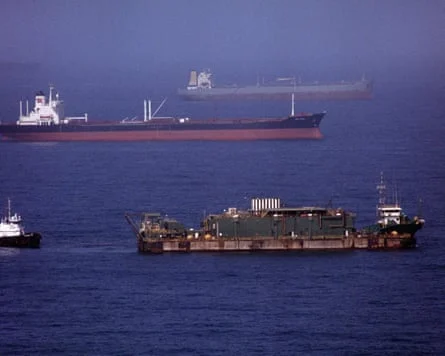
The President’s remarks come in the wake of increased military activity and growing economic concerns tied to the conflict. The U.S. military confirmed it had struck five Iranian tankers on Tuesday in retaliation for attempted missile attacks on a U.S. Navy warship.
These actions follow targeted strikes carried out by the U.S. on three Iranian nuclear facilities during a brief but intense 12-day war between Iran and Israel in June 2025. At the time, President Trump had declared that those strikes had "obliterated" Iran’s nuclear program, a statement that underscored the administration’s resolve.
Diplomatic efforts to de-escalate the situation have largely faltered in recent months. The Trump administration has been notably cautious in its public pronouncements regarding the conflict, particularly as the midterm elections approach. The war’s unpopularity within the United States is a significant factor, with a recent poll indicating that only 31 percent of Americans support the ongoing hostilities, a decline from 37 percent in March.
The heightened tensions have had a tangible impact on global markets, with oil prices surging above $100 a barrel amid renewed U.S.-Iran hostilities. This price increase poses a significant threat of further escalating costs for consumers worldwide, adding another layer of economic pressure.
President Trump’s warning of further U.S. military action was unequivocal. "You’re going to see a lot more," he stated on Wednesday, signaling a continued commitment to a strategy of deterrence and direct action against Iran. This ongoing military engagement, coupled with the looming political calendar, sets a tense backdrop for the approaching midterm elections.
The Political Calculus of the Iran Conflict
The timing of President Trump’s pronouncements on the Iran war is inextricably linked to the upcoming midterm elections. Control of both the House of Representatives and the Senate currently rests with slim Republican majorities, and the Democratic Party is actively campaigning to flip at least one chamber.
Trump’s narrative directly positions the Iran conflict as a key issue that could influence voters. By portraying Iran as a destabilizing force seeking to undermine American interests and elect a "weak" Congress, he aims to rally his base and persuade undecided voters that a Republican victory is essential for national security.
The President’s assertion that Iran is actively trying to influence the election underscores a broader strategy of framing foreign policy challenges as partisan battlegrounds. This approach seeks to draw a clear contrast between his administration’s perceived strength and a potential Democratic leadership that he contends would be less resolute in confronting adversaries like Iran.
The potential for a Democratic takeover of Congress could indeed alter the dynamics of U.S. foreign policy. Opposition lawmakers have often criticized the administration’s withdrawal from the JCPOA and its "maximum pressure" campaign against Iran, advocating for more diplomatic engagement and a less confrontational approach.
Trump’s prediction of an immediate end to the war post-election implies a belief that either a Republican victory will embolden Iran to seek a swift resolution, or that a Democratic victory would usher in an era of appeasement that would, in his view, effectively end the current phase of hostilities. The latter scenario, while framed negatively by Trump, suggests a belief that a different U.S. policy under Democratic leadership would lead to a de-escalation, albeit one he disapproves of.
Public Opinion and the Burden of War
The war in Iran has become an increasingly unpopular undertaking for the American public. The significant drop in support, from 37 percent in March to 31 percent in the latest poll, indicates a growing weariness with the protracted conflict and its associated costs.
This public sentiment presents a challenge for President Trump and the Republican Party as they campaign for re-election in their congressional seats. The economic strain, characterized by rising oil prices, further exacerbates these concerns. Voters are increasingly looking for solutions to domestic issues, and a costly foreign conflict can become a liability.
The administration’s strategy appears to be twofold: to project strength and decisiveness on the international stage while simultaneously suggesting that the conflict’s resolution is imminent, thus mitigating concerns about its ongoing drain on resources and lives. The promise of an "immediate" end to the war post-election serves as a powerful, albeit speculative, reassurance to voters.
The geopolitical implications of Trump’s statements are significant. They suggest a belief that the internal political dynamics of the United States have a direct and immediate impact on the decision-making of foreign adversaries. This perspective underscores the complex interplay between domestic politics and international relations, particularly in times of heightened global tension.
As the midterm elections draw nearer, the situation with Iran remains a critical, albeit often unspoken, factor in the political discourse. President Trump’s bold prediction offers a glimpse into his administration’s strategic thinking and its hopes for shaping both the international arena and the domestic political landscape in the coming weeks. The world watches to see if his forecast of an immediate end to the war will materialize, and what consequences such a resolution, or lack thereof, will bring.