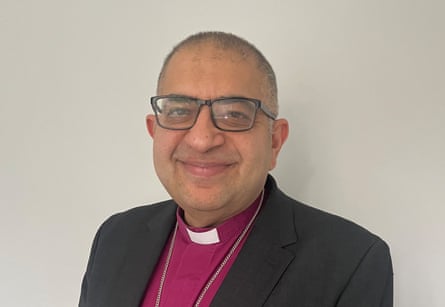
A senior leader within the Church of England has issued a stark warning regarding what he describes as a disturbing resurgence of extremist ideologies, asserting that fascism is on the rise in the UK following a series of high-profile demonstrations and racially motivated incidents across the country. Bishop Arun Arora of Kirkstall, speaking at a high-level ecclesiastical gathering, condemned the "twisted theology" of far-right groups that have recently co-opted Christian symbols and rhetoric to advance an anti-migrant agenda. The bishop’s remarks highlight a growing concern among religious and civic leaders that the social fabric of the United Kingdom is being systematically targeted by nationalist movements seeking to incite division and hostility.
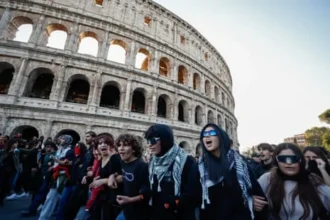
The warning follows a weekend of unrest at several major British ports, including Dover and Portsmouth, where masked agitators dressed in black conducted demonstrations against migration. These groups, who identify themselves as "Christian patriots," were observed chanting religious slogans such as "Christ is King" while blockading transit routes. Security reports indicate that these protests were led by prominent figures within the British far-right ecosystem, including Daniel "Danny Tommo" Thomas, a known associate and former bodyguard of the influential extremist figure Tommy Robinson.
Fascism on the Rise in the UK: A Bishop’s Warning
Bishop Arora’s assessment of the current political climate suggests that the United Kingdom is witnessing a transition from traditional forms of prejudice to a more organized and aggressive form of nationalist extremism. During his address at Lambeth Palace, the official residence of the Archbishop of Canterbury, Arora characterized the recent unrest as "the first steps on the journey to open fascist nationalism." He argued that the movement takes a specific pride in conflict and division, utilizing a "might is right" philosophy that threatens the fundamental safety of minority communities and the broader British way of life.
The bishop drew direct parallels between the current atmosphere and the political instability of the 1930s. He noted that the sight of black-clad vigilantes marching through the streets mirrors the historical tactics of the British Union of Fascists, commonly known as the Blackshirts. By framing the current situation as a return to an era of overt fascism, Arora signaled that the Church of England views the present threat as significantly more dangerous than the localized racism observed in the latter half of the 20th century.
The Exploitation of Christian Symbols by Far-Right Agitators
A central theme of the bishop’s critique was the appropriation of Christian iconography by nationalist groups. Arora described the use of the cross as a "fashion accessory" by those who have no understanding of the core tenets of the faith. He asserted that the "twisted theology" of these self-described patriots is a form of "sinful idolatry" that places national identity above religious values. The bishop emphasized a clear theological boundary, stating that "there is no national flag that sits atop the cross," and urged the church to be unequivocal in rejecting nationalist interpretations of the gospel.

The rise of "Christian nationalism" in the UK reflects a broader global trend where right-wing movements use religious identity as a tool for exclusion. By chanting "Christ is King" during anti-migrant rallies, these groups attempt to frame their political grievances as a spiritual crusade. Church leaders are increasingly concerned that this rhetoric not only misrepresents Christianity but also serves to radicalize individuals by providing a moral veneer for xenophobic actions.
A Timeline of Escalating Nationalistic Unrest
The bishop’s warnings are rooted in a series of violent and disruptive events that have occurred across the United Kingdom throughout the year. The catalyst for much of the recent tension was the killing of Henry Nowak in Southampton, an "evil" act that was quickly exploited by far-right influencers to stoke anti-immigrant sentiment. In the wake of that tragedy, the country saw a wave of disorder that security analysts say was fueled by disinformation spread through social media channels.
Following the Southampton incident, a string of racially motivated attacks occurred in Northern Ireland and various English counties:
- Belfast, Northern Ireland: A series of racist firebombings targeted homes and businesses, forcing families to flee and drawing international condemnation.
- Thetford, Norfolk: Anti-migration protests disrupted local governance and created an atmosphere of intimidation for residents of ethnic minority backgrounds.
- Lancashire: A particularly harrowing incident was reported by the BBC, involving a six-year-old boy who had a racial slur scrawled across his forehead, an act that Bishop Arora cited as evidence of the deteriorating social climate.
- Doncaster: Protesters surrounded a local vicar, Rev. Canon Dr. Richard Frith, inside Doncaster Minster after claiming the church’s bells were intentionally rung to drown out a far-right rally occurring nearby.
The Church of England’s Response to Institutional Racism
The Lambeth Palace event where Bishop Arora spoke was organized to celebrate the contributions of the Church of England’s diverse clergy and to mark the progress—or lack thereof—since the 2021 publication of "From Lament to Action." That landmark report was commissioned to address systemic and institutional racism within the church’s own structures. Five years into the initiative, the emergence of overt fascism on British streets has forced the institution to re-evaluate its role as a bulwark against extremism.
Bishop Rosemarie Mallett, the co-lead for racial justice alongside Arora, noted that the conflict is no longer confined to the political sphere but is being brought "directly into our sacred spaces." She highlighted the incident at Doncaster Minster as a turning point, suggesting that the sanctity of religious buildings is no longer respected by those performing "fear of the stranger as a public spectacle." Mallett called on the church to protect the dignity of racialized people and to offer a theological vision of belonging that counters the narrative of exclusion.
Leadership and the Responsibility to Speak Out
The Archbishop of Canterbury, Sarah Mullally, also addressed the growing sense of threat felt by ethnic minority communities. She acknowledged that the UK has developed a culture where intimidation is increasingly viewed as an acceptable form of political expression. Mullally stressed that silence from religious and civic leaders is no longer an option, as it provides a vacuum in which extremist ideologies can flourish.
"I think there is an increasing responsibility on Christian leaders to speak up and not be silent," Mullally said during the event. Her comments reflect a shift in the Church of England’s strategy, moving toward a more vocal and confrontational stance against far-right movements. This proactive approach is intended to reassure vulnerable populations that the state church remains committed to their safety and inclusion.
Political and Social Implications of Rising Nationalism
The rise of fascist nationalism in the UK has significant implications for the country’s political landscape. Analysts suggest that the "tidal wave of nationalism" described by Bishop Arora is threatening the foundations of social cohesion and the unity of the United Kingdom. As these movements gain visibility, they put pressure on mainstream political parties to adopt harder stances on immigration and national identity, often at the expense of human rights and civil liberties.
Furthermore, the "machtpolitik" or power-politics mentioned by Arora suggests a shift away from democratic discourse toward a reliance on physical intimidation and public disorder. This trend poses a challenge for law enforcement and policymakers who must balance the right to protest with the need to protect communities from targeted harassment. The bishop’s warning serves as a call to action for the government to address the underlying causes of radicalization and to strengthen the legal frameworks that prevent hate speech and extremist mobilization.
Impact on Social Cohesion and Future Outlook
As the United Kingdom grapples with these internal divisions, the role of the Church of England as a moral authority remains under scrutiny. The institution’s ability to influence public opinion and counter fascist narratives will depend on its consistency in addressing both internal institutional racism and external political extremism. The bishop’s speech indicates a realization that the "social fabric" is not merely fraying but is being intentionally torn by groups that view diversity as a threat to national survival.
The path forward, according to Church of England leadership, involves a commitment to "radical hospitality" and the protection of those targeted by nationalist violence. By telling "the truth about history" and challenging the misuse of religious identity, the church aims to provide a counter-narrative to the rising tide of fascism. However, the persistence of masked demonstrations and the escalation of racially motivated crimes suggest that the struggle for social cohesion in the UK is entering a volatile and uncertain chapter.