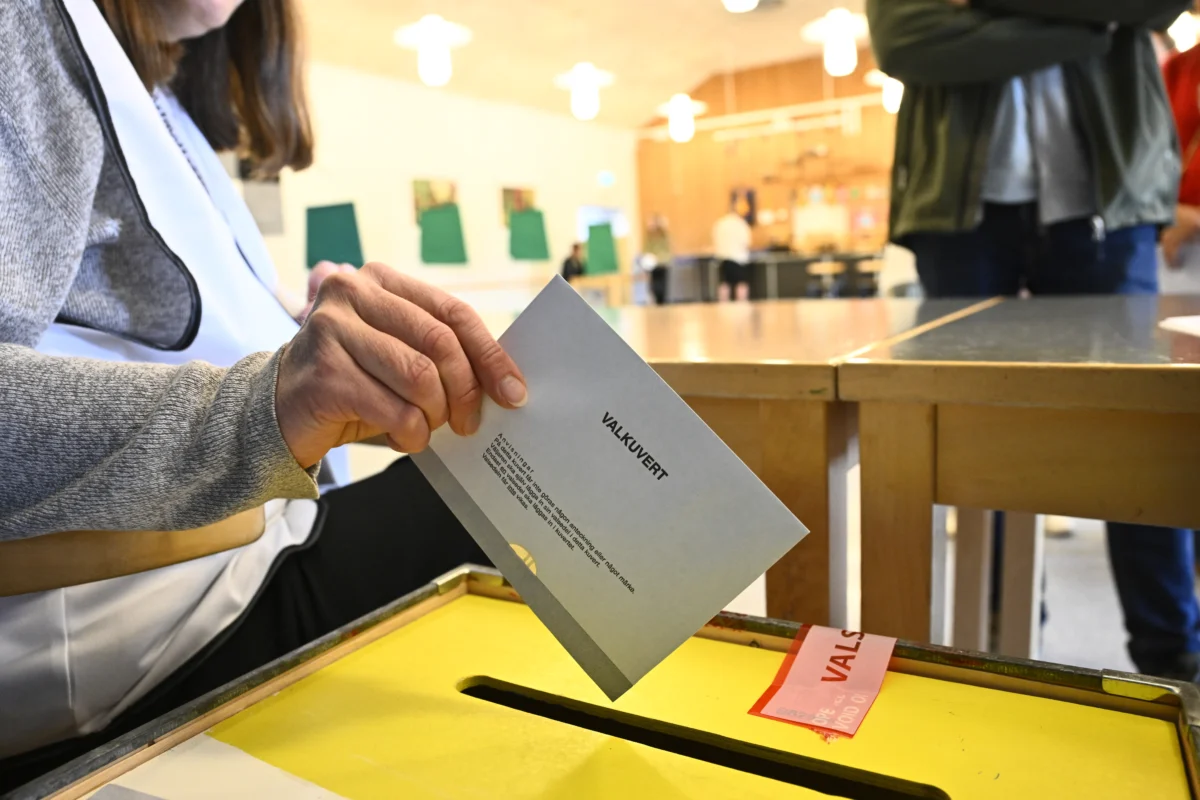
Stockholm, Sweden – Swedish voters began casting ballots Sunday in a closely watched general election that could usher the far-right Sweden Democrats party into the government for the first time, a seismic shift in the nation’s political landscape. The outcome will determine whether the center-left opposition reclaims power or if a right-wing bloc, reliant on the Sweden Democrats, forms the next administration.
The election pits incumbent Prime Minister Ulf Kristersson’s center-right alliance against the Social Democratic Party, led by former Prime Minister Magdalena Andersson. Pre-election polls, which had long suggested a comfortable lead for Andersson’s bloc, narrowed significantly in the final days of the campaign, signaling a potentially tight race. The Sweden Democrats, a party with a complex history that has gradually shed its extremist past, has emerged as a powerful kingmaker.
A Historic Crossroads for Swedish Politics
The stakes of this election are exceptionally high, representing a potential watershed moment for Sweden, a country long known for its progressive social policies and consensus-driven politics. For decades, the Sweden Democrats were considered political pariahs, their anti-immigration and nationalist platform a stark contrast to the nation’s prevailing ideals. However, their steady rise in electoral support, culminating in becoming the largest party on the right in the 2022 election, has fundamentally reshaped the political terrain.
Magdalena Andersson, leader of the Social Democrats, cast her ballot early Sunday morning, emphasizing the profound choice facing the Swedish electorate. "It is now up to the Swedish people to decide which direction our country should take," Andersson stated to reporters. She posed a stark question: "Should we have a government entirely dominated by the Sweden Democrats? Something that has never happened in Sweden before? Or should we have a government led by me, which will steer Sweden in a new spirit of cooperation?" Her party has campaigned on a platform of strengthening the welfare state and providing relief to households struggling with the escalating cost of living.
The Rise of the Sweden Democrats
The Sweden Democrats’ journey from the fringes to a position of potential governmental influence is a narrative that has unfolded over years. Founded in the late 1980s with roots in neo-Nazi movements, the party has undergone a significant rebranding under its current leadership. Its platform, centered on stricter immigration controls, a strong emphasis on national identity, and a more nationalistic approach to foreign policy, has resonated with a growing segment of the Swedish population, particularly in the wake of Europe’s refugee crises and concerns over social integration.

In the 2022 general election, the Sweden Democrats secured 20.5 percent of the vote, positioning them as a significant force on the right. This electoral success paved the way for their current influential role. While Prime Minister Kristersson’s Moderates lead the center-right alliance, they have relied on the tacit support of the Sweden Democrats to maintain a parliamentary majority since 2022.
Navigating a Polarized Landscape
The current political climate in Sweden is marked by a deep division over issues of immigration, integration, and the future direction of the welfare state. Prime Minister Kristersson, seeking a second four-year term, has focused his campaign on themes of law and order, particularly addressing organized crime and immigration. He has promised to leverage his government’s "far better preconditions" to improve the lives of ordinary Swedes and "make Sweden great again," a slogan echoing similar sentiments seen in other Western democracies.
Kristersson’s administration, a three-party center-right coalition, has operated with the Sweden Democrats as a crucial external supporter. The prospect of the Sweden Democrats gaining cabinet posts represents a significant departure from traditional Swedish governance, where such parties have historically been excluded from power. Kristersson has publicly stated that if the right-wing bloc achieves a majority, the Sweden Democrats will be integrated into the government, though he has indicated he would remain Prime Minister even if the Sweden Democrats emerge as the larger party within the coalition.
Key Election Issues
Beyond the headline-grabbing potential entry of the far-right into government, several pressing issues are at the forefront of voters’ minds. The escalating cost of living, driven by global inflation and the energy crisis, is a major concern for households across Sweden. The Social Democrats have pledged extensive welfare measures to alleviate this burden, while the right-wing bloc has focused on economic reforms and controlling public spending.
Concerns about crime, particularly gang-related violence, have also heavily influenced the campaign discourse. The current government has implemented a tougher stance on organized crime, a policy that appears to have gained traction among voters. Immigration and integration remain contentious topics, with the Sweden Democrats advocating for significantly reduced immigration levels and more stringent assimilation policies.
The Mechanics of Swedish Elections
Polling stations opened at 8:00 AM local time across Sweden, with voters having until 8:00 PM to cast their ballots. The Swedish electoral system involves electing members of the Riksdag, the national parliament, as well as representatives for regional and municipal councils. Approximately eight million Swedes are eligible to vote in this nation of 10.6 million people, where voter turnout traditionally exceeds 80 percent. A significant portion of the electorate, around half of all voters, had already cast their ballots in advance, highlighting the importance of early voting in facilitating participation.

Exit polls are expected to be released shortly after the polls close, providing an initial indication of the election’s outcome. However, more definitive and reliable results are anticipated several hours later, as the votes are tallied. The close nature of the race means that the final results could be subject to close scrutiny and potentially protracted coalition negotiations.
International Implications
The outcome of the Swedish election carries implications beyond its borders. A government that includes the Sweden Democrats could signal a broader trend of right-wing populist parties gaining influence across Europe. This could impact the dynamics of the European Union, particularly on issues related to immigration, foreign policy, and economic cooperation. Sweden’s traditional role as a proponent of multilateralism and humanitarian values could also be re-evaluated under a new government.
The Sweden Democrats’ platform, with its emphasis on national sovereignty and a more critical stance towards European integration, could lead to shifts in Sweden’s foreign policy engagements. This could affect alliances and Sweden’s participation in international initiatives, potentially reshaping its influence on the global stage.
A Nation at a Political Juncture
As Swedes deliberate their choice, the country stands at a pivotal moment. The election represents a significant test for Sweden’s democratic institutions and its long-held political traditions. The potential integration of a far-right party into the core of government power raises fundamental questions about the future of Swedish society, its identity, and its place in the world.
The campaign has been characterized by intense debate and a palpable sense of anticipation. The coming hours and days will reveal whether Sweden opts for a continuation of its traditional political trajectory or embarks on a new, and for many, uncertain, path. The final vote count will not only determine the composition of the next government but also signal the evolving political consciousness of a nation grappling with profound societal changes. The world will be watching closely as Sweden decides its direction.