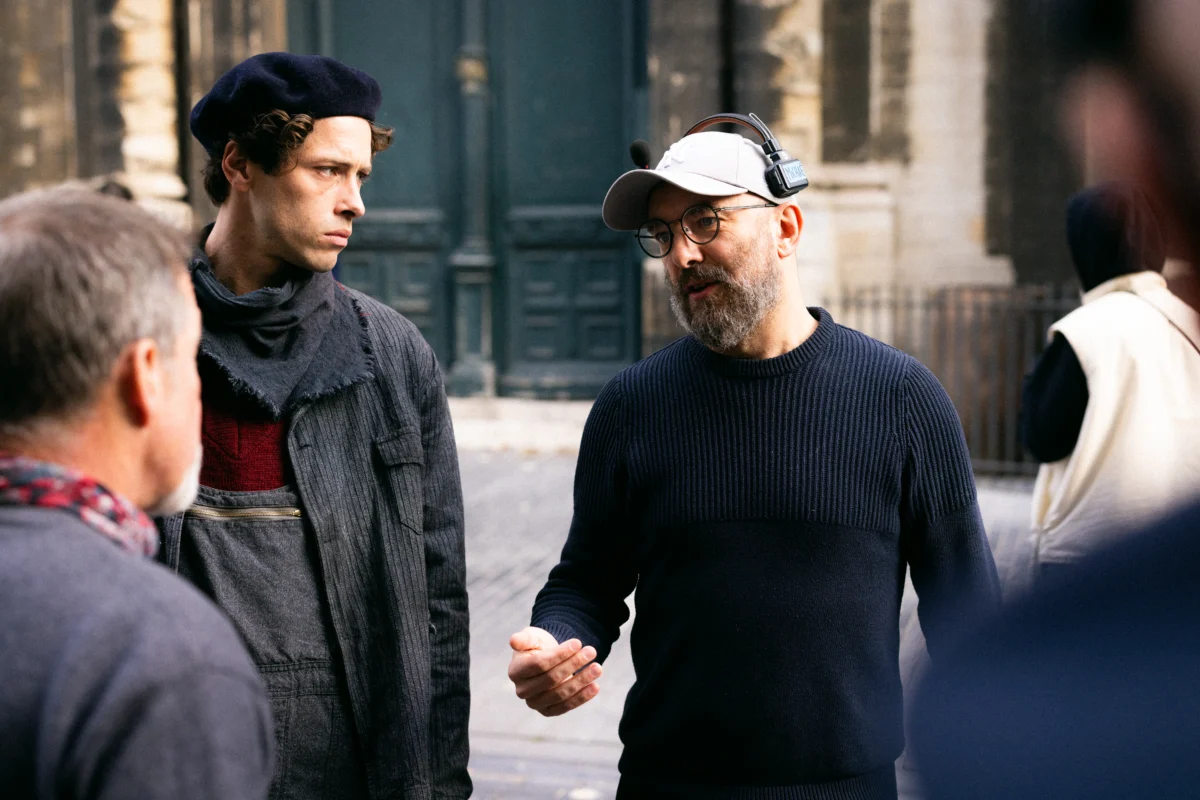
Belgian director Michaël R. Roskam is bringing to the screen the extraordinary true story of Le Faux Soir, a daring World War II media hack where a group of resistance journalists and printers outwitted Nazi occupiers by publishing a satirical counterfeit of the controlled newspaper Le Soir. Roskam, known for critically acclaimed films such as Bullhead and The Drop, frames this audacious act of defiance not merely as a historical drama, but as a high-stakes "Ocean’s Eleven, but with a newspaper" heist movie, celebrating the intellectual bravery of those who wielded words as weapons against tyranny. The film, which recently had its world premiere at TIFF, delves into the meticulous planning, inherent dangers, and enduring legacy of this pivotal moment in media history.
A Daring Act of Wartime Satire
The year was 1943, and Belgium, like much of Europe, languished under Nazi occupation. Propaganda saturated the airwaves and print, with newspapers like Le Soir serving as mouthpieces for the German regime. Yet, amidst this oppressive atmosphere, a clandestine group of Belgian journalists and printers conceived an audacious plan: to infiltrate the very heart of the Nazi propaganda machine and turn it against itself. Their target was Le Soir, the widely read daily, which they intended to replace with a satirical, anti-occupation version.
On November 9, 1943, the group executed their plan with astonishing precision. They intercepted the official Le Soir distribution, replacing thousands of copies with Le Faux Soir (The Fake Evening). This counterfeit newspaper, meticulously designed to mimic the original, was filled with biting satire, mocking the occupiers and their collaborators. It was a spectacular act of psychological warfare, disrupting the flow of propaganda and delivering a powerful, morale-boosting message of resistance to the Belgian populace. This event is widely recognized as the world’s first significant media hack, a testament to the ingenuity and courage of those who risked everything for freedom of expression.
The Genesis of a Film: From History to Hollywood
Michaël R. Roskam’s journey to directing Le Faux Soir began unexpectedly through his co-writer, Bernard Falaise. Falaise, while pursuing film studies, encountered the story of Le Faux Soir in a course on media piracy and satire. The historical account resonated deeply with him, particularly as news broke of the horrific Charlie Hebdo attacks in Paris, an act of terrorism against satire that underscored the timeless danger faced by those who use humor to challenge power.
Falaise initially envisioned a script based on this incredible event. Recognizing Roskam’s directorial prowess and their established friendship (Falaise had previously assisted with casting for Bullhead), he approached the Flemish-speaking director with his initial draft. Roskam, who admitted he, like many in Belgium’s Flemish community, had never heard the full story, was immediately captivated. He saw not just a historical narrative, but a compelling cinematic opportunity. “That’s a movie. This is amazing,” Roskam recalled thinking, quickly committing to direct if Falaise could refine the script to capture his vision. The collaboration evolved, with Roskam eventually joining as co-writer to reshape the narrative into the thrilling heist film he envisioned.
Crafting the Narrative: A Heist, Not a Satire
The biggest challenge in adapting the story of Le Faux Soir, Roskam explains, was translating the original newspaper’s humor. While the 1940s jokes were undoubtedly funny and potent in their time, many references were obscure to a modern audience. Roskam realized that a film solely focused on the dated satirical text would miss the mark. His fascination lay instead in the intricate mechanics of how the resistance pulled off such a daring feat.

This realization led to a pivotal creative decision: to pivot from making a pure satire, like Roberto Benigni’s Life is Beautiful or Taika Waititi’s Jojo Rabbit, to a more grounded, realistic caper. Roskam wanted to depict "very realistic, very funny people risking their lives," emphasizing the danger and ingenuity behind the operation. The director famously pitched it as “Ocean’s Eleven, but with a newspaper,” a comparison that highlights the meticulous planning, specialized skills, and ensemble effort required to execute the audacious prank. This approach allowed the film to convey the spirit of the original satire without being bogged down by its specific, time-bound comedic content.
Assembling the "Ocean’s Eleven" Ensemble
To bring this high-stakes narrative to life, Roskam meticulously cast a team of actors known for their comedic timing and dramatic depth, particularly from Belgium and France’s French-speaking communities. He sought out performers with "funny bones," recognizing that the film’s humor would stem from the characters themselves and their interactions, rather than solely from the satirical content of the fake newspaper.
The ensemble includes celebrated talents like François Damiens, Arieh Worthalter, and Bouli Lanners, all recognized for their ability to blend humor with serious performances. Mélanie Thierry, known for her poetic and nuanced roles, also joins the cast, bringing a subtle twinkle to her character. Roskam described his intention to assemble his "Ocean’s Eleven" and then, crucially, to "hold them back," preventing the film from veering into an all-out comedy. This careful balance ensures that the film retains its gravitas, reminding audiences of the very real dangers faced by the characters, even as their camaraderie and wit shine through.
The Mechanics of Deception: Immersive Historical Research
Roskam is renowned for his commitment to authenticity, a trait evident in his previous works where he immersed himself in subjects ranging from cattle farming (Bullhead) to criminal underworlds (Racer and the Jailbird). For Le Faux Soir, this dedication led him down a fascinating rabbit hole of 1940s printing technology. The director confessed that he now possesses the knowledge to "be a project manager of a newspaper in the ’40s."
His research involved extensive visits to museums and conversations with octogenarian and nonagenarian retirees who intimately remembered the era’s printing methods. He also connected with younger generations who are passionately rediscovering and preserving these vintage techniques, such as those at La Démocrate in France, a museum that still prints newspapers using traditional methods. The most captivating discovery for Roskam was the linotype machine – a marvel of mechanical automation that casts lines of type from molten metal. He described it as one of the most magical machines he had ever encountered, still alive due to the passion of its custodians. The sheer physicality and sound of the linotype, with its intricate mechanical process devoid of any digital component, became a crucial element in evoking the tactile, hands-on nature of the WWII media hack.
Words as Weapons: Satire in a Time of Tyranny
The central thesis of Le Faux Soir resonates deeply with a powerful historical truth: words are weapons. Roskam emphasizes that the film’s heroes are not conventional resistance fighters planting bombs, but individuals who chose to fight fascism with jokes, puns, and satirical poems. This intellectual form of resistance, while less overt, was no less dangerous and equally potent in its psychological impact.
Roskam sees his film positioned between Charlie Chaplin’s iconic The Great Dictator and Quentin Tarantino’s revisionist Inglourious Basterds. He aims not to create satire himself, but to show how satire is made and deployed as a tool of defiance. The film serves as a poignant reminder that the fight against disinformation and authoritarian narratives is not new. In an era grappling with "fake news," the story of Le Faux Soir offers a historical precedent, demonstrating the enduring human impulse to challenge distorted truths and the immense risks involved. As one of his characters states, "Why do the Nazis burn books? Because words are weapons."

Modern Echoes and Ironic Reversals
The historical context of Le Faux Soir takes on a chilling contemporary relevance when viewed through the lens of modern information warfare. Roskam points to the striking irony that today, authoritarian regimes are employing tactics eerily similar to the resistance’s 1943 media hack. Russia, for instance, operates "farms" that meticulously copy the websites of reputable news outlets like Le Monde or Der Spiegel, embedding their own fabricated narratives within these cloned platforms.
This reversal of roles, where the methods of historical resistance are now adopted by those seeking to undermine democracy, presents a profound and unsettling paradox. Roskam reflects on this irony, questioning the shifting landscapes of truth and deception. He acknowledges the unsettling thought that, from a detached perspective, modern "establishments" defending democracy could be perceived as the "Nazis of the time" by those who feel victimized by the system and seek to dismantle it using any means necessary. This complex dynamic underscores the timeless, cyclical nature of information battles.
The Enduring Power and Limits of Satire
While Le Faux Soir highlights the power of satire, it also implicitly raises questions about its effectiveness against entrenched authoritarianism. Historically, many satirists who mocked Hitler faced severe consequences, from exile to execution. Even the valiant effort of Le Faux Soir did not topple the Nazi regime, and its creators faced immense danger.
Roskam acknowledges that satire is not akin to "blowing up a bridge" in its immediate, physical impact. However, he argues for its potent psychological and long-term effects. Satire, he suggests, plants seeds of doubt and dissent in the minds of the populace. It is "the first button of the emperor’s clothes being opened," initiating a process where ridicule can gradually strip away an authoritarian’s credibility. Eventually, if consistently applied, the ruler is "naked on his throne and everybody’s laughing, and that’s when he loses." This, Roskam concludes, is precisely why authoritarian regimes, past and present, despise and fear satire, often retaliating with brutal force or by propagating their own forms of falsification and fake news—a distinction Roskam is keen to emphasize.
The film serves as a powerful reminder that while the tools and battlegrounds of information warfare evolve, the fundamental struggle for truth and freedom of expression remains constant. It celebrates the unsung heroes who, armed with wit and courage, dared to challenge the dominant narrative, proving that even in the darkest of times, laughter can be a profound act of resistance.