Islamist extremist activity across the central Sahel region is tracking toward a historic peak following a series of aggressive offensives by groups affiliated with al-Qaida and the Islamic State. Data compiled by the Armed Conflict Location and Event Data Project (ACLED) indicates that the frequency and lethality of these attacks have transformed the region into the global epicenter of jihadist militancy. As the international community marks the 25th anniversary of the September 11 attacks, the resilience and expansion of al-Qaida’s African branches stand in sharp contrast to the organization’s diminished operational capacity in its traditional strongholds in the Middle East and South Asia.
The surge in Al-Qaida and IS-linked violence in Africa’s Sahel belt is most pronounced in the tri-border area encompassing Mali, Burkina Faso, and Niger. These three nations, currently governed by military juntas that have pivoted away from Western security partnerships, are struggling to contain a multi-front insurgency that has claimed thousands of lives and displaced millions of civilians. Statistics from ACLED reveal a staggering escalation: violent incidents involving jihadist groups in these three countries rose from just 63 in 2016 to 2,845 in 2025. With 2,145 events already logged in the first half of 2026, analysts project the annual total will comfortably exceed the 3,000 mark.
Escalating Conflict in the Central Sahel
The rapid deterioration of security in the Sahel reflects a broader trend of geographic concentration in global terrorism. While total deaths from terrorist activity have declined to their lowest levels since 2008 on a global scale, the Sahel has moved in the opposite direction. The 2026 Global Peace Index highlighted this disparity, noting that Burkina Faso, Mali, and Niger accounted for more than 9,000 deaths from security incidents in 2025 alone. This concentration of violence suggests that while the "far enemy" strategy of targeting Western capitals has been suppressed, the "near enemy" strategy of territorial control and state subversion is flourishing in sub-Saharan Africa.

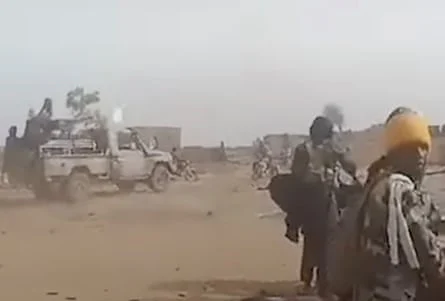
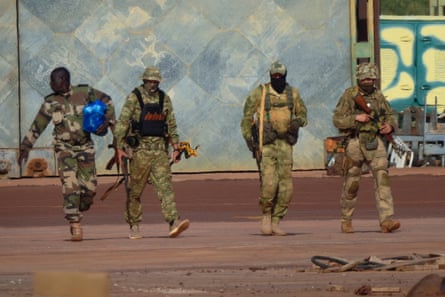
In Mali, the security situation reached a critical juncture in April 2026 during a coordinated offensive led by Jama’at Nusrat ul-Islam wa al-Muslimin (JNIM), the primary al-Qaida affiliate in the region. In a rare tactical alignment, JNIM forces operated alongside the Azawad Liberation Front (FLA), a Tuareg-dominated rebel group. This alliance targeted strategic garrison towns and government infrastructure using a sophisticated mix of ambushes, suicide vehicle-borne IEDs (SVBIEDs), and commercial drones. The scale of the offensive overwhelmed local forces and their Russian paramilitary auxiliaries, leading to significant territorial losses for the Malian state.
The political impact of these attacks has been devastating for the ruling military junta in Bamako. In a high-profile strike, Mali’s defense minister was killed in a suicide bombing at his residence in Kati, a strategic military town located just nine miles from the capital. The head of military intelligence was also killed in the same period, hollowed out the upper echelons of the state’s security apparatus. Furthermore, the seizure of Kidal by rebel forces marked a humiliating reversal for the government. Kidal, a symbolic stronghold, had been recaptured by the military three years ago with much fanfare, but the recent surrender of Russian mercenary units in the city has signaled a shift in the balance of power.
Al-Qaida and IS-Linked Violence in Africa’s Sahel Belt: A Strategic Pivot
The evolution of Al-Qaida and IS-linked violence in Africa’s Sahel belt is characterized by a shift toward localized governance and territorial administration. Unlike the centralized command structure seen during the 9/11 era, groups like JNIM have embedded themselves within local ethnic and agrarian conflicts. By mediating land disputes and providing a rudimentary form of justice in neglected rural areas, these groups have built a recruitment pipeline that is difficult to disrupt through purely kinetic military action. Experts note that while these groups maintain their ideological allegiance to the global al-Qaida leadership, their primary focus remains the expulsion of state authority and the establishment of shadow governments.
Ulf Laessing, a senior analyst at the Konrad Adenauer Foundation, observes that the Sahelian affiliates have largely distanced themselves from the objective of striking Western soil. Instead, they have focused on creating "liberated zones" where they can tax local populations and control artisanal gold mines and smuggling routes. This localized focus has made them more resilient, as they do not rely on external funding or complex international logistics to sustain their operations. However, this regional entrenchment poses a long-term threat to the stability of the entire West African coastline, as violence increasingly spills over into littoral states like Ghana, Togo, and Benin.
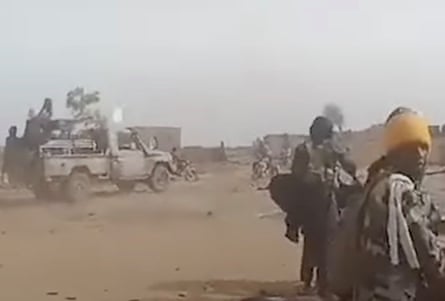
In Burkina Faso, the situation is equally dire. JNIM has claimed responsibility for more than 130 attacks in 2026, many of which have occurred in close proximity to the capital, Ouagadougou. The group’s strategy of blockading major towns has created a humanitarian crisis, with the government struggling to supply besieged communities. In Niger, the security landscape is further complicated by the presence of the Islamic State in the Greater Sahara (ISGS), which remains a formidable rival to JNIM. The two groups frequently engage in internecine warfare, competing for influence and control over the lucrative trade corridors that crisscross the desert.
The Role of Russian Mercenaries and Military Juntas
The withdrawal of French and American forces from the Sahel has left a security vacuum that Russian paramilitary groups, such as the Wagner Group and its successors, have attempted to fill. However, the presence of these Russian auxiliaries has coincided with a sharp increase in civilian casualties and a perceived decline in military effectiveness. Reports of massacres and human rights abuses committed during joint operations have served as a potent recruitment tool for extremist groups, who frame themselves as the only viable protectors of local communities against state-sponsored violence.
The military juntas in Mali, Burkina Faso, and Niger have justified their seizures of power by promising to restore security. Yet, the data suggests that the "security-first" approach, characterized by heavy-handed military operations and a reliance on foreign mercenaries, has failed to stem the tide of Al-Qaida and IS-linked violence in Africa’s Sahel belt. The loss of Kidal and the successful strikes on high-ranking officials in Bamako have undermined the juntas’ claims of progress, leading to increased internal friction within the military leadership of these nations.
Broader Continental Trends: Somalia and the Lake Chad Basin
While the Sahel is the primary theater of concern, the expansion of al-Qaida and Islamic State affiliates is a continent-wide phenomenon. In East Africa, al-Shabaab remains one of the world’s deadliest organizations. ACLED recorded more than 10,000 deaths linked to al-Shabaab violence over the past 18 months. Despite a sustained counter-insurgency campaign by the Somali federal government and African Union transition forces, the group maintains a robust extortion network that generates millions of dollars in revenue from Mogadishu to the Kenyan border.
Similarly, Islamic State-linked groups continue to destabilize the Democratic Republic of Congo, Mozambique, and the Lake Chad Basin. In Nigeria, despite years of military operations, IS-affiliated fighters continue to launch sophisticated attacks on both military and civilian targets. The persistent mobility of these groups across porous borders highlights the limitations of national-level security strategies in the face of a transnational threat. The United States has responded with targeted airstrikes and intelligence support in some regions, but the overall trend remains one of militant expansion.
Global Leadership and Future Outlook
The current state of al-Qaida’s global leadership remains shrouded in ambiguity. Since the 2022 death of Ayman al-Zawahiri in a U.S. drone strike in Kabul, the organization has not officially named a successor. Intelligence agencies believe the de facto leader is Saif al-Adel, a veteran operative reportedly based in Iran. This lack of visible, centralized leadership has allowed regional affiliates like JNIM in the Sahel and Al-Qaida in the Arabian Peninsula (AQAP) in Yemen to operate with significant autonomy.
While AQAP continues to advocate for "lone wolf" attacks in Europe and the United States, its operational tempo has slowed significantly. In contrast, the African affiliates are mobilizing tens of thousands of fighters, a scale of manpower that dwarfs the resources al-Qaida possessed in the lead-up to the 9/11 attacks. The challenge for the international community is no longer just preventing a single spectacular attack, but managing the collapse of state authority across a vast belt of the African continent.
As Al-Qaida and IS-linked violence in Africa’s Sahel belt continues to break records, the humanitarian and geopolitical consequences are becoming increasingly difficult to ignore. The displacement of millions has fueled migration pressures toward Europe, while the collapse of governance has created sanctuary zones for criminal enterprises. Without a fundamental shift in strategy—one that addresses the underlying drivers of grievance, such as poor governance and resource competition—the Sahel appears destined to remain the most volatile frontier in the global fight against extremism for the foreseeable future.