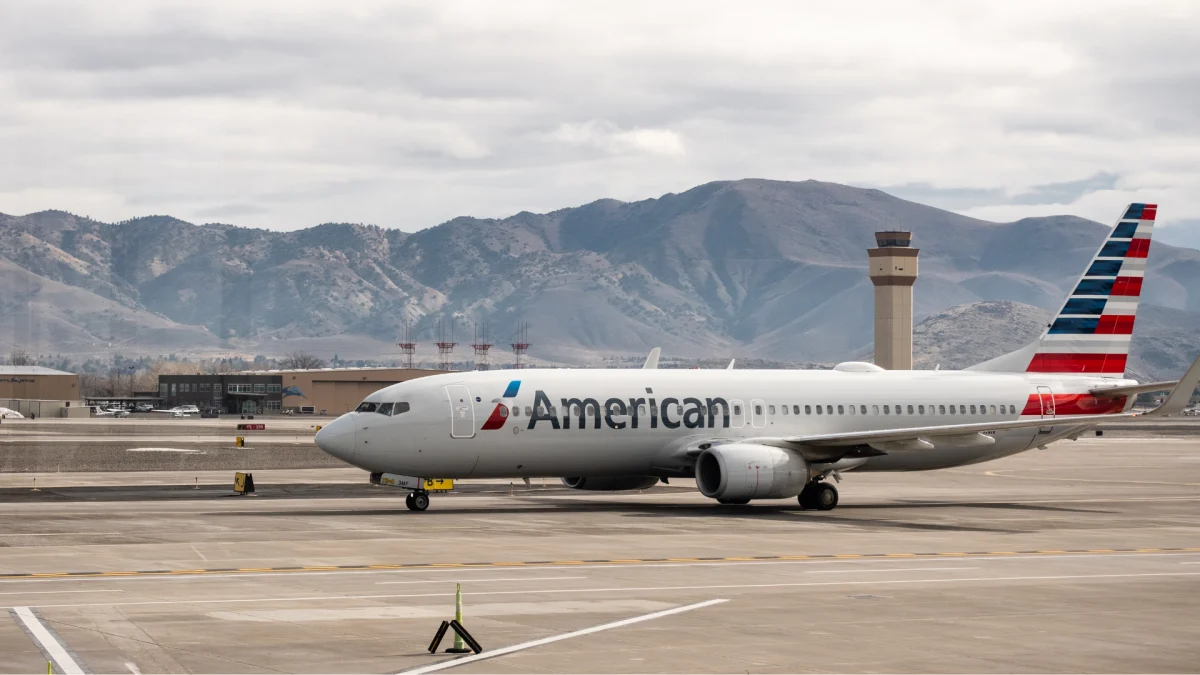
American Airlines, the largest domestic carrier by seat capacity, experienced a significant operational disruption on Tuesday evening as a technical failure forced a nationwide halt of its flight operations. The grounding, which was initiated at approximately 6:30 p.m. ET, prevented all scheduled departures across the United States while the company’s technical teams worked to resolve what was described as a connectivity problem. Although the ground stop was lifted in less than an hour, the incident underscored the continued vulnerability of major aviation infrastructure to software and network instabilities.
The Federal Aviation Administration (FAA) confirmed the implementation of the ground stop, a move typically reserved for severe weather or critical equipment failures. In this instance, the airline requested the pause in service to address a technology issue that briefly impacted connectivity for several internal systems. By 7:21 p.m. ET, the carrier announced via its official communication channels that the systems were coming back online and that flights were beginning to resume their scheduled departures.
Despite the relatively short duration of the technical glitch, the timing of the event during the busy evening travel window created immediate challenges for thousands of passengers. American Airlines operates a fleet of more than 1,000 aircraft and serves as a primary link for travelers moving through major hubs such as Dallas-Fort Worth, Charlotte, and Miami. Even a brief cessation of movement can lead to a backlog of aircraft on taxiways and delayed arrivals that ripple throughout the national airspace system.
The Immediate Impact of the Nationwide Ground Stop
When the American Airlines briefly grounded in U.S. by IT issue alert was first communicated to air traffic control towers, the response was immediate. Ground stops are considered one of the most restrictive traffic management tools available to the FAA. Unlike a "ground delay program," which merely slows the rate of incoming flights to a specific airport, a nationwide ground stop for a specific airline brings the entire network to a standstill. This measure is implemented to prevent a surge of aircraft from entering the sky when the carrier’s dispatchers or pilots cannot access critical flight data.
The disruption was felt most acutely at the airline’s primary hubs. At Dallas-Fort Worth International Airport (DFW), where American Airlines handles the vast majority of traffic, gates became occupied by aircraft unable to push back, preventing arriving flights from deplaning their passengers. This "gridlock" effect is a common consequence of IT failures in the aviation sector, as the logistical choreography required to move hundreds of thousands of people daily relies on millisecond-accurate data transmission.
Industry analysts noted that while the ground stop lasted less than 60 minutes, the recovery process for an airline of this scale often takes much longer. Crews reaching their maximum legal working hours, known as "timing out," can lead to flight cancellations even after the technical systems are restored. Furthermore, the positioning of aircraft for the following morning’s departures is frequently disrupted, leading to a "domino effect" that can persist into the next business day.
Understanding the Scope of the American Airlines IT Issue
While the carrier did not provide an exhaustive technical breakdown of the failure, the reference to "connectivity for some of our systems" suggests a breakdown in the servers that handle essential pre-flight data. Modern aviation requires a constant stream of information regarding weather updates, flight plans, weight and balance calculations, and passenger manifests. If any of these systems lose their connection to the central database, a flight cannot legally or safely depart.
This specific IT issue highlights the complex web of legacy systems and modern cloud-based architecture that major airlines currently navigate. Over the last decade, the industry has aggressively moved toward digital solutions for everything from maintenance logs to pilot tablets. However, this digital transformation has also created single points of failure where a localized network outage can manifest as a nationwide operational crisis.
The carrier issued a formal apology to its customers, acknowledging the inconvenience caused by the temporary halt. "We put a temporary ground stop in place while our teams worked to resolve the issue," the company stated in a public update. The transparency of the communication was intended to mitigate passenger frustration, though many travelers took to social media to report being stuck on tarmacs or waiting in terminal gates with little information during the height of the outage.
Federal Aviation Administration Protocols and Safety Measures
The FAA’s role in managing such incidents is primarily focused on safety and the orderly flow of air traffic. When an airline experiences an internal technical failure, it must notify the FAA’s Air Traffic Control System Command Center. The Command Center then evaluates how the grounding of one carrier will affect the rest of the National Airspace System (NAS). Because American Airlines accounts for such a large percentage of U.S. flights, their sudden stop requires careful coordination to ensure that other carriers are not unduly delayed by American’s stationary aircraft.
According to FAA guidelines, ground stops are utilized only when other traffic management initiatives cannot effectively manage the situation. The agency views these stops as a last resort because of the significant economic and logistical costs involved. In this case, the decision to ground the fleet was deemed necessary to ensure that no aircraft took off without the required data links, which could have posed a safety risk if pilots were unable to receive real-time updates during their flight.
Fortunately, there were no reports of safety compromises during the brief window of the IT issue. Flights that were already in the air were able to continue to their destinations, as the connectivity problem primarily affected the systems used for departures. This distinction is vital for maintaining public confidence in air travel, as it separates administrative and logistical IT failures from the critical avionics and flight control systems used by pilots in the cockpit.
The Ripple Effect: How Brief Groundings Disrupt Global Travel
The concept of "network integrity" is central to understanding why a 45-minute delay is more than just a minor nuisance. In a hub-and-spoke model, passengers from dozens of different cities arrive at a central hub to connect to their final destinations. If the "outbound" bank of flights is delayed by an IT issue, hundreds of passengers may miss their connections, requiring the airline to rebook them on later flights, provide hotel vouchers, or even arrange travel on competing carriers.
For American Airlines, which manages thousands of daily connections, the administrative burden of a nationwide ground stop is immense. Customer service agents at airports across the country were tasked with handling long lines of frustrated travelers, while the airline’s digital rebooking systems faced a surge in traffic. The financial cost of such disruptions includes not only lost revenue and vouchers but also the increased fuel consumption of aircraft idling on the ground and the overtime pay for ground crews and gate agents.
Furthermore, the impact extends to international travel. While the ground stop was focused on domestic departures, the delay of domestic feeder flights can cause international long-haul departures to be held so that connecting passengers can make their flights. This can lead to American Airlines aircraft arriving late at international destinations like London, Tokyo, or Buenos Aires, further spreading the disruption across the global aviation network.
Legacy Systems and the Challenges of Modern Aviation Infrastructure
The incident involving the American Airlines briefly grounded in U.S. by IT issue brings renewed attention to the aging infrastructure that supports the global airline industry. Many of the world’s largest carriers still rely on core processing systems developed decades ago. While these systems are incredibly robust, they are increasingly being interfaced with modern web-based applications, creating a "hybrid" environment that can be prone to synchronization errors and connectivity gaps.
In recent years, several major U.S. airlines have faced similar challenges. Outages at Southwest Airlines and Delta Air Lines in previous years have prompted congressional inquiries and calls for greater investment in IT redundancy. The Department of Transportation (DOT) has also increased its scrutiny of how airlines handle these failures, emphasizing that carriers must be held accountable for disruptions within their control, such as IT glitches, as opposed to uncontrollable factors like weather.
Experts in aviation technology argue that the path forward requires a complete overhaul of back-end systems to ensure higher levels of "fault tolerance." This means designing systems so that if one part of the network fails, the rest can continue to operate independently. However, the cost of such upgrades is multi-billion dollar and requires years of implementation, making it a slow process for an industry that operates on relatively thin profit margins and must maintain 24/7 operations.
Passenger Fallout and the Corporate Response
For the traveling public, the primary concern during an IT-related ground stop is the lack of predictability. Unlike weather delays, which can often be anticipated through forecasts, a technical glitch is sudden and total. Passengers at airports reported that departure boards suddenly switched to "delayed" status without explanation, leading to confusion and anxiety. The reliance on mobile apps for boarding passes and flight updates also becomes a liability if the airline’s servers are the source of the problem.
In the aftermath of the Tuesday evening incident, American Airlines has focused on stabilizing its network and ensuring that all delayed passengers reach their destinations. The carrier’s quick resolution of the problem was a positive sign, but it does not erase the frustration of those who were affected. Consumer advocacy groups have pointed to this event as another reason why the U.S. should adopt stricter passenger compensation laws, similar to those found in the European Union, which mandate fixed payments for delays caused by airline-controlled factors.
The airline’s communication strategy involved using social media to provide real-time updates, a tactic that has become standard in the industry. By acknowledging the problem early and providing an estimated time for service restoration, the company attempted to manage expectations. However, the incident remains a reminder that in the modern era, a single broken line of code or a failed router can be just as disruptive to travel as a massive blizzard or a mechanical failure.
Financial and Operational Consequences for the Industry
While the stock market impact of a brief ground stop is usually negligible, the cumulative effect of repeated IT issues can damage an airline’s brand and long-term valuation. Investors look for operational reliability as a key metric of a well-managed company. When a carrier like American Airlines—which is the biggest in the U.S. by capacity—experiences a nationwide failure, it raises questions about its capital expenditure priorities and its readiness for future growth.
From an operational standpoint, the airline must now conduct a "post-mortem" analysis to determine the exact root cause of the connectivity loss. This involves a deep dive into network logs and hardware performance data. The goal is to implement safeguards that prevent a similar occurrence in the future. Whether the issue was caused by a routine software update gone wrong, a hardware failure in a primary data center, or a third-party service provider outage, the findings will be crucial for the company’s IT roadmap.
The broader aviation industry will also be watching the results of this investigation. Airlines often share "lessons learned" through industry forums to improve the collective stability of the air travel ecosystem. As the world becomes more dependent on digital connectivity, the lessons from the American Airlines ground stop will likely inform the strategies of other carriers looking to fortify their own systems against the inevitable challenges of the digital age.
The resolution of the IT issue and the resumption of flights on Tuesday night allowed the airline to avoid a total operational meltdown. However, the event serves as a potent illustration of the fragility of modern travel. As American Airlines returns to normal scheduling, the focus shifts from immediate crisis management to the long-term necessity of building more resilient, redundant, and reliable technological foundations for the millions of passengers who fly every year.