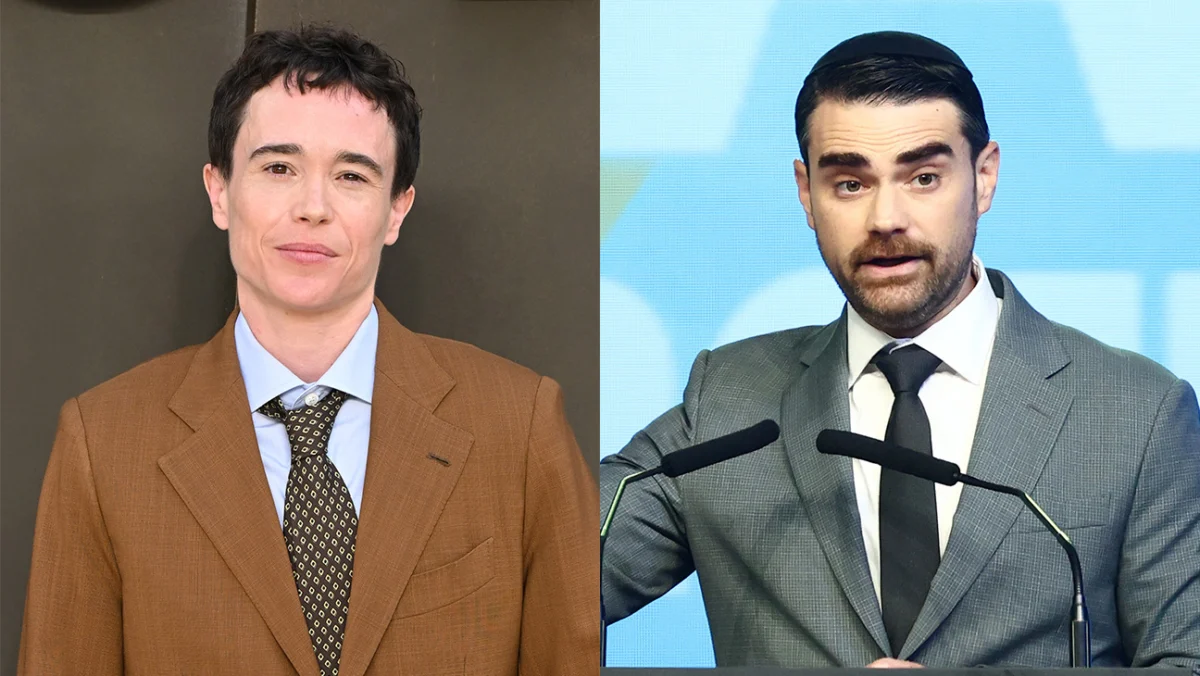
Right-wing influencer Ben Shapiro has lauded Christopher Nolan’s epic film The Odyssey as a "masterpiece," assigning it a near-perfect score despite significant pre-release backlash from conservative circles, particularly regarding the casting of transgender actor Elliot Page. Shapiro, a prominent voice within the "MAGA-verse," delivered an 18-minute YouTube review, granting the film an 8.5 out of 9 on his personal scale, a notable endorsement that navigates the complex cultural and political divisions currently affecting Hollywood productions.
Christopher Nolan’s Visionary Epic
Christopher Nolan, celebrated for his intricate narratives and large-scale cinematic experiences, embarked on an ambitious adaptation of Homer’s ancient Greek epic, The Odyssey. Known for blockbusters such as Inception, Interstellar, Dunkirk, and most recently Oppenheimer, Nolan’s involvement in such a monumental project immediately generated immense anticipation. His films are often characterized by their intellectual depth, non-linear storytelling, and a commitment to practical effects, garnering both critical acclaim and significant box office success. The challenge of bringing one of literature’s most enduring tales to the screen, particularly with a contemporary ensemble, placed The Odyssey under intense scrutiny even before its theatrical debut.
The original epic poem, attributed to Homer, recounts the arduous ten-year journey of Odysseus, king of Ithaca, as he strives to return home after the Trojan War. It is a foundational text of Western literature, exploring themes of perseverance, homecoming, loyalty, and the human condition. Nolan’s modern interpretation, featuring a star-studded cast, aimed to reintroduce this classic to a new generation while maintaining the grand scope and emotional resonance of the original.
The Political Undercurrents of Hollywood Casting
The lead-up to The Odyssey‘s release was marked by a distinct wave of criticism from certain conservative factions, often coalescing under the umbrella term "MAGA-verse." This segment of the audience frequently scrutinizes Hollywood for what it perceives as an overemphasis on "woke" ideologies, identity politics, and progressive casting choices that deviate from traditional interpretations of source material. These cultural skirmishes have become increasingly common in the entertainment industry, with debates frequently erupting over diversity initiatives and representation on screen.
For many within these conservative circles, casting decisions are often viewed through a lens of cultural purity and historical accuracy, particularly when adapting classic stories. This perspective often clashes with Hollywood’s evolving approaches to representation, which prioritize broader inclusivity. The controversy surrounding The Odyssey thus became another flashpoint in the ongoing "culture wars," pitting artistic freedom and modern sensibilities against traditionalist expectations.
Ben Shapiro’s Unexpected Endorsement of ‘The Odyssey’
Despite the vocal opposition from some of his ideological allies, Ben Shapiro’s comprehensive review offered a surprising and largely positive assessment of The Odyssey. His declaration of the film as a "masterpiece" and his high rating set him apart from the more uniformly negative reactions seen in some conservative media outlets. Shapiro, a political commentator, media host, and co-founder of The Daily Wire, wields significant influence among his conservative audience, and his endorsement carries weight within this demographic.
In his detailed critique, Shapiro specifically praised the performances of key cast members. Matt Damon, in the titular role of Odysseus, received commendation for his portrayal of the beleaguered hero. Robert Pattinson as Antinous and Tom Holland as Telemachus also garnered Shapiro’s approval, suggesting that the core dramatic performances aligned with his expectations for a high-caliber production.
Defending Diverse Casting (Mostly)
A notable aspect of Shapiro’s review was his nuanced stance on several diverse casting choices that had drawn fire from other conservatives. He expressed little to no issue with Zendaya’s portrayal of Athena or Lupita Nyong’o as Helen of Troy, two roles that had faced criticism regarding racial accuracy in a Greek epic. Shapiro directly addressed the complaints about Nyong’o’s casting, stating, "I know a lot of people were like, ‘Oh my God, Lupita Nyong’o is supposed to look like Diane Kruger.’ I don’t know. Diane Kruger doesn’t look very Greek. She’s German.” This pointed rebuttal demonstrated a willingness to challenge the superficiality of some "historical accuracy" arguments within his own ideological camp.
Furthermore, Shapiro found Zendaya’s performance as Athena entirely acceptable, remarking, "Casting Zendaya in that role doesn’t change anything… Zendaya does a fine job, doesn’t bother me at all." While he acknowledged that rapper Travis Scott’s small role as Bard felt "a bit jarring," he dismissed it as a minor issue given its limited screen time. This selective acceptance of diverse casting underscored that his criticisms were not a blanket rejection of non-traditional choices but were instead rooted in specific narrative and aesthetic concerns.
The Elliot Page Controversy: A "Stupid" Casting Decision
The primary point of contention for Shapiro, and the source of his most direct criticism, was the casting of Elliot Page as Sinon. Page, who publicly came out as transgender in 2020, reunited with director Christopher Nolan after their collaboration on Inception. For Shapiro, this casting decision was a significant "unforced error" that fundamentally disrupted his immersion in the film’s narrative.
Shapiro did not mince words, declaring, "It’s stupid to cast Elliot Page as a dude. It’s just stupid." He elaborated on his discomfort, citing Page’s physical characteristics and vocal delivery as distracting elements. "Elliot Page was a woman with mental issues who believes that she is a man and has had surgeries to make her appear more man-like, but still she is about five foot two inches and 105 pounds, soaking wet, and has the voice of a woman. It doesn’t work," Shapiro argued, directly criticizing Page’s personal identity and physical presence in the role. His critique centered on the perceived incongruity between Page’s real-life identity and the character’s requirements, asserting that it pulled him "far away from the film’s narrative."
Speculation and Narrative Control
Beyond his direct critique of Page’s casting, Shapiro engaged in speculation regarding Christopher Nolan’s motivations, despite initially stating he would not. He proposed several theories, popular among certain conservative podcasters and commentators, suggesting that Nolan’s decision might stem from personal loyalty, a sense of pity for Page, or even as an attempt to garner awards season attention. "Maybe he’s personally friendly with Elliot Page, feels bad for Elliot Page, because Elliot Page is a certain person, was friends of that person from the time they did Inception together. Maybe it’s in fact some sort of Oscar bait attempt," Shapiro mused.
These conjectures tap into a broader conservative narrative that often views Hollywood as driven by political agendas and virtue signaling rather than pure artistic merit. By framing the casting as potentially motivated by external factors rather than narrative necessity, Shapiro reinforces skepticism about the industry’s integrity within his audience. This also positions the controversy within the larger context of identity politics, suggesting that artistic choices are increasingly influenced by non-cinematic considerations.
A Call for Conservative Engagement with ‘The Odyssey’
Despite his strong reservations about Elliot Page’s role, Shapiro urged his conservative audience not to dismiss The Odyssey entirely. He argued against boycotting the film, emphasizing that its overall quality and thematic resonance should outweigh individual casting grievances. "No, the movie’s not going to bomb because of that. It turns out that when people are willing to be entertained, they’re willing to entertain even bad flaws in the teeth, if it turns out the smile is nice," Shapiro stated, advocating for a pragmatic approach to film consumption.
He stressed that the film’s "broader theme" actually aligns with many conservative values, implying that focusing solely on the controversial casting would lead viewers to miss out on a valuable cultural experience. "If you let Elliot Page kill that for you, I think you’re missing out on an incredible moviegoing experience," he concluded, positioning his review as a guide for conservatives to engage with the film critically but not dismissively. This call to action highlighted an internal debate within conservative media: whether to reject productions outright based on perceived ideological slights or to selectively engage with content that, despite some objectionable elements, still offers artistic merit or resonant themes.
Broader Implications for Film and Culture
Ben Shapiro’s review of The Odyssey serves as a significant data point in the ongoing cultural discourse surrounding Hollywood, casting, and political ideology. His nuanced position — praising the film as a masterpiece while vehemently criticizing one specific casting choice — reflects the complex and often contradictory nature of contemporary cultural commentary. It suggests that for some conservative critics, artistic merit can, at times, transcend ideological differences, though not without explicit caveats and strong condemnations of perceived "woke" elements.
The review also highlights the commercial realities faced by studios and filmmakers. While pre-release backlash from specific segments of the audience can be loud, Shapiro’s assertion that such controversies might not derail a film’s box office success underscores the varied motivations and tolerances of the broader moviegoing public. The debate surrounding The Odyssey and Elliot Page’s casting is emblematic of a larger societal conversation about representation, gender identity, and the role of art in reflecting or challenging prevailing norms.
The Evolving Landscape of Cultural Commentary
The commentary from influential figures like Ben Shapiro continues to shape how specific demographics engage with and interpret cultural products. His The Odyssey review demonstrates a sophisticated approach to cultural criticism within the conservative sphere, moving beyond simple calls for boycotts to offer a more detailed, albeit ideologically driven, analysis. This dynamic interaction between art, politics, and celebrity underscores the evolving landscape of cultural consumption, where film reviews are not merely critiques of cinematic technique but also battlegrounds for ideological positions.
As Hollywood navigates an increasingly polarized cultural environment, the responses from critics across the political spectrum, like Shapiro’s take on The Odyssey, will continue to play a crucial role in shaping public perception and influencing the ongoing dialogue about what stories are told, how they are told, and who gets to tell them. The film’s reception, both critical and commercial, will offer further insights into the enduring power of classic narratives and the challenges of adapting them for a modern, diverse, and often divided audience.