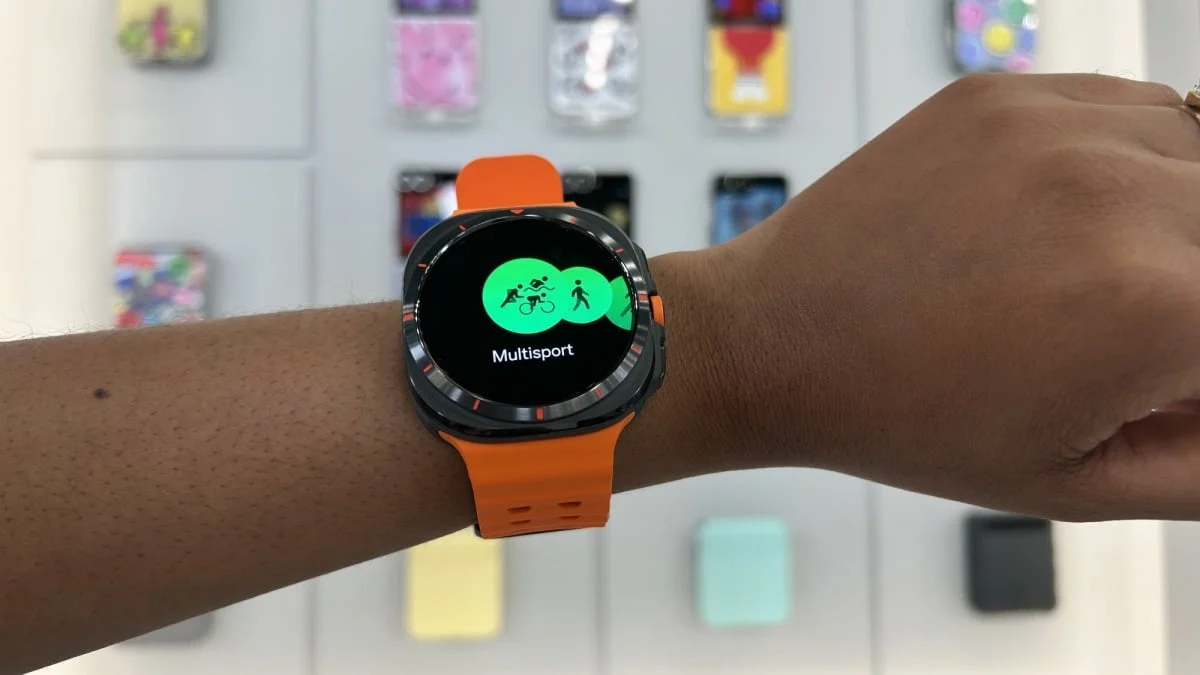
Leaked renders and comprehensive technical specifications for the upcoming Samsung Galaxy Watch Ultra 2 have surfaced online just days before the official Galaxy Unpacked event in London. The disclosure, attributed to prolific industry analyst Evan Blass, provides an exhaustive look at the hardware design and internal capabilities of the South Korean tech giant’s next flagship wearable. The leaks suggest that Samsung is preparing to challenge the high-end smartwatch market with significant upgrades to battery life, display brightness, and structural durability.
While Apple historically maintains a high level of secrecy regarding its product pipeline, Samsung’s hardware often appears in the public domain via supply chain leaks and retail previews weeks before an official unveiling. These latest images, shared via Blass’s Substack, appear to be official promotional materials intended for the July 22 launch. The visual assets confirm a refined aesthetic that maintains the rugged "Ultra" branding while introducing a more streamlined chassis compared to previous iterations.
The Samsung Galaxy Watch Ultra 2 leaks indicate a strategic shift in the company’s approach to the premium wearable segment. By focusing on extreme outdoor performance and longevity, Samsung aims to capture a larger share of the enthusiast market currently dominated by Garmin and the Apple Watch Ultra series. The timing of the leak, coming less than 48 hours before the London event, has shifted the focus from speculation to technical analysis of the device’s capabilities.
Detailed Renders Surface Ahead of Unpacked
The leaked renders of the Samsung Galaxy Watch Ultra 2 showcase a device that blends industrial durability with modern sophistication. The imagery reveals a "squircle" design—a square housing with a circular watch face—which has become a signature look for the Ultra line. This design choice allows for a larger internal volume to house a more robust battery while maintaining the traditional circular interface that Samsung’s Tizen and Wear OS users have come to expect.
Beyond the physical shape, the renders highlight new colorways and strap designs that suggest a focus on both tactical utility and daily wear. The materials appear to be high-grade titanium, consistent with the "Ultra" naming convention, providing a high strength-to-weight ratio. This choice of material is critical for athletes and outdoor enthusiasts who require a device capable of withstanding impacts without adding excessive bulk to the wrist.
The leaked documentation accompanying the images also points to a refined button layout. The Samsung Galaxy Watch Ultra 2 appears to feature a prominent "Action Button" similar to its predecessors, but with improved tactile feedback and programmable functionality. This allows users to trigger specific workouts, emergency sirens, or navigation tools without navigating through touch menus, a feature particularly useful when wearing gloves or in wet conditions.
Breaking Down the Samsung Galaxy Watch Ultra 2 Technical Specifications
The most significant revelations in the Samsung Galaxy Watch Ultra 2 leaks concern the internal hardware, which represents a generational leap in performance. According to the leaked spec sheets, the device will be powered by the Snapdragon Wear Elite chip. This new silicon from Qualcomm is expected to offer better power efficiency and faster processing speeds than the previous generation, enabling smoother transitions within the Wear OS interface and faster GPS locking.
Display technology is another area where the Samsung Galaxy Watch Ultra 2 is set to break industry records. The leak indicates a peak brightness of 5,000 nits, a substantial increase from the 3,000 nits found on previous high-end models. This level of brightness is designed to ensure perfect legibility even under direct, high-altitude sunlight, a common pain point for hikers and mountain bikers.
Furthermore, the device is reported to be approximately 12 percent thinner than its predecessor. Reducing the thickness of a rugged smartwatch is a difficult engineering feat, especially when considering the increased battery capacity mentioned in the leaks. This slimming of the profile suggests that Samsung has optimized the internal component stacking, potentially using a more compact sensor array or a more efficient thermal management system.
A Leap in Battery Capacity and Efficiency
Battery life remains the primary metric by which high-end smartwatches are judged, and the Samsung Galaxy Watch Ultra 2 leaks suggest a major breakthrough in this department. The device is rumored to house an 800mAh battery, a significant increase over the 590mAh cell used in last year’s flagship wearable. This 35 percent increase in raw capacity, combined with the more efficient Snapdragon Wear Elite processor, could push the device’s battery life well beyond the three-day mark under normal usage.
In the world of ultra-endurance sports, battery longevity is a safety feature. Samsung appears to be targeting multi-day excursions where charging is not an option. By providing a larger battery, the Samsung Galaxy Watch Ultra 2 can maintain high-frequency GPS tracking and continuous heart rate monitoring for extended periods, making it a viable alternative to dedicated sports watches from brands like Suunto or Coros.
The leaked data also hints at improved fast-charging capabilities. While the exact wattage has not been confirmed, industry analysts expect Samsung to implement a charging solution that can provide a 50 percent charge in under 30 minutes. This would allow users to quickly top off the device during a morning routine, minimizing the downtime often associated with high-capacity wearables.
Rugged Durability and the IP69K Rating
One of the most surprising elements of the Samsung Galaxy Watch Ultra 2 leaks is the inclusion of an IP69K rating. While most consumer electronics carry an IP68 rating, which protects against immersion in water, the "K" designation signifies protection against high-pressure and high-temperature water jets. This is a standard typically reserved for industrial equipment and heavy machinery, suggesting that the new wearable is designed for the most extreme environments on Earth.
The IP69K rating implies that the Samsung Galaxy Watch Ultra 2 can survive not just swimming or diving, but also high-impact water sports like jet skiing or power washing. This level of ingress protection requires specialized gaskets and a reinforced chassis that can withstand significant atmospheric pressure changes. For the average consumer, this means a device that is virtually "life-proof," but for the professional diver or extreme athlete, it represents a new ceiling for wearable durability.
Additionally, the device is expected to meet MIL-STD-810H standards, a military-grade certification that tests for shock, vibration, and temperature extremes. By combining these certifications, Samsung is positioning the Galaxy Watch Ultra 2 as a tool for professionals who work in hazardous conditions, as well as for consumers who simply want the most durable product available.
Competitive Positioning Against Apple and Garmin
The release of the Samsung Galaxy Watch Ultra 2 comes at a pivotal time in the wearable market. Apple currently holds a dominant position in the premium smartwatch space with the Apple Watch Ultra 2, while Garmin remains the preferred choice for data-driven athletes. Samsung’s strategy appears to be a "middle-ground" approach, offering the smart features and app ecosystem of Wear OS with the ruggedness and battery life of a dedicated fitness tracker.
By increasing the display brightness to 5,000 nits, Samsung is directly outperforming the Apple Watch Ultra 2, which peaks at 3,000 nits. This "spec war" is a clear signal to consumers that Samsung intends to lead in hardware innovation. However, the success of the Samsung Galaxy Watch Ultra 2 will also depend on its software integration. Samsung has been working closely with Google to optimize Wear OS, ensuring that features like Google Maps, Assistant, and third-party fitness apps run seamlessly on the new hardware.
Market analysts suggest that the Samsung Galaxy Watch Ultra 2 could disrupt Garmin’s stronghold on the endurance market if its GPS accuracy and biometric sensors meet professional standards. Samsung has invested heavily in its BioActive Sensor technology, which combines optical heart rate, electrical heart signal, and bioelectrical impedance analysis. If these sensors can provide clinical-grade data in a rugged form factor, the Ultra 2 could become a formidable competitor to the Garmin Fenix and Epix lines.
The Broader Context of Samsung’s Wearable Ecosystem
The Samsung Galaxy Watch Ultra 2 is not launching in a vacuum. It is part of a broader expansion of the Samsung Health ecosystem, which is expected to include the new Galaxy Ring and updated Galaxy Buds. The integration between these devices is a key selling point for Samsung, as it creates a "walled garden" similar to Apple’s, where devices work better together than they do in isolation.
For example, the Galaxy Watch Ultra 2 is expected to sync data seamlessly with the Galaxy Ring to provide a more comprehensive view of a user’s health. While the watch handles high-intensity tracking and outdoor navigation, the ring can provide unobtrusive sleep and recovery tracking. This multi-device approach allows users to choose the right tool for the right moment while maintaining a continuous stream of health data in the Samsung Health app.
Furthermore, the leaks suggest that Samsung is leaning heavily into Artificial Intelligence (AI) to differentiate its wearable software. "Galaxy AI" is expected to play a role in analyzing fitness data, offering personalized coaching, and predicting potential health issues based on heart rate variability and sleep patterns. The Samsung Galaxy Watch Ultra 2 will likely serve as the primary interface for these AI-driven insights, providing users with actionable data on their wrists.
Consumer Expectations and Market Impact
As the official launch approaches, consumer expectations for the Samsung Galaxy Watch Ultra 2 are high. The leaks have painted a picture of a device that addresses almost every criticism of previous models—specifically battery life and display visibility. However, the premium specs will likely come with a premium price tag. Analysts expect the device to be priced competitively with the Apple Watch Ultra 2, likely in the $799 to $899 range.
The impact of this release on the broader industry could be significant. If Samsung successfully delivers a watch with a 5,000-nit display and an 800mAh battery, it will set a new benchmark for what is possible in a consumer wearable. Other manufacturers will be forced to respond, potentially leading to a new era of high-performance smartwatches that prioritize utility and longevity over mere aesthetics.
Public reaction to the leaks has been largely positive, with tech enthusiasts praising the "no-compromise" approach to the hardware. The 12 percent reduction in thickness is particularly noted, as previous "Ultra" watches have been criticized for being too bulky for smaller wrists. By making the device thinner while increasing the battery size, Samsung may have found the "goldilocks" zone of wearable design.
Anticipation Builds for Galaxy Unpacked in London
With the Samsung Galaxy Unpacked event scheduled for July 22, the tech community is waiting to see if Samsung has any surprises left. While the Samsung Galaxy Watch Ultra 2 leaks have provided a clear look at the hardware, the software features and ecosystem integrations remain the biggest unknowns. Samsung’s presentation in London is expected to focus heavily on the "experience" of using these devices in real-world scenarios.
The event will also serve as a platform for Samsung to demonstrate its commitment to the European market. By hosting the launch in London, Samsung is emphasizing its global reach and its desire to compete on a worldwide stage. The Galaxy Watch Ultra 2 will be a centerpiece of this strategy, representing the pinnacle of Samsung’s engineering and design capabilities.
As the final hours count down to the official reveal, the Samsung Galaxy Watch Ultra 2 stands as one of the most anticipated wearables of the year. The combination of record-breaking brightness, extreme durability, and a massive battery suggests that Samsung is no longer content with being a runner-up in the smartwatch race. The London event will confirm whether these leaked specs translate into a device that can truly redefine the premium wearable category.