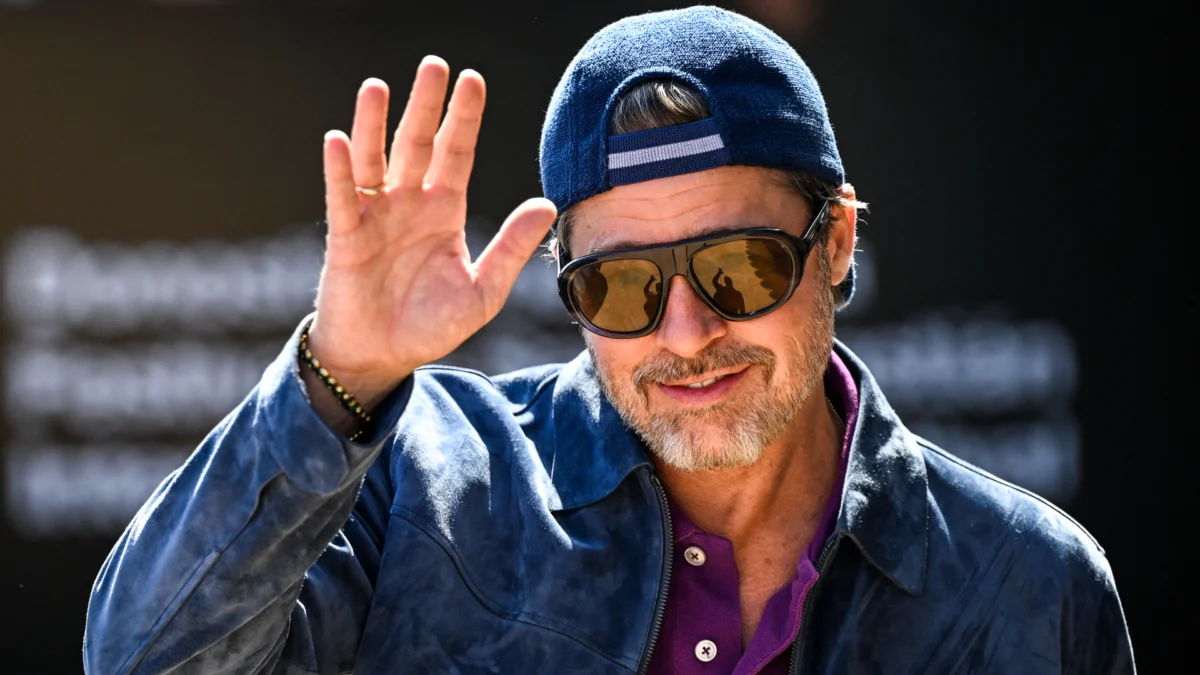
San Sebastian, Spain – Actor and producer Brad Pitt asserted this week that the independent cinema landscape is experiencing a resurgence, likening its current vitality to the creative boom of the 1990s. His comments came during a press conference at the prestigious San Sebastian Film Festival, where he appeared alongside director David Ayer to promote their upcoming film, Heart of the Beast. The festival appearance marks Pitt’s first at San Sebastian since 2009, when he presented Quentin Tarantino’s Inglourious Basterds.
Journalists and industry attendees converged at the city’s Kursaal Theater, eager to hear from the acclaimed star. Pitt, in a jovial mood, addressed a range of topics, including the evolving dynamics of Hollywood, the unique bond between humans and animals, and the philosophical challenges of navigating a complex world. His observations on the robust state of independent filmmaking, particularly, resonated within a sector grappling with significant industry shifts.
The Resurgence of Independent Cinema
Pitt, whose production company Plan B Entertainment has been instrumental in bringing numerous critically acclaimed and commercially successful independent films to the screen, expressed profound optimism regarding the current environment for indie projects. "I think the current setup has actually been really conducive to independent [films], in a really cool way because more eyes are getting on these projects," Pitt stated. He added, "It feels even as strong as in the ’90s." This assessment from a figure deeply entrenched in both mainstream and independent film production offers a significant vote of confidence in a sector often perceived as struggling against the dominance of studio blockbusters and streaming giants.
The 1990s are widely regarded as a golden age for independent cinema, characterized by a surge of innovative storytelling, the rise of influential film festivals like Sundance, and the emergence of production houses such as Miramax Films. This era launched the careers of filmmakers like Quentin Tarantino, Steven Soderbergh, and Richard Linklater, who pushed artistic boundaries and garnered mainstream appeal. Pitt’s comparison suggests a belief that the contemporary film ecosystem, despite its challenges, is fostering a similar environment of creative ferment and audience discovery, particularly through new digital avenues.
Director David Ayer echoed Pitt’s sentiment, highlighting the transformative power of modern digital platforms in unearthing fresh talent. "I think there’s new pipelines of discovery out there, new auteurs," Ayer commented. He cited emerging horror directors Curry Barker and Kane Parsons, who gained prominence through online platforms like YouTube, as prime examples of this phenomenon. Ayer emphasized that this new generation of filmmakers, having grown up with a different media consumption landscape, brings diverse tastes and perspectives to the industry. "We’re seeing what I believe may be the ascent of it, as we find filmmakers in that space, but also as young people matriculate into the industry," he explained, expressing excitement for the future stories that will be told.
Navigating Hollywood Consolidation and the Streaming Era
The discussion swiftly moved to the broader structural changes sweeping through Hollywood, particularly the increasing consolidation of major studios and the omnipresence of streaming services. Against a backdrop of rumored mergers, such as the potential Paramount-Warner Bros. Discovery deal, Pitt addressed how these shifts impact the industry. While acknowledging the concentration of power, Pitt championed the opportunities streaming has created. "What I love about what streaming has brought to us is so many more opportunities for actors, writers, directors," he observed. "And because of that, we have a greater plethora of really interesting stories and really interesting talents, and that’s been amazing."
The rise of streaming platforms has indeed democratized access to content creation and distribution, allowing a wider array of voices to reach global audiences. This expansion has also led to a significant increase in demand for original content, providing work for countless creative professionals. However, Pitt also highlighted a critical challenge within this new paradigm: the precarious position of "middle-budget" films.
"What happened is movies got so expensive," Pitt explained, articulating a common industry concern. He noted that while "very big tentpole movies" can still reliably recoup their massive investments, and independent, lower-budget films find new avenues through streamers, the films in the "middle ground"—those budgeted between $30 million and $60 million—face significant hurdles. "Anything in the middle ground has a really difficult time getting made, even movies like ours, because it’s very difficult for the studio to recoup that middle budget," he said, referencing Heart of the Beast. Pitt candidly shared his personal stake in this segment: "I’m hoping these movies still have a lot [of support], because that’s usually where I end up most," he laughed, referring to his frequent involvement in these character-driven, mid-range productions. The struggle of these films underscores a growing polarization in Hollywood financing, threatening the diversity of storytelling that often comes from this crucial budget tier.
Thematic Depth: The Human-Animal Bond in Heart of the Beast
Beyond industry mechanics, Pitt delved into the emotional core of Heart of the Beast, exploring the profound bond between his character, James, and his canine companion, Odin. In the film, Pitt portrays a former Special Forces officer who, along with his retired combat dog, must navigate the treacherous Alaskan wilderness after a plane crash.
When questioned about the importance of such bonds in real life, Pitt offered a reflective response. "[The characters] James and Odin are both extremely capable creatures. They’ve been trained. They’ve been hardened. They’ve been proven," he elaborated. "But it was more their bond between each other… we would fight more for another than we would even for ourselves, and that kind of care and love and loyalty kept them both points in our film, and I think that’s also true love." His comments highlight a central theme of the film: the selfless loyalty and deep connection that can form between humans and animals, particularly in extreme circumstances. This bond serves not just as a narrative device but as a lifeline for survival and emotional resilience.
Pitt drew parallels to his own life, emphasizing the vital role of close relationships during challenging times. "When I think of the darker days, certainly my close relationships, I relied heavily on friends, dear close friends, handful of close family, and was very open about my growth," he shared. This personal insight underscored the universal need for connection and support, echoing the powerful dynamic portrayed in Heart of the Beast. The film, therefore, transcends a mere survival narrative, exploring the psychological and emotional anchors that sustain individuals through adversity.
Philosophical Reflections: Coping in a Complex World
In a moment that shifted from industry specifics to broader human concerns, a European journalist posed a final, poignant question to Pitt: how is it possible to cope in a "sad world full of hate, wars, politics, and racism?" The question, reflective of current global anxieties, prompted a thoughtful and measured response from the U.S. star.
Pitt advocated for a focus on shared humanity and mutual understanding. "I think we could spend more time on where we are the same… What binds us, what connects us, and I think we can listen better through these divisional lines," he suggested. His answer emphasized the importance of empathy and dialogue in overcoming societal divisions. He further proposed a practical, grassroots approach to fostering positive change: "But you know, maybe we just start taking care of the people that are around us and making sure they’re okay." This sentiment highlights the power of local community and individual responsibility as foundational steps toward addressing larger global challenges, offering a message of hope and collective action amidst widespread despair.
The Creative Forces Behind Heart of the Beast
Heart of the Beast marks a reunion between Pitt and director David Ayer, who previously collaborated on the acclaimed 2014 war drama Fury. Ayer’s extensive filmography includes gritty, character-driven works such as Training Day, End of Watch, and Suicide Squad. The screenplay for Heart of the Beast was penned by Cameron Alexander.
In addition to Pitt, the film features a talented ensemble cast including Academy Award winner J.K. Simmons and Anna Lambe. Pitt is also a producer on the film, alongside Olivia Hamilton, Marty Bowen, and Ayer himself, with Damien Chazelle serving as one of its executive producers. The film’s narrative, focusing on resilience, loyalty, and the struggle for survival against the backdrop of the unforgiving Alaskan wilderness, is poised to be a compelling addition to both Pitt’s and Ayer’s body of work.
The San Sebastian International Film Festival, which runs from September 18th to 16th, serves as a vital platform for showcasing international cinema and fostering dialogue among filmmakers and audiences. Pitt’s candid reflections on the state of the film industry and broader societal issues provided a compelling highlight, underscoring the enduring relevance of cinema not just as entertainment but as a medium for artistic expression, cultural commentary, and profound human connection.