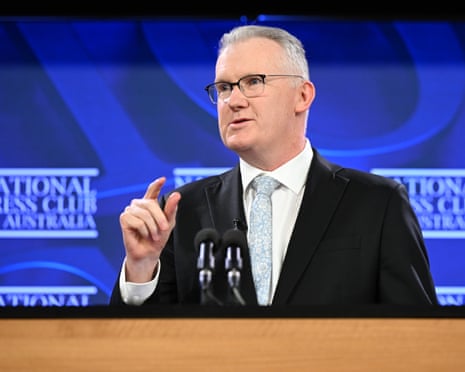
Australian Home Affairs Minister Tony Burke on Thursday dismissed allegations that the country is experiencing "mass migration," characterizing the current political debate as being fueled by "absurd" claims and "nombyism." Speaking before the National Press Club in Canberra, Burke unveiled the Labor government’s comprehensive migration strategy, which aims to tighten oversight on international student visas and crack down on individuals overstaying their legal welcome. The address coincided with new data from the Australian Bureau of Statistics (ABS) showing that net overseas migration has begun to ease, falling to 292,000 in the year ending March 2024.
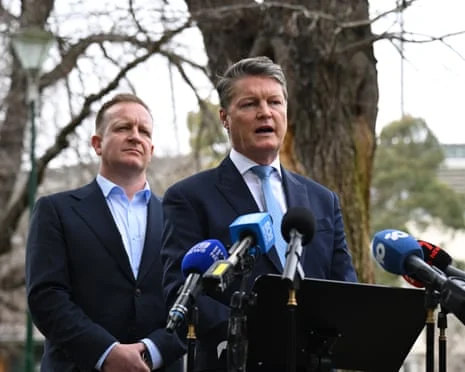
The release of the migration plan follows months of intense pressure from both the conservative Coalition and the right-wing One Nation party, led by Senator Pauline Hanson. While critics have accused the Albanese government of losing control of the nation’s borders following a post-pandemic surge in arrivals, Burke argued that the current population is actually significantly lower than what was projected prior to the COVID-19 pandemic. According to the government’s Intergenerational Report projections, Australia’s population by 2030–31 is expected to be 700,000 people smaller than initial estimates suggested before the global health crisis halted international travel.
Disputing the ‘Mass Migration’ Narrative
Burke’s speech was designed to provide a factual rebuttal to the rhetoric of "mass migration" that has dominated recent headlines. He argued that the term is often used loosely by political opponents who simultaneously demand lower numbers while protecting specific visa categories that benefit their own constituencies. Burke coined the term "nombyism"—a play on the "Not In My Backyard" (NIMBY) acronym—to describe those who advocate for lower net overseas migration (NOM) but refuse to support cuts to backpacker visas or the Pacific Australia Labour Mobility (PALM) scheme.

"It’s a concept where people say they want immigration numbers to go down, but they don’t want to mention this visa class and they immediately want to rule out all the ones that they would rely on," Burke told the press gallery. He noted that backpackers alone accounted for 48,000 of the net migration figure last year, highlighting the economic reliance many regional sectors have on temporary labor. By framing the debate around "nombyism," Burke sought to expose what the government views as the hypocrisy of the opposition’s migration platform.
Despite the recent decline in arrivals, the current NOM figure of 292,000 remains above the government’s long-term target of 225,000. It also sits higher than the pre-pandemic average of roughly 250,000. Burke acknowledged that while the numbers are trending downward from the historic peak of 556,000 recorded in September 2023, the government must move away from the "demand-driven" settings established during the Howard era to regain full control over the program.

Cracking Down on ‘Visa Hopping’ and Compliance
A central pillar of the new migration plan involves a significant crackdown on "visa hopping," a practice where temporary residents—primarily international students—apply for successive visas to extend their stay indefinitely. Burke outlined new restrictions that will prevent students from moving down the qualification scale. Under the new rules, a student who completes a university degree will no longer be permitted to enroll in a lower-level vocational course simply to maintain their residency.
"One of the classic areas of visa hopping is people finish a course, hop to the next course, and transfer down to a not-so-legitimate educational provider," Burke explained. He described these providers as "dodgy migration agents" who offer low-demand courses with minimal attendance requirements, effectively selling migration outcomes rather than educational ones. To further curb this trend, the government will restrict the ability of international students to bring family members to Australia, with exceptions carved out for PhD candidates and students from Pacific and ASEAN nations.
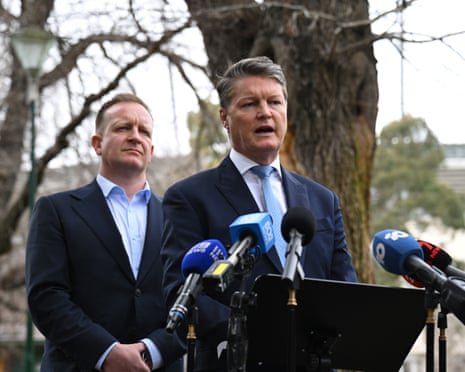
In terms of enforcement, the government will hire an additional 100 compliance officers tasked with identifying and removing individuals living in Australia without valid visas. Burke also announced that the government is exploring the repurposing of the former COVID-19 quarantine facility in Melbourne to serve as an administrative detention center for overstayers. He emphasized that this would not be an "ICE-style" crackdown similar to those seen in the United States, but rather a return to the pre-2015 system where detention centers focused on administrative removals rather than housing high-risk individuals coming from the prison system.
Denying the One Nation Influence
The timing and content of the migration plan have led to accusations from the opposition that Labor is "copying and pasting" the policies of Pauline Hanson’s One Nation. Nationals MP Barnaby Joyce recently described Burke’s address as the "greatest no-show since Amelia Earhart" after an earlier version of the speech was delayed, suggesting that the government was scrambling to align its policy with shifting public sentiment.

Burke vehemently denied these claims, stating that the reforms have been in development since last year and are based on economic modeling rather than political pressure. "It’s simply demonstrably wrong to suggest that somehow this is a recent bit of work done to deal with a political climate," Burke said. However, he admitted that the reforms are not as "comprehensive" as he would prefer, citing the difficulty of passing more stringent legislation through a divided Parliament where the Greens and the Coalition often block government initiatives for different reasons.
The minister also highlighted the economic risks of "drastic cuts" to the international student sector, which remains one of Australia’s largest export industries. He warned that tempering migration must be done with surgical precision to avoid damaging the urban economies that rely on student spending. To address labor shortages in critical sectors, the points system for permanent residency will be updated to give construction trades the same weight as university degrees, prioritizing the workers needed to solve the nation’s housing crisis.

Broader Political Context: Veteran Health and Child Support
While migration dominated the headlines, the Australian government also navigated several other high-stakes policy shifts on Thursday. In a significant "backflip," Veterans’ Affairs Minister Matt Keogh announced that the government would scrap a controversial plan to cap allied health services for veterans at $5,000. The proposal had faced fierce backlash from veterans’ groups and crossbenchers like Senator Jacqui Lambie, who argued that "bean counters" should not be able to put a price on the lives of those who served.
"If a veteran needs treatment because of their service, they should be able to get that treatment," Lambie said, celebrating the government’s retreat. The Coalition moved a no-confidence motion against Minister Keogh in the House of Representatives, though the government used its majority to shut down the attempt.
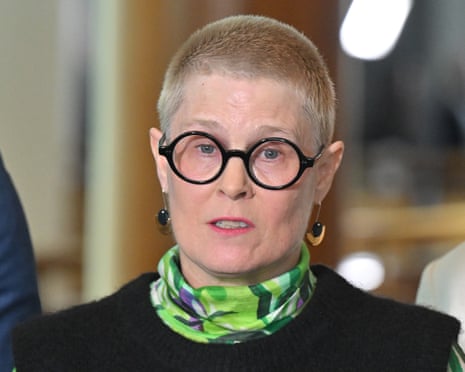
Simultaneously, the government announced a major overhaul of the child support system. Social Services Minister Tanya Plibersek and Finance Minister Katy Gallagher unveiled plans to introduce travel bans for individuals who owe more than $10,000 in unpaid child support. With more than $2 billion in unpaid debt currently outstanding, Plibersek characterized the evasion of payments as an "insidious form of domestic violence" used to harass former partners. The new laws will also scrap requirements that force parents to share sensitive contact information with one another, a move designed to protect victims of family violence.
Economic and Social Milestones
The flurry of activity in Canberra comes at a time when the Albanese government is seeking to highlight its achievements in social equity and technological investment. On Wednesday, Australia broke into the top 10 of the World Economic Forum’s Global Gender Gap Report for the first time, ranking eighth out of 148 countries. This marks a 35-place climb since the current government took office, a result attributed to a majority-female cabinet and expanded paid parental leave.

In the technology sector, the Queensland government is facing scrutiny over a $31 billion deal with AI giant Anthropic to build the country’s largest data center. While Premier David Crisafulli touted the investment as a win for the state, opposition leaders have pressed for modeling on how the massive energy requirements of the facility will affect household electricity prices. Independent MP Kate Chaney has also called for new federal regulations requiring AI companies to report "critical incidents" and share information on advanced frontier models to ensure public safety.
Future Outlook for Migration Policy
As Tony Burke concludes his high-profile push for Labor’s migration plan, the political battle lines for the next election are becoming clearer. The government is betting that a more controlled, compliance-heavy approach to migration will neutralize attacks from the right while maintaining the economic benefits of a skilled workforce. By focusing on "visa hopping" and the "nombyism" of its opponents, Labor hopes to frame itself as the party of responsible management rather than reactive politics.

The coming months will test whether the ease in net migration figures will translate into relief for Australia’s strained infrastructure and housing markets. With the government’s target of 225,000 still a distant goal, the implementation of these new visa conditions and compliance measures will be closely watched by economists and voters alike. For now, the administration remains firm in its stance that while the "work of managing migration" is ongoing, the era of unchecked post-pandemic growth has come to a definitive end.