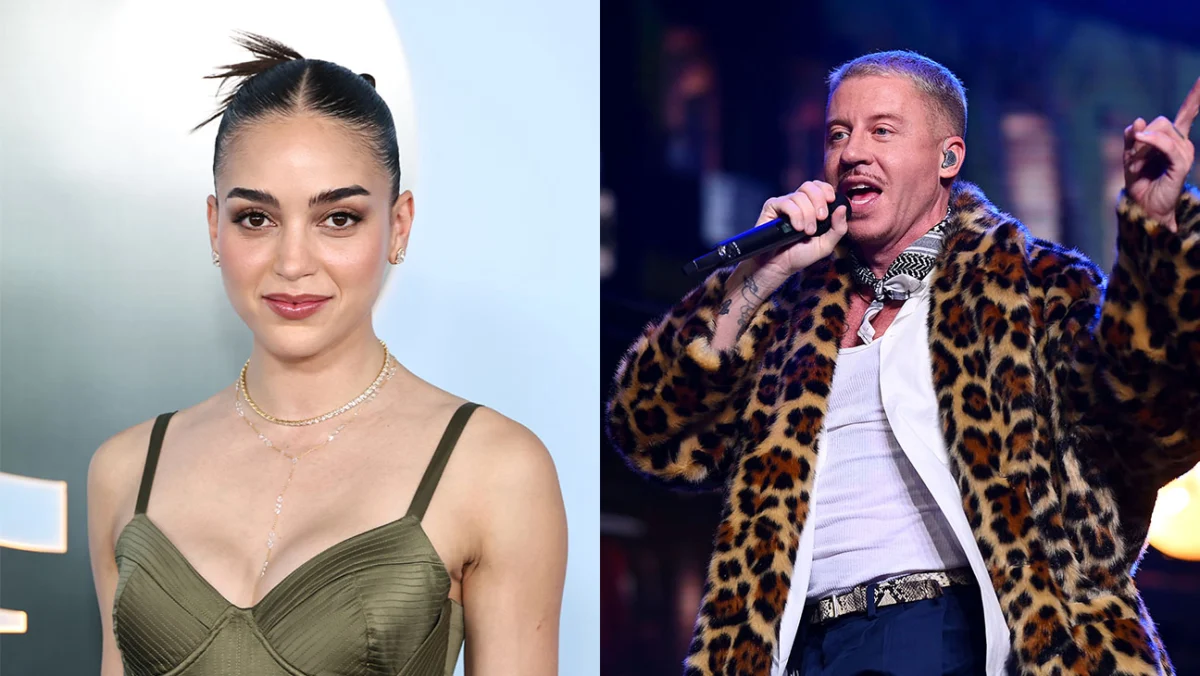
Actress Melissa Barrera, who faced professional repercussions for her pro-Palestine social media posts in 2023, recently expressed profound admiration for the public and industry solidarity shown to rapper Macklemore after his removal from Ed Sheeran’s tour for similar advocacy, noting a stark contrast with her own experience. Barrera, known for her roles in the Scream franchise, described the collective support for Macklemore as "beautiful" and emotionally resonant, highlighting what she perceives as a significant shift in the entertainment industry’s response to artists voicing political opinions.
Barrera’s Dismissal from the Scream Franchise
Barrera’s personal journey into the complexities of artistic expression and political stance began in late 2023. She was a prominent figure in the revitalized Scream horror franchise, having starred in two installments. However, her tenure with the iconic series came to an abrupt end when Spyglass Media Group, the production company behind Scream, announced her dismissal from the upcoming seventh film. The decision followed a series of social media posts made by Barrera amid the escalating conflict in Israel and Gaza.
The Controversial Social Media Posts
In her Instagram Stories, Barrera shared graphic and impassioned messages regarding the humanitarian crisis. One particularly impactful post stated, "Gaza is currently being treated like a concentration camp. Cornering everyone together, with nowhere to go, no electricity, no water… People have learned nothing from our histories. And just like our histories, people are still silently watching it all happen. THIS IS GENOCIDE & ETHNIC CLEANSING." These statements, made during a period of intense global scrutiny and divided public opinion, quickly drew widespread attention and criticism.
Spyglass Media Group’s Stance
Spyglass Media Group responded swiftly and decisively to Barrera’s posts. In an official statement, a spokesperson for the company asserted a "zero tolerance for antisemitism or the incitement of hate in any form, including false references to genocide, ethnic cleansing, Holocaust distortion or anything that flagrantly crosses the line into hate speech." This declaration underscored the delicate balance entertainment companies often navigate between supporting their talent and managing brand reputation, particularly concerning highly sensitive geopolitical issues. For Barrera, this immediate and unyielding corporate reaction resulted in her being effectively "canceled" from a major studio franchise, leading to a period she described as isolating.
Macklemore’s Tour Firing and Subsequent Solidarity
Years later, the entertainment landscape seems to be demonstrating a different kind of response, as evidenced by the situation involving Grammy-winning artist Macklemore. The rapper, known for hits like "Thrift Shop" and "Same Love," was serving as an opening act for global superstar Ed Sheeran’s extensive tour. His performances took a politically charged turn when he began to vocalize his support for Palestine from the stage.
Pro-Palestine Statements on Tour
Macklemore’s advocacy became particularly pronounced during Sheeran’s September 4 and September 5 shows at MetLife Stadium. During these high-profile performances, Macklemore openly expressed solidarity with Palestinians, leading crowds in chants of "Free Palestine." His remarks quickly garnered significant attention, prompting both applause from supporters and considerable backlash from detractors, who initiated petitions for his removal from the tour.
The Promoter’s Decision and Industry Pressure
Days after his public statements, Macklemore was indeed dropped from the tour. Ed Sheeran later addressed the situation, clarifying that "Macklemore coming off tour was the promoter’s decision, it was not mine." This statement suggested a complex web of influence beyond Sheeran himself. Macklemore, in his own subsequent statement, shed further light on the behind-the-scenes pressures, alleging that Robert Kraft, owner of Gillette Stadium — an upcoming venue on Sheeran’s tour — had "rallied some of the other stadium owners and collectively they gave him an ultimatum: if Macklemore stays on the tour, you will not be allowed to play in our venues." This accusation pointed to significant financial and logistical leverage wielded by venue owners and powerful industry figures, capable of dictating artist participation based on their political expressions.
Unprecedented Artist Solidarity
What followed Macklemore’s dismissal was a notable display of solidarity from other artists. Several opening acts for Ed Sheeran, including acclaimed musician Finneas, Lukas Graham, and Aaron Rowe, voluntarily withdrew from the tour. Their collective departure was a direct show of support for Macklemore, signaling an unprecedented level of unity among artists in response to perceived censorship or punitive action against political speech. This act of solidarity was precisely what Melissa Barrera observed with a mix of admiration and a touch of wistful reflection on her own experience.
Shifting Tides: Barrera’s Perspective on Industry Evolution
Barrera’s comments to the Associated Press underscored her belief that the industry’s willingness to stand up for artists’ political expression has evolved. "It was so beautiful to see Finneas and the band and all the opening acts pulling out in support of Macklemore. It made me emotional, you know," she stated. The emotional weight of the moment for Barrera was palpable, rooted in her own solitary battle. "I didn’t get that when it happened to me. I didn’t have any of that happen. It was too soon. People were too scared. But it’s good to see that almost three years later, at least things have changed.”
The Role of Celebrity Influence and Power
Barrera’s analysis delves into the dynamics of power within the entertainment industry. She pondered what might have transpired if Ed Sheeran, a global music icon, had chosen to defy the alleged ultimatum from venue owners. "I can’t help but wonder what would have happened if Ed Sheeran had been like, ‘No,’ and called the bluff. I mean, it’s possible that he still would have had his shows canceled, but I bet you that he could have rebooked those shows in other venues just as easily, and people would have rallied behind him." Her perspective suggests that artists with significant leverage, like Sheeran, possess a latent power to challenge corporate pressures, a power that could potentially shift the industry’s landscape.
Free Speech vs. Corporate Interests in Entertainment
The contrast between Barrera’s isolated firing and the collective support for Macklemore highlights a persistent tension in the entertainment world: the struggle between artists’ freedom of expression and the financial and reputational interests of the corporations that employ them. Barrera’s experience suggested a climate of fear where individuals were hesitant to risk their careers by supporting controversial stances. The Macklemore incident, however, points to a potential loosening of that fear, or perhaps a growing conviction among some artists that the cost of silence outweighs the risk of speaking out. This evolving dynamic could redefine the boundaries of acceptable political discourse for public figures.
Broader Ramifications for Artistic Expression
The incidents involving both Melissa Barrera and Macklemore serve as significant case studies in the ongoing debate over artistic freedom and political activism in the entertainment sphere. The entertainment industry, a global platform with immense cultural influence, often finds itself at the crossroads of social movements and corporate caution. The response to artists who take a stance on contentious issues, particularly the Israeli-Palestinian conflict, reveals deep-seated divisions and anxieties within the industry and broader society.
The Financial and Reputational Stakes
For production companies, record labels, and tour promoters, the stakes are undeniably high. Associating with controversial political statements can lead to boycotts, advertiser withdrawals, and reputational damage, all of which translate into significant financial losses. Barrera’s swift dismissal from Scream demonstrated the industry’s willingness to prioritize perceived neutrality or align with dominant political sentiments to protect commercial interests. Conversely, the acts of solidarity with Macklemore, while potentially incurring costs for the artists involved, also generated positive publicity and reinforced their commitment to principles beyond pure commerce.
Public Discourse and Activism’s Role
These incidents also reflect the heightened role of public discourse and social media activism in shaping careers and corporate decisions. In an age where news travels instantaneously and opinions are amplified across global networks, celebrities are under increasing pressure to articulate their views on pressing global issues. This pressure comes from both advocates who demand moral leadership and critics who decry the politicization of entertainment. The diverging outcomes for Barrera and Macklemore might indicate a growing public tolerance, or even expectation, for artists to engage with social justice issues, especially as younger, more socially conscious audiences gain influence.
Looking Ahead: The Future of Advocacy in Entertainment
Melissa Barrera remains hopeful that the newfound solidarity observed in Macklemore’s case will inspire tangible change within the industry. "When someone is attacked, and there are people behind being like, ‘We’re not gonna allow this,’ and the more that happens, the less that the people in power are going to try to censor it, because eventually it’s not gonna work,” she told the AP. Her vision is one where collective action and moral courage from within the industry can gradually erode the power of censorship and fear-driven decision-making.
Barrera emphasized the responsibility of those in influential positions. "I wish that the people that have power understood the power that they have. I think that the problem is that there’s a lot of people that actually have a lot of power; they think that they don’t, and they’re operating out of fear, and it’s just a shame because, you know, we just saw what happened — the support that rallied behind Macklemore — and I think that’s a big step. I think that what we’re seeing, what we’re witnessing, is going to inspire real change, and I’m very hopeful about that.” Her words highlight a call for greater self-awareness among powerful figures regarding their potential to influence not just entertainment, but broader societal norms around free expression.
As the entertainment industry continues to grapple with the intersection of art, commerce, and political conviction, the differing experiences of artists like Melissa Barrera and Macklemore offer critical insights. Ed Sheeran, whose tour became the focal point of the Macklemore controversy, is scheduled to play his first show since the events unfolded on Saturday night in Philadelphia, signaling a cautious return to normalcy for some, while the broader implications of these standoffs continue to reverberate across the industry.