The targeted killing of seven international and Palestinian aid workers by the Israel Defense Forces on the night of April 1, 2024, remains one of the most scrutinized incidents of the Gaza conflict. Traveling in a deconflicted zone after delivering more than 100 tons of food aid, the World Central Kitchen (WCK) convoy was struck three times by drone-fired missiles in a span of four minutes. The deaths sparked international outrage, forced a temporary suspension of maritime aid corridors, and raised fundamental questions about the Israeli military’s rules of engagement and the safety of humanitarian personnel in active war zones.
The Sea Corridor and the Road to Rafah
By the spring of 2024, the humanitarian situation in Gaza had reached a breaking point. With land crossings severely restricted, World Central Kitchen, founded by celebrity chef José Andrés, pioneered a maritime corridor to deliver food from Cyprus. On the evening of the attack, WCK staff were overseeing the unloading of a second major shipment at a makeshift jetty constructed from sand and rubble on the Gaza coast. The cargo included 200 tonnes of rice, flour, and proteins, alongside a special Ramadan gift of dates from the United Arab Emirates.
The logistics of the delivery had been coordinated meticulously with the Israel Defense Forces (IDF) over several days. An Israeli liaison officer was present on the jetty to observe the unloading process, which concluded around 8:30 p.m. Despite the extensive planning, the convoy faced a significant delay in receiving final security clearance to depart. By the time the green light was given by local commanders, the sun had set, forcing the team to navigate the dangerous "road to Rafah" in total darkness.
The convoy consisted of eight hired trucks carrying the food and three WCK escort vehicles. Two of the escort vehicles were "up-armored," designed to withstand small arms fire, while the third was a standard "soft-skinned" vehicle. As the group began its six-mile journey south toward a welcome center, they were being monitored by Israeli drones. However, investigations later revealed that the specific details of the coordinated mission had not been communicated to the drone operators or the brigade-level commanders in charge of that sector.
Breakdown in IDF Command and Control
The failure of the IDF’s internal communication systems is a central theme in the aftermath of the tragedy. According to a special report commissioned by the Australian government—conducted to investigate the death of Australian national Lalzawmi "Zomi" Frankcom—higher-level Southern Command officers failed to pass the convoy’s itinerary down to the Nahal Brigade and the Unmanned Aerial Vehicle (UAV) operators. This information gap created a vacuum where suspicion flourished.
As the convoy reached the WCK welcome center, it was met by a group of local Palestinian men hired as security guards. In the context of Gaza’s desperate food shortages, aid convoys were frequently mobbed by starving civilians or targeted by organized criminal gangs. While WCK policy officially prohibited the use of armed escorts, the local team on the ground that night reportedly accepted the presence of several guards, some of whom were armed.
Drone operators observed the interaction and, lacking the context that this was a pre-approved aid mission, concluded they were witnessing a hijacking. Israeli military accounts suggest a guard fired a shot into the air from the top of a truck cabin, an action that Nahal Brigade officers interpreted as a definitive sign of Hamas involvement. This "false assumption," as the Australian report characterized it, set the stage for the lethal strikes that followed.

The Role of Armed Guards and Alleged Hamas Hijacking
The IDF’s official version of events maintains that the presence of armed men "incriminated" the convoy. Field commanders, operating under the belief that Hamas was seizing the food delivery, monitored the trucks as they moved from the welcome center to a WCK warehouse in Deir al-Balah. Despite the fact that the trucks arrived at the correct destination and unloaded the aid as planned—behavior inconsistent with a terrorist hijacking—the suspicion of the officers remained unchanged.
The Israeli military prosecutor later justified the decision not to pursue criminal proceedings by stating that personnel attempted to contact WCK headquarters but were unsuccessful. However, WCK sources and independent investigators dispute this, noting that contact was indeed established with WCK’s global security office. During these calls, the WCK confirmed they had not lost control of the convoy. One worker on the ground reportedly told headquarters that the guards only had "fake guns," though the basis for this specific claim remains unclear.
Regardless of the communications, the Nahal Brigade’s chief of staff, reserve Col. Nochi Mendel, viewed the "mingling" of aid workers and armed guards as sufficient evidence of enemy activity. In his assessment, the aid workers had become "guilty by association." This perspective highlights a broader trend within the conflict where the threshold for identifying a target is often lowered based on proximity to suspected combatants.
Targeted Strikes on the Road to Rafah
The most harrowing sequence of the night occurred after the food trucks were safely parked inside the Deir al-Balah warehouse. At approximately 11:00 p.m., the three WCK escort vehicles departed the warehouse to head south toward their accommodation in Rafah. Although the armed guards who had accompanied the trucks drove away in a different direction, drone operators focused their attention on the three white cars carrying the aid workers.
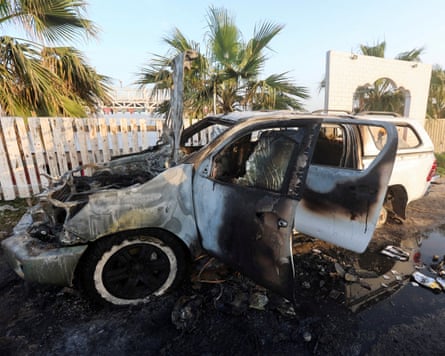
The first missile struck the lead vehicle on the coastal road. Two survivors from that car managed to scramble out and seek refuge in the second up-armored vehicle. Approximately two minutes later, a second missile hit the second vehicle. Again, survivors attempted to flee, moving their wounded colleagues into the third, unarmored car. Finally, a third missile struck the last vehicle, killing everyone remaining.
The entire operation lasted only four minutes, between 11:09 p.m. and 11:13 p.m. The precision of the strikes ensured that there was no escape for the team. The victims included three British security consultants—John Chapman, James Kirby, and James Henderson—as well as Polish national Damian Soból, U.S.-Canadian citizen Jacob Flickinger, Australian Lalzawmi Frankcom, and their Palestinian driver and translator, Saifeddin Issam Ayad Abutaha.
Identifying the Victims of the WCK Convoy
The loss of the WCK team resonated globally due to the diverse nationalities of the victims and the high profile of the organization. Zomi Frankcom, 43, was a veteran humanitarian known for her work in various global hotspots. Damian Soból, 35, had been a key figure in WCK’s efforts to provide meals to refugees in Poland following the invasion of Ukraine. The three British veterans were providing professional security services to ensure the safety of the humanitarian mission.
The youngest victim, Saifeddin Issam Ayad Abutaha, was just 25 years old. As a local Palestinian, he served as a vital bridge between the international staff and the community they were trying to feed. His death, along with his colleagues, underscored the extreme risks faced by those attempting to provide basic necessities to a population on the brink of famine. World Central Kitchen described the team as "heroes" who were targeted despite following every protocol required by the Israeli military.
Conflicting Reports and the Refusal to Prosecute
In the months following the incident, a significant divide emerged between the IDF’s internal findings and independent assessments. The Israeli military prosecutor’s summary, released in late 2024, acknowledged "serious errors" and a "grave failure" in the chain of command but concluded that the officers involved did not act with criminal intent. The report emphasized that the officers believed they were attacking Hamas operatives and cited the convoy’s southern turn as a "deviation" from the planned route.
However, the Australian investigation found that the route change—decided by the WCK team due to the late hour—was not known to the IDF at the time of the strikes and therefore could not have been a factor in the decision to fire. Furthermore, the Australian report highlighted that drone operators had actually seen the suspected gunmen drive away from the WCK vehicles before the strikes began. This crucial detail was omitted from the Israeli military prosecutor’s public summary.
The dismissal of criminal charges has led to renewed calls for an independent, international investigation. World Central Kitchen has remained steadfast in its demand for a full release of the drone footage and audio recordings from the night of the attack. The organization argues that the IDF’s shifting explanations suggest a lack of transparency and a refusal to hold high-ranking officers accountable for systemic failures.
The Policy of Incrimination and Future Risks
The events on the road to Rafah have brought the IDF’s policy of "incrimination" into sharp focus. This practice allows field commanders significant discretion in identifying targets based on behavioral patterns and proximity to suspected militants. As Col. Mendel stated in his own defense, his priority was preventing Hamas from controlling the distribution of aid, a policy he believed he was executing correctly even if it resulted in the deaths of non-combatants.
This approach has created what many humanitarian organizations call a "mortal threat" to aid workers. If being in the vicinity of an armed individual—even one hired for protection against gangs—is enough to justify a precision strike, the "deconfliction" process becomes essentially meaningless. The WCK tragedy forced many NGOs to temporarily suspend operations in Gaza, further exacerbating the hunger crisis and highlighting the impossibility of operating safely without ironclad guarantees from the warring parties.
The death of the seven World Central Kitchen workers remains a symbol of the immense human cost of the conflict and the fragile nature of international humanitarian law in modern warfare. While the IDF has implemented some changes to its coordination procedures since the April 1st strikes, the core issues of targeting logic and accountability continue to be a source of profound international tension. The road to Rafah, once intended to be a lifeline for the hungry, instead became the site of a tragedy that redefined the limits of humanitarian intervention in the 21st century.