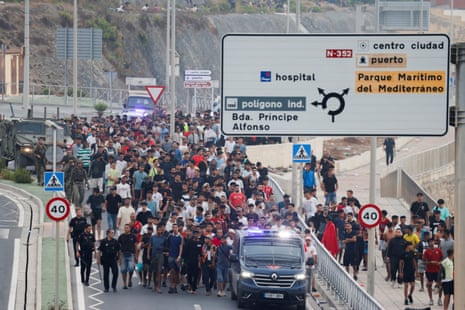
The Spanish government confirmed Saturday that the fatality count in the ongoing migration crisis at the Ceuta enclave has reached 67, marking one of the deadliest weeks in the territory’s history. Spanish officials also unveiled a new security strategy involving a containment barrier designed to extend from the coastal breakwater into the Mediterranean Sea to prevent further unauthorized entries. This announcement follows a week of unprecedented pressure on the border where tens of thousands of migrants attempted to cross from Morocco into Spanish territory.
The humanitarian situation in Ceuta has reached a breaking point as local authorities and non-governmental organizations struggle to provide aid to the influx of people. The Spanish foreign minister, José Albares, stated that while the situation remains tense, the majority of those who entered the enclave have been processed and returned to Morocco. Albares emphasized that the integrity of the Schengen area is being strictly maintained through rigorous identification checks at all transit points between the North African enclaves and mainland Spain.
Escalating Fatalities and New Security Measures in Ceuta
The rise in the death toll to 67 has sparked a wave of international concern regarding the safety of migration routes and the methods used by human trafficking networks. Spanish Prime Minister Pedro Sánchez has pointed the finger at organized crime syndicates, accusing them of orchestrating the surge by exploiting the desperation of vulnerable individuals. According to reports, these gangs have been misleading migrants about the ease of the crossing, leading many to attempt dangerous swims around the breakwaters that separate Morocco from Ceuta.
To combat this, the Spanish Ministry of the Interior has fast-tracked plans for a new physical containment barrier. This structure is intended to close the gap at the maritime border, where the current land fences meet the sea. Engineers are looking at a design that would make it significantly more difficult for individuals to swim around the existing fortifications, a method that has become the primary route for those seeking to enter the European Union via the enclave.
The crisis has not only resulted in a high loss of life but has also strained the diplomatic relationship between Madrid and Rabat. While Morocco has recently increased its patrols, the initial ease with which thousands were able to cross suggested a temporary lapse in border enforcement. Spanish officials have been in constant communication with their Moroccan counterparts to ensure a more coordinated response to prevent further tragedies at sea.

Diplomatic Strains and the Mechanics of the Migration Surge
Ceuta and its sister enclave Melilla represent the only land borders between the European Union and Africa. This unique geographic position makes them perennial flashpoints for migration. The recent surge is part of a broader pattern of movement driven by economic instability, regional conflicts, and the search for asylum. However, the scale of this week’s events has surpassed previous records, forcing the Spanish government to deploy military units to assist the Guardia Civil and national police in patrolling the perimeter.
Foreign Minister Albares has been vocal about the necessity of maintaining border security to protect the Schengen agreement. "It is not possible to travel from Ceuta or Melilla to mainland Spain without presenting identification at a police checkpoint," Albares noted in a public statement. He reiterated that the security of the European Union’s external borders is a collective responsibility, requiring both technological solutions and robust diplomatic cooperation with neighboring states.
The human cost of the Ceuta border crisis continues to mount as search and rescue teams recover more bodies from the waters surrounding the enclave. Most of the deceased are believed to have drowned while attempting to navigate the rocky coastline in heavy surf. Identification of the victims is ongoing, with many families in sub-Saharan Africa and Morocco waiting for news of missing loved ones who are feared to be among the 67 confirmed dead.
Strengthening the Schengen Perimeter and Border Controls
The ripples of the Ceuta crisis are being felt across the continent, with France and Italy both announcing a tightening of their own border controls. Approximately 60,000 people are estimated to have attempted the crossing into Spanish territory over the last several days, prompting fears of a secondary migration wave toward the heart of Europe. The French and Italian governments have expressed solidarity with Spain while simultaneously deploying additional personnel to their own frontiers to monitor for unauthorized transit.
The Spanish government’s decision to build a sea-based barrier is seen as a move to provide a permanent deterrent. Critics, however, argue that such measures only serve to push migrants toward even more dangerous routes. Human rights organizations have called for a more comprehensive approach that includes legal migration pathways and increased investment in the countries of origin to address the root causes of the exodus.
Despite the controversy, the Sánchez administration maintains that border security is paramount. The government is currently coordinating with the European Commission to secure funding for the new barrier and for additional surveillance technology, including high-resolution thermal cameras and drone patrols. These measures are intended to provide an early warning system for the Spanish Coast Guard, allowing them to intervene before migrants reach deep or dangerous waters.
Russian Missile Barrage Claims Nine Lives in Kyiv
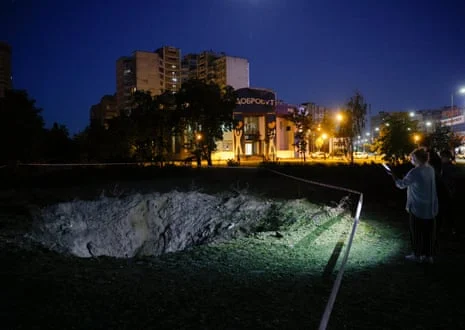
As Spain grapples with its southern border, a separate crisis is unfolding in Eastern Europe. At least nine people were killed in the Ukrainian capital of Kyiv following a massive overnight strike by Russian forces. The attack, which involved a combination of 35 missiles and 185 attack drones, left 22 others injured and caused significant damage to civilian infrastructure and residential areas.
The Russian Defense Ministry characterized the operation as a targeted strike against the "Ukrainian military-industrial complex" and logistics centers. However, Ukrainian Foreign Minister Andrii Sybiha countered this narrative, stating that the barrage was a clear act of terror against the civilian population. Rescue workers in Kyiv spent the morning digging through the rubble of apartment buildings, searching for survivors as the smoke from intercepted drones hung over the city.
President Volodymyr Zelenskyy highlighted the severity of the situation, noting that the vast majority of the ballistic missiles fired in the attack were not intercepted. Out of 27 ballistic missiles, only one was shot down. Zelenskyy attributed this failure to a critical shortage of interceptor missiles for the U.S.-supplied Patriot air defense systems, which have been the backbone of Kyiv’s protection against high-altitude threats.
Depleted Air Defenses and the Global Supply Chain Crisis
The inability of Ukraine to defend its capital against the latest Russian onslaught has led to urgent appeals for Western allies to replenish ammunition stocks. Zelenskyy stated that the shortage of Patriot interceptors is directly encouraging Moscow to increase the frequency and intensity of its air attacks. "Every additional missile saves lives," Zelenskyy said, emphasizing that delays in military aid are resulting in preventable civilian casualties.
The Ukrainian leadership has been in high-level talks with U.S. officials, including Vice President JD Vance. These discussions have focused on the immediate delivery of air defense assets and the long-term strategy for ending the conflict. Zelenskyy described recent meetings with U.S. political leaders as "positive and productive," yet the immediate reality on the ground remains one of vulnerability as Russian forces exploit gaps in the defensive umbrella.
The conflict in Ukraine continues to impact broader European security and economic stability. The reliance on sophisticated Western technology has created a bottleneck in the global supply chain for munitions, as manufacturers struggle to keep up with the rate of consumption on the front lines. This hardware shortage is a primary concern for NATO commanders, who are monitoring the depletion of European stockpiles with increasing apprehension.
Environmental Emergency: Wildfires Ravage Southern Europe
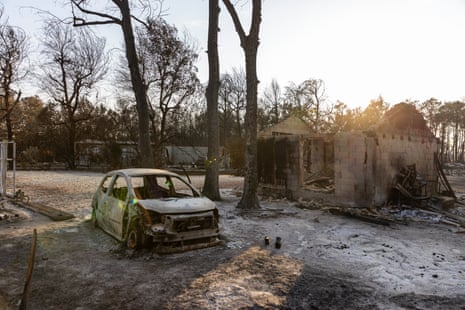
In addition to the challenges of migration and warfare, Europe is currently battling an environmental catastrophe. Extreme heat and prolonged drought have triggered devastating wildfires across Greece, France, and Spain. In Greece, more than 300 firefighters are currently engaged in a desperate struggle to contain a fast-moving blaze near the resort town of Porto Germeno. Strong winds have pushed the fire toward the shoreline, where several homes have already been consumed by the flames.
In southwestern France, authorities are describing the current situation as a "megafire." In the village of Le Porge, near Bordeaux, approximately 20% of the homes have been lost to an unpredictable inferno that has scorched thousands of hectares of forest. Firefighters in the region have reported that the intensity of the heat is making traditional containment methods nearly impossible, forcing them to retreat and focus on protecting human life over property.
The climate crisis is being cited as the primary driver behind these increasingly frequent and severe weather events. The combination of record-breaking temperatures and tinder-dry vegetation has created a "perfect storm" for fire outbreaks. Governments across the Mediterranean are now being forced to reallocate emergency funds to bolster their firefighting capabilities, including the purchase of additional water-dropping aircraft and the training of specialized volunteer units.
Regional Stability and the Path Forward
The convergence of the Ceuta border crisis, the escalation of the war in Ukraine, and the environmental devastation of the wildfires has placed the European Union under immense pressure. Each of these issues requires a coordinated international response, yet the political landscape remains fragmented. In Spain, the focus remains on stabilizing the border with Morocco and preventing further loss of life among the migrant population.
The planned containment barrier in Ceuta is expected to be completed within the next year, provided that environmental and technical assessments proceed as scheduled. In the meantime, the Spanish government will continue to rely on a heavy military and police presence to maintain order. The death toll of 67 serves as a grim reminder of the high stakes involved in the management of international borders and the desperate lengths to which people will go in search of a better life.
As Europe moves into the final months of the year, the interconnectedness of these crises becomes more apparent. The security of the borders, the defense of sovereign nations, and the protection of the environment are no longer isolated concerns but are part of a complex web of challenges that will define the continent’s policy agenda for the foreseeable future. Direct action and sustained diplomatic engagement will be the only way to navigate these turbulent times.