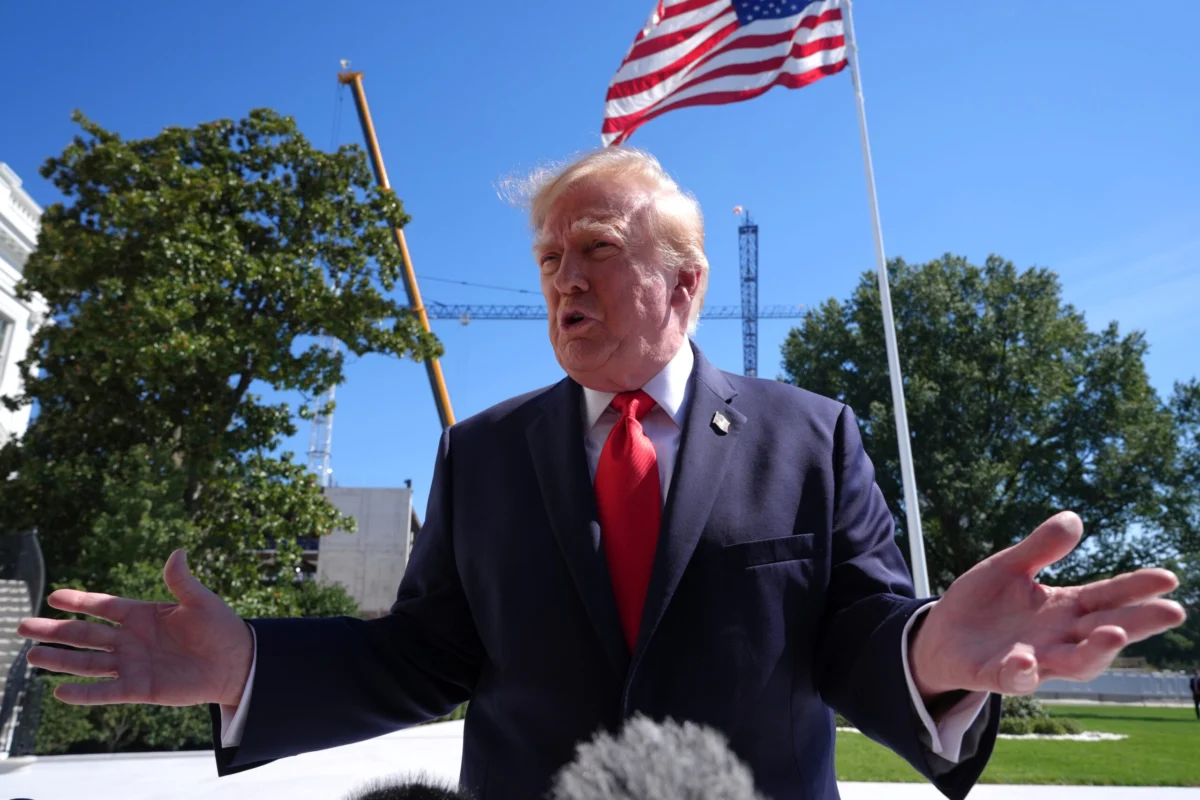
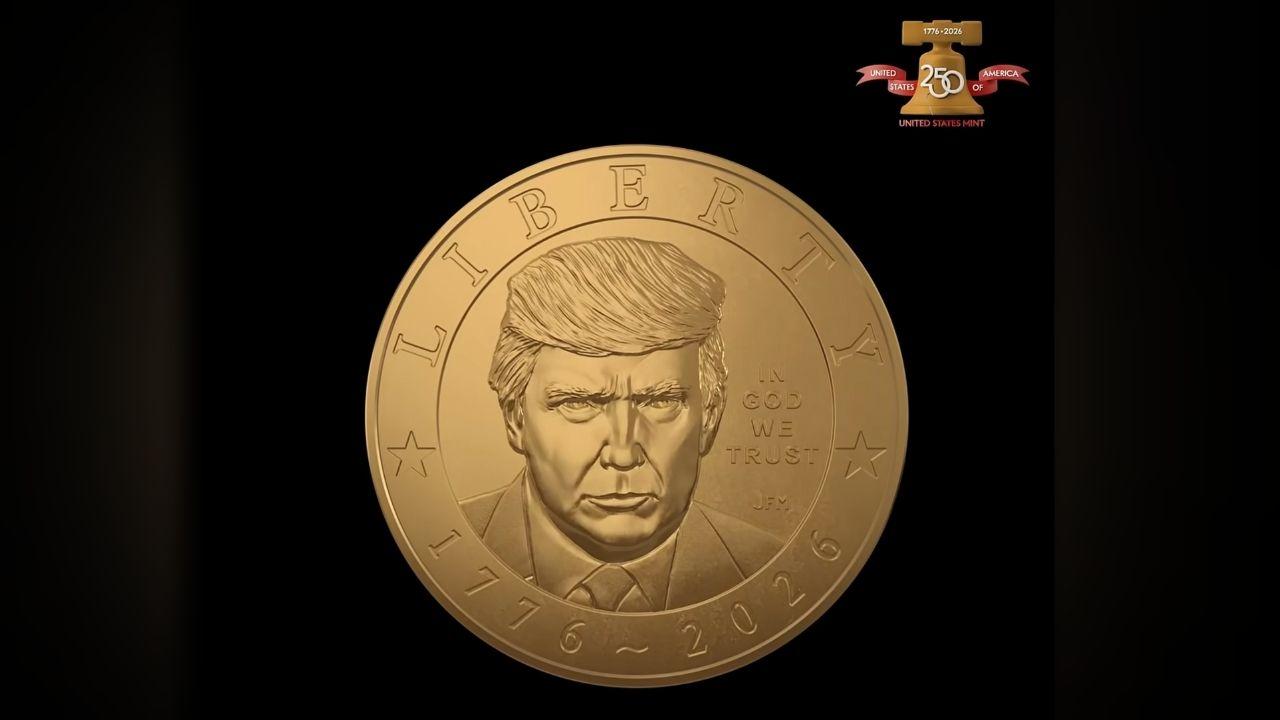
A newly released commemorative $1 coin featuring the likeness of former President Donald Trump has ignited a firestorm of criticism and widespread mockery, with particular attention drawn to a controversial date inscription. Intended to honor America’s upcoming 250th birthday, the coin’s design has been interpreted by many as inadvertently suggesting an "expiration date" for liberty in the United States. The U.S. Mint began selling rolls and bags of the special coins this week, but instead of universal celebration, the rollout was met with immediate ridicule over the placement of "LIBERTY" above Trump’s portrait and the date range "1776 – 2026" printed directly below.
The Controversial Commemorative Coin

The coin’s release is part of a broader federal initiative to commemorate the United States’ Semiquincentennial, marking 250 years since the Declaration of Independence. The U.S. Mint, responsible for producing coinage for the nation, unveiled the design featuring the 45th president, an honor typically reserved for deceased leaders. The front, or obverse, of the coin prominently displays Donald Trump’s profile. Above his image, the word "LIBERTY" is inscribed, a foundational principle of the American republic. However, it is the dates "1776 – 2026" positioned beneath his portrait that have become the focal point of intense public and political debate, overshadowing the coin’s intended celebratory purpose.
Design Flaw Ignites Online Firestorm
The specific arrangement of the design elements on the Donald Trump $1 coin quickly became fodder for critics across social media and news outlets. The juxtaposition of "LIBERTY" with a date range that concludes in the very year of the nation’s 250th anniversary, 2026, sparked a wave of sarcastic commentary. Many observers interpreted the "1776 – 2026" inscription not as a span of national history, but as a lifespan for the concept of liberty itself, implying a symbolic end to the nation’s core value. This reading resonated particularly strongly among those who have been critical of Trump’s presidency and its perceived impact on democratic institutions.

Catherine Rampell, an economics commentator for The Bulwark, succinctly articulated this sentiment, noting on X (formerly Twitter): "I like that this design appears to show the birth date of liberty as 1776, and its death as 2026." Her observation quickly went viral, encapsulating the public’s reaction and amplifying the narrative of a design gaffe with profound symbolic implications. The swift and widespread adoption of this interpretation highlighted a broader cultural anxiety regarding the state of American democracy and the perceived challenges to its founding principles. The U.S. Mint has yet to issue a comprehensive official statement addressing this specific critique of the date placement, leaving the initial interpretation largely unchallenged in the public discourse.
Beyond the Gaffe: The High Cost and Composition
Beyond the controversy surrounding its symbolic dates, the Donald Trump $1 coin also drew scrutiny for its pricing and composition. Despite being nominally a one-dollar coin, these commemorative pieces are not being sold at face value, leading to further public questioning and online mockery. Collectors interested in acquiring these coins face a significant markup, with a 25-coin roll priced at $61 and a larger 100-coin bag retailing for $154.50. This pricing strategy positions the coins as premium collector’s items rather than accessible mementos, drawing comparisons to other merchandise associated with the former president that often carries elevated price tags.

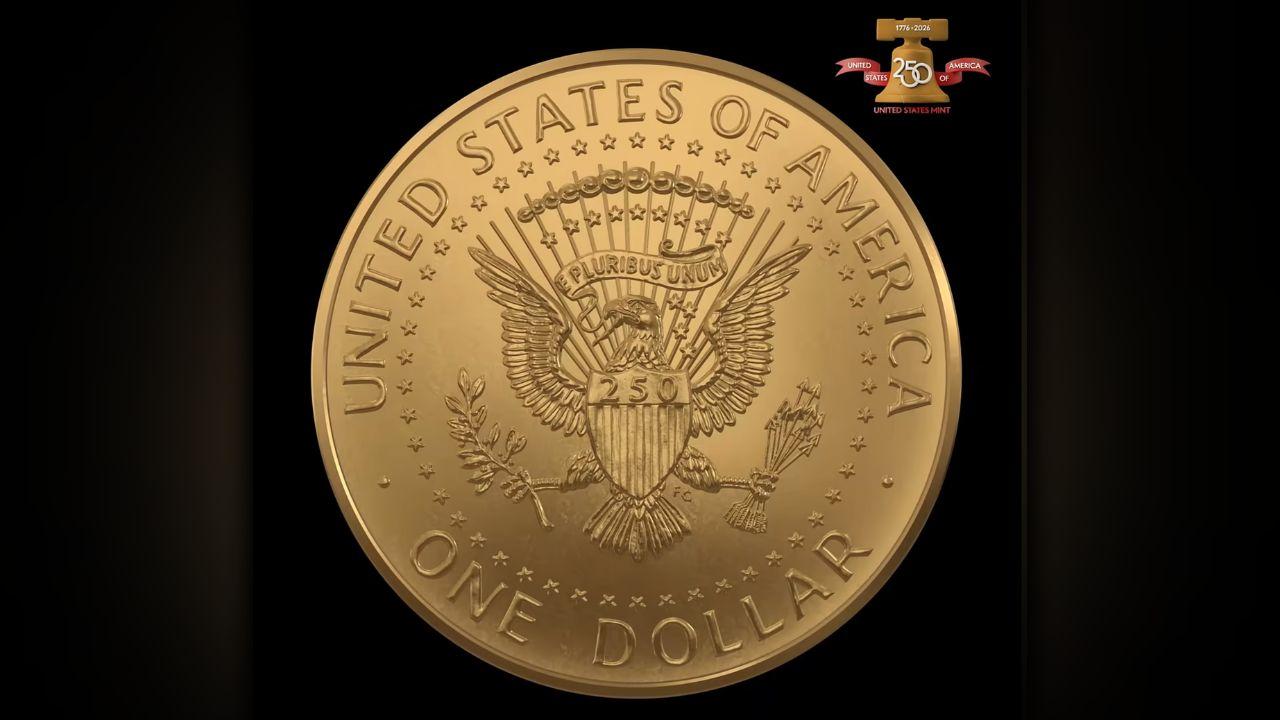
The material composition of the coin further added to the discussion. While promoted with an appearance often described as "gold-colored," the coins are actually minted from a base metal alloy consisting of zinc, manganese, nickel, and copper. This composition is standard for dollar coins in general circulation, but the perceived discrepancy between its "gold" aesthetic and its actual metal value became another point of contention. Critics highlighted that, unlike true gold or silver commemorative coins, these pieces derive their value almost entirely from their scarcity and collector appeal, rather than any intrinsic worth of precious metals. The reverse side of the coin features an eagle clutching an olive branch and arrows, along with the national motto "E Pluribus Unum" (Out of many, one), and a shield emblazoned with "250," referring to the anniversary. These traditional American symbols stand in stark contrast to the controversy generated by the obverse design.
A President on Currency: Reviving an Age-Old Debate
The release of the Donald Trump $1 coin reignited a long-standing debate in American numismatics and political tradition: the appropriateness of featuring a living president on U.S. currency. Federal law typically stipulates that portraits on U.S. currency, whether paper or coin, should be reserved for deceased individuals. This tradition is deeply rooted in American democratic principles, specifically designed to distance the nation from the monarchical practices of European nations, where reigning sovereigns frequently appear on coinage. The rule aims to prevent the perception of a cult of personality or an authoritarian leader, ensuring that national symbols remain distinct from contemporary political figures.
However, officials within the Trump administration justified the commemorative coin’s design by referencing a 2020 law. This legislation specifically authorized the issuance of $1 coins to mark the country’s 250th anniversary. Proponents of the design argued that this special authorization superseded the general prohibition on living presidential portraits. They also pointed to a historical precedent: President Calvin Coolidge appeared on a commemorative half-dollar coin in 1926, celebrating America’s 150th anniversary. While Coolidge was a sitting president at the time, his appearance was on a limited-edition commemorative coin, not a widely circulating legal tender designed for everyday use, which is a subtle but significant distinction in numismatic circles.
Democratic lawmakers, however, vehemently opposed the move, viewing it as a deliberate subversion of established norms and an attempt to elevate a political figure beyond appropriate bounds. Senator Jeff Merkley, among others, publicly decried the effort as "un-American" and characterized it as another in a series of "authoritarian actions" by the Trump administration. These lawmakers had previously introduced legislation aimed at blocking the coin’s production, arguing that it violated the spirit, if not the letter, of federal law and contributed to a dangerous precedent of personalizing national symbols. The controversy underscored the deep partisan divisions surrounding the former president, extending even to the design of national currency.
The Broader Landscape of Trump Branding
The Donald Trump $1 coin incident is not an isolated event but rather fits into a broader, well-documented pattern of the former president’s efforts to embed his name and image into public spaces and national consciousness. Throughout his political career and even after leaving office, Trump has demonstrated a consistent strategy of personal branding that extends beyond traditional political merchandise to encompass more formal and public symbols. This approach has often blurred the lines between personal promotion and national representation, generating both fervent support and strong condemnation.
Examples of this extensive branding push are numerous and varied. His face has appeared on banners displayed outside federal buildings, a move criticized by those who argue such displays should remain politically neutral. Republican lawmakers have also floated various proposals to further entrench Trump’s image in national iconography, including suggestions to feature him on a hypothetical $250 bill, replace Benjamin Franklin on the $100 bill, or even add his likeness to the iconic Mount Rushmore monument. The idea of adding a living or recently living president to Mount Rushmore, alongside foundational figures like Washington, Jefferson, Roosevelt, and Lincoln, has been particularly controversial, given the monument’s historical significance and the careful selection process for its existing figures.
More recently, Palm Beach International Airport in Florida officially became known as President Donald J. Trump International Airport, a renaming that sparked local and national debate. Even in seemingly lighter moments, Trump has expressed a desire for personal commemoration. During a call with astronauts, after praising the Artemis II crew for naming a moon crater after the late wife of Commander Reid Wiseman, Trump reportedly quipped to the crowd, "I wish they’d name something like that after me." These instances collectively illustrate a persistent drive to weave his personal identity into the fabric of American public life and history, often challenging established protocols and generating significant public discussion in the process.
Enduring Symbolism and Future Implications
The controversy surrounding the Donald Trump $1 coin encapsulates the polarized political climate of contemporary America. What was intended as a celebratory tribute to the nation’s 250th anniversary has instead become a lightning rod for criticism, fueled by an unfortunate design choice and the deeply divisive figure it portrays. The "1776 – 2026" date inscription, interpreted by many as a symbolic "death of liberty," has overshadowed the coin’s official purpose, turning a numismatic item into a potent political symbol.
This incident further highlights the ongoing tension between presidential legacy and democratic norms, particularly concerning the use of national symbols for political branding. The debate over its high price, base metal composition, and the legality of a living president on currency underscores broader questions about the commercialization of national heritage and the integrity of public institutions. As America approaches its semiquincentennial, the Donald Trump $1 coin will likely remain a curious and contentious artifact, serving not only as a commemorative piece but also as a tangible representation of a deeply contested era in American history. Whether it will ultimately be remembered as a significant collector’s item or a symbol of political overreach remains to be seen, but its impact on public discourse is undeniable.