Prosecutors in the Australian state of Victoria argued before the Court of Appeal on Thursday that the 33-year non-parole period handed to Erin Patterson for the 2023 "mushroom murders" is "manifestly inadequate" given the gravity of her crimes. The Director of Public Prosecutions (DPP) is seeking to upgrade her sentence to life in prison without the possibility of release, asserting that the trial judge erred in his assessment of her future prison conditions. Patterson, who appeared via video link from a maximum-security facility, is simultaneously appealing her convictions for three counts of murder and five counts of attempted murder, citing what her legal team describes as a "catastrophic" failure of the judicial process.
The high-profile case, which has drawn international attention due to its bizarre and lethal circumstances, centers on a July 2023 lunch at Patterson’s home in Leongatha, rural Victoria. During the meal, Patterson served a beef wellington containing deadly death cap mushrooms to her estranged husband’s parents, Don and Gail Patterson, and his aunt and uncle, Heather and Ian Wilkinson. Don, Gail, and Heather died within days of the meal, while Ian Wilkinson survived after spending weeks in critical condition. Patterson has maintained her innocence throughout the proceedings, claiming she unintentionally used dried mushrooms purchased from an Asian grocer.
Prosecution Challenges Leniancy in Sentencing
Brendan Kissane KC, representing the Victorian DPP, told the three-judge appeal panel that the original sentence did not reflect the "seriousness of the offending." Last September, Justice Christopher Beale sentenced Patterson to life in prison but granted her a chance at parole after 33 years. Kissane argued that fixing a non-parole period was "inappropriate" because it effectively sets a ceiling on the punishment for a triple murderer. He suggested that the cold-blooded nature of the poisonings warranted the state’s harshest possible penalty: permanent incarceration.

A significant portion of the prosecution’s argument focused on the trial judge’s findings regarding Patterson’s life behind bars. Justice Beale had previously concluded there was a "substantial risk" that Patterson would be kept in solitary confinement for years to come due to her high profile and the nature of her crimes. The prosecution contends this finding was not supported by the evidence provided by Corrections Victoria. Kissane argued that while Patterson’s environment is "restrictive," it does not meet the international threshold for solitary confinement, and therefore should not have been used to mitigate her sentence.
The Debate Over Prison Conditions and the Mandela Rules
The defense and prosecution offered starkly different portrayals of Patterson’s life at the Dame Phyllis Frost Centre, Victoria’s maximum-security women’s prison. Patterson’s barrister, Richard Edney, argued that his client’s current circumstances amount to solitary confinement under the "Mandela Rules"—a United Nations standard that defines solitary confinement as 22 hours or more a day without meaningful human contact. Edney told the court that while Patterson’s status is reviewed monthly, her situation has remained unchanged for a considerable period, leaving her isolated and psychologically vulnerable.
In response, the prosecution called upon evidence from Jenny Hosking, an official with Corrections Victoria. Hosking testified that Patterson is currently housed in the Gordon unit, a protected area of the prison. According to the prosecution, Patterson has access to a library, a leisure center, a computer in her cell, and materials for crocheting. Kissane acknowledged that the prison is "not a perfect environment" and noted that staff shortages have led to occasional lockdowns, but he maintained that the evidence does not suggest a permanent state of solitary confinement. The prosecution argued that the defense’s claims were given "too much weight" during the initial sentencing phase.
Erin Patterson Appeal Live: Defense Seeks to Quash Convictions
While the state seeks a longer sentence, Patterson’s legal team is fighting to have her convictions overturned entirely. They have presented seven grounds of appeal, ranging from the mishandling of evidence to the conduct of the jury. One of the most contentious points involves the discovery of an SD card in Patterson’s home containing photos and videos of mushrooms from 2020. The defense argues that these images prove Patterson had a long-standing, "innocent" interest in foraging for wild mushrooms, which would support her claim that the poisoning was an accident.

Jeremy McWilliams, a prosecutor arguing against this ground, dismissed the notion that the photos showed a culinary interest. He described the photographed mushrooms as looking "raggedy" and lacking the "hallmarks of culinary use." The prosecution maintains that Patterson intentionally sought out death cap mushrooms with the intent to kill her family members. The defense, however, argues that the trial judge’s decision to rule these photos inadmissible forced Patterson to testify to explain her history with mushrooms, thereby violating her right to silence as a defendant.
Allegations of Judicial Misstep and Jury Contamination
The appeal also highlighted a potential procedural scandal involving the jury that convicted Patterson. Defense barrister Richard Edney labeled the jury sequestering arrangements a "catastrophic failure of justice." It was revealed that during deliberations, the jurors stayed in the same hotel as members of the police force and the prosecution team. The defense expressed "grave concern" that this arrangement was not disclosed by the Office of Public Prosecutions (OPP) until well after the trial began.
Edney argued that the proximity between the jurors and the prosecution created an unacceptable risk of bias or the appearance of impropriety. He noted that there was "silence" from the OPP regarding the hotel arrangements for several days while the jury was deliberating. This lack of transparency, the defense claims, undermined the integrity of the entire trial and should be grounds for a mistrial. The prosecution, meanwhile, has downplayed the significance of the hotel stay, suggesting that no actual contact or influence occurred.
iNaturalist Data and Digital Evidence
The court also revisited technical evidence regarding Patterson’s movements prior to the fatal lunch. Defense barrister Veronika Drago challenged the testimony of expert witness Dr. Matthew Sorell, who analyzed Patterson’s phone data. The prosecution had used this data to suggest that Patterson visited locations where death cap mushrooms had been reported on the iNaturalist app.
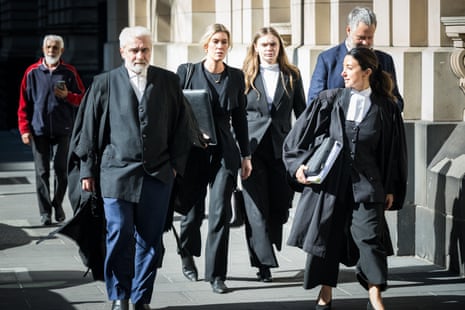
Drago argued that Sorell’s analysis was flawed because he was only provided with data for specific dates chosen by the prosecution, rather than the full 18 months of records. The defense contends that without the full context of Patterson’s movements, the inference that she was "hunting" for poisonous mushrooms is speculative. They argue that the selective use of digital evidence created an "unfair prejudice" that misled the jury during the original trial.
Broader Implications for the Victorian Justice System
The Erin Patterson case has become a landmark for the Victorian legal system, touching on complex issues of mandatory sentencing, the rights of the accused, and the standards of prison care. If the DPP is successful in securing a life sentence without parole, it would mark one of the most severe punishments ever handed down in the state. Conversely, if the defense succeeds in quashing the convictions, it would trigger a massive retrial that would once again put the small community of Leongatha under the microscope.
Public interest in the case remains high, as the "mushroom murders" tapped into a deep-seated fear of domestic betrayal. The image of a mother and daughter-in-law serving a lethal meal to her family has lingered in the public consciousness, making the outcome of this appeal a matter of significant cultural and legal importance. The decision will likely influence how future high-profile murder cases are managed, particularly regarding jury sequestration and the use of digital foraging records as evidence of intent.
Reserved Judgment and Next Steps
As the second day of the appeal concluded, the three Victorian Court of Appeal judges announced they would reserve their judgments. A final decision on both the conviction appeal and the sentencing appeal is expected to be handed down at a later date. Until then, Erin Patterson will remain at the Dame Phyllis Frost Centre, where her lawyers say she continues to live in conditions that violate international human rights standards.
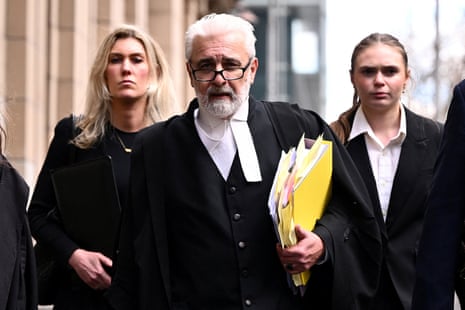
The victims’ families, including survivor Ian Wilkinson, have largely remained silent during the appeal process, having previously delivered emotional victim impact statements during the sentencing phase. The legal community now waits to see if the court will favor the prosecution’s demand for ultimate retribution or the defense’s call for a total judicial reset. Regardless of the outcome, the Erin Patterson case has already left an indelible mark on the history of Australian criminal law.