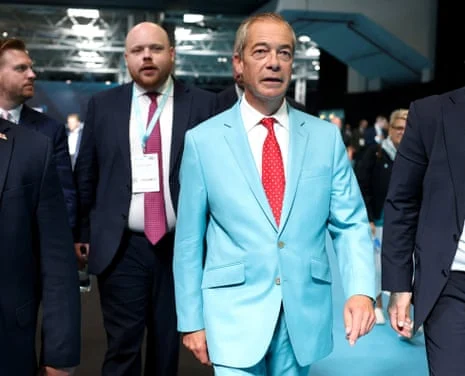
Nigel Farage, the leader of Reform UK, dismissed the growing public and political outcry over the forceful removal of protesters from his party’s national conference as "utter nonsense" on Saturday. The remarks come as West Midlands Police launched a formal appeal for witnesses after social media footage surfaced appearing to show a female climate activist being manhandled and having her hair pulled by audience members during Farage’s keynote address in Birmingham.

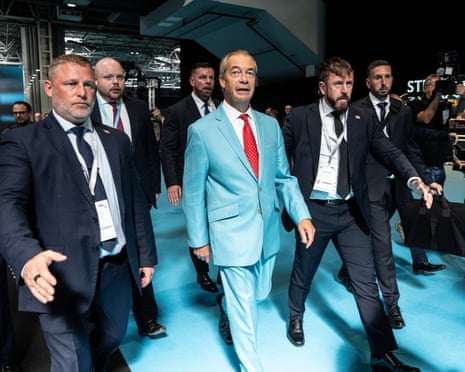
The incident has ignited a firestorm of criticism regarding the security protocols and the conduct of supporters at the event, which was already under intense scrutiny due to allegations of financial irregularities. Farage, speaking to a phalanx of broadcasters following the session, accused his detractors of maintaining a "one-sided" perspective on political discourse. He argued that the physical removal of disruptors was a necessary measure to protect an event for which attendees had paid significant sums to attend.
Farage Calls Reform Conference Protest Backlash ‘Utter Nonsense’ Following Viral Video
The controversy centered on a series of disruptions during the Friday session of the Reform UK conference. Security personnel and several audience members were seen intercepting protesters who stood up to heckle Farage at various intervals. One specific video, which has been widely circulated on digital platforms, depicts a woman being physically restrained by a man who was not part of the official security detail. In the footage, another individual appears to place a hand over the woman’s face while a third person is seen pulling her hair as she is led out of the auditorium.
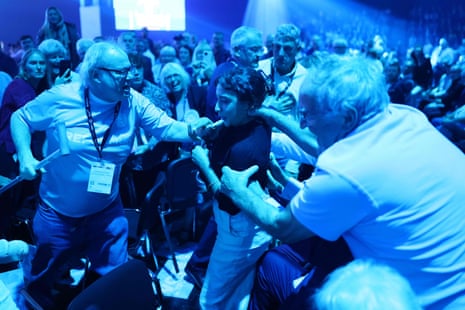
West Midlands Police issued a statement Saturday morning confirming they are investigating the matter. "We’re aware of a video circulating from the Reform UK Conference showing an incident with a protester," the department stated. "We haven’t received a formal complaint but would ask the woman involved to come forward and contact us so we can carry out enquiries."
Farage remained defiant in the face of the police appeal and the subsequent backlash. He pointed to past incidents where he was the target of physical protest, including being doused with milkshakes and struck with placards during campaign trails. "It’s all one way, isn’t it?" Farage said. "I can have milkshakes chucked in my face, be bashed over the head with placards and that’s all fine. But we have a big event… and we remove people trying to disrupt it, and suddenly we’re in the wrong. It is ridiculous."

Heightened Security and the Shadow of Financial Scandal
The atmosphere at the Birmingham conference was described by attendees as both festive and defensive. Nadine Dorries, a former Conservative Member of Parliament who has recently aligned herself with Reform UK, defended the actions of the audience. She suggested that the political climate in the United Kingdom has become increasingly volatile, citing the high-security environment as a reaction to past tragedies involving public figures. Dorries characterized the protest as an "organized sting" intended to derail the party’s momentum.
However, the "utter nonsense" defense offered by Farage has not quieted concerns regarding the party’s internal operations. The conference has been heavily overshadowed by an undercover investigation conducted by Channel 4 News. The report allegedly showed senior Reform UK officials discussing strategies to circumvent laws regarding foreign political donations.
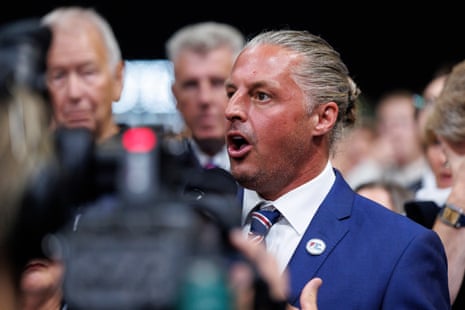
In response to the report, Reform UK Treasury spokesperson Robert Jenrick confirmed that James Orr, the party’s head of policy, and Dan Jukes, a high-ranking aide to Farage, have been "permanently suspended" pending a full investigation. Farage has insisted that the party has broken no laws and framed the investigation as a coordinated attack by "the establishment" to prevent the party’s rise in the polls. He predicted that more investigations would follow in the coming months as the party continues to challenge the political status quo.
Robert Jenrick Outlines Aggressive Economic Agenda
Seeking to pivot the conversation back to policy, Robert Jenrick utilized his keynote speech to unveil a series of major tax-cutting pledges. Jenrick promised that a Reform UK government would increase the tax-free personal allowance to £15,000 within its first 100 days in power. The current threshold, which has been frozen at £12,570 since 2021, is currently slated to remain at that level until 2031 under existing government plans.
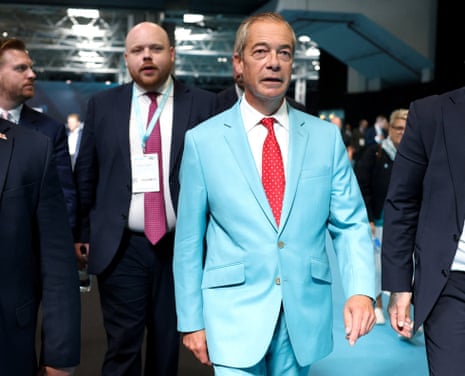
Jenrick claimed the move would save the average taxpayer approximately £500 per year and remove nearly 3 million low-income earners from the income tax rolls entirely. The party estimated the cost of the policy at £17.7 billion in its first year. To fund these cuts, Jenrick proposed a staggering £80 billion reduction in government spending, targeted primarily at the welfare budget and foreign aid.
"The hard choice is either welfare waste, foreign aid, and migrants—or the British worker," Jenrick told the cheering crowd. "We choose the worker." In a moment of high political drama, Jenrick staked his career on the pledge, stating that he would resign "no ifs, no buts" if he failed to deliver the tax threshold increase.
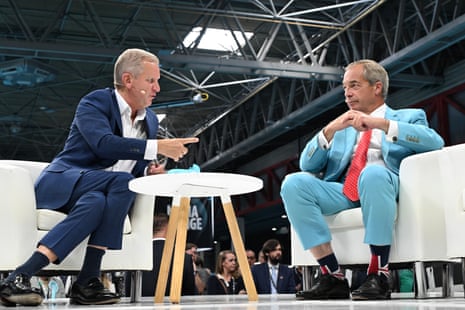
Farage Calls Reform Conference Protest Backlash ‘Utter Nonsense’ Amid Activist Tensions
While the leadership focused on economic policy, the conference floor remained a site of ideological friction. The activist group "Climate Resistance" claimed responsibility for the banner protest that targeted Deputy Leader Richard Tice. The banner, which read "Collect £5m, burn the planet," was a direct reference to a £5 million donation Farage received from cryptocurrency billionaire Christopher Harborne, as well as the party’s skepticism toward Net Zero climate goals.
The group stated they were "horrified at the violence" displayed by conference attendees and confirmed that the manhandled protester is currently considering whether to cooperate with the West Midlands Police investigation. Tice, who has previously encouraged the public to "enjoy the heat" during record-breaking summer heatwaves, continued his speech unabated after the banner was removed.
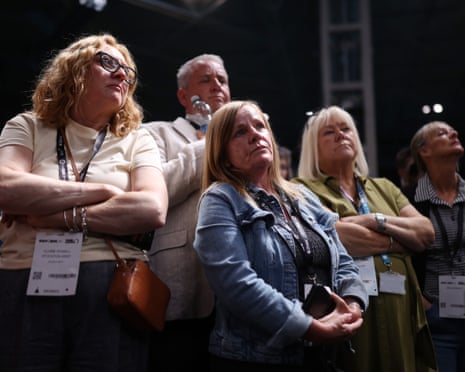
Interviews with delegates at the conference revealed a deep-seated skepticism toward mainstream climate science. Many attendees echoed Tice’s views, describing climate change as "overhyped" or "not a human problem." Michael Jacobs, an emeritus professor of political economy at the University of Sheffield, noted that the party leadership’s rhetoric has created a "bombardment of contradictory viewpoints" that appeals to voters looking to engage in a cultural war over environmental policy.
Internal Rifts and the Threat of Tactical Voting
Despite the outward display of unity, new polling data released during the conference suggests significant internal contradictions within the Reform UK base. A study conducted by Opinium for the Policy Institute at King’s College London found that 25% of Reform UK supporters actually favor rejoining the European Union, a stark contrast to the party’s core identity as the successor to the Brexit Party.
The polling also highlighted a significant threat to the party’s electoral prospects: tactical voting. Approximately 41% of the general electorate identified Reform UK as the party they would most like to stop from winning in their local area. The data suggested that a third of Labour and Green party voters would be willing to vote for a Conservative candidate specifically to prevent a Reform UK victory.
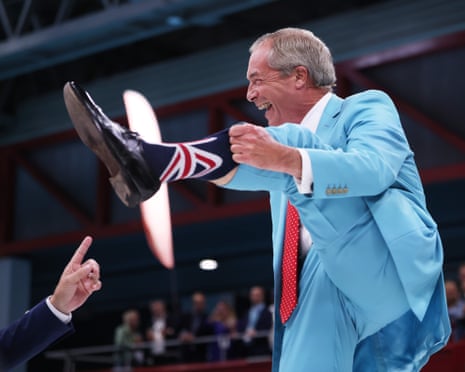
The party also faced criticism from the cultural sector. Kevin Rowland, the frontman for Dexys Midnight Runners, expressed "disgust" over the party’s use of the hit song "Come on Eileen" as Farage’s entrance music. Rowland, the son of Irish immigrants, stated that he and the band are "passionately against Farage’s politics," adding another layer to the controversies surrounding the event.
Border Security and Regional Devolution
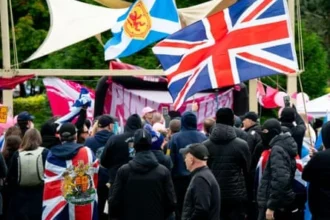
As the conference concluded, external events continued to influence the narrative. In Dover, police were forced to intervene when dozens of masked men dressed in black and wearing balaclavas blocked roads leading to the port. The protesters, who were reportedly demonstrating against illegal migration, brought traffic to a standstill.
Robert Jenrick condemned the disruption at the port, despite his party’s own hardline stance on immigration. "I’m sick of people disrupting life in this country," Jenrick said. "It’s completely disgraceful that businesses and individuals are having their lives held up."
Simultaneously, a new economic report from Mandala Partners suggested that the "Manchester model" of regional devolution could unlock £80 billion in growth across England. The report argued that replicating Manchester’s success in housing and transport investment could be the key to the Prime Minister’s goal of achieving "growth in every postcode." While Reform UK remains focused on national sovereignty and centralized tax cuts, the report highlighted a growing appetite for local empowerment that may challenge the party’s platform in the coming years.
The Reform UK conference ended with Nigel Farage doubling down on his "utter nonsense" dismissal of the protest backlash, signaling that the party intends to maintain its aggressive, populist posture despite police inquiries and internal suspensions. As the party prepares for the next electoral cycle, the tension between its grassroots fervor and the requirements of legal and financial transparency remains a defining challenge for Farage’s leadership.