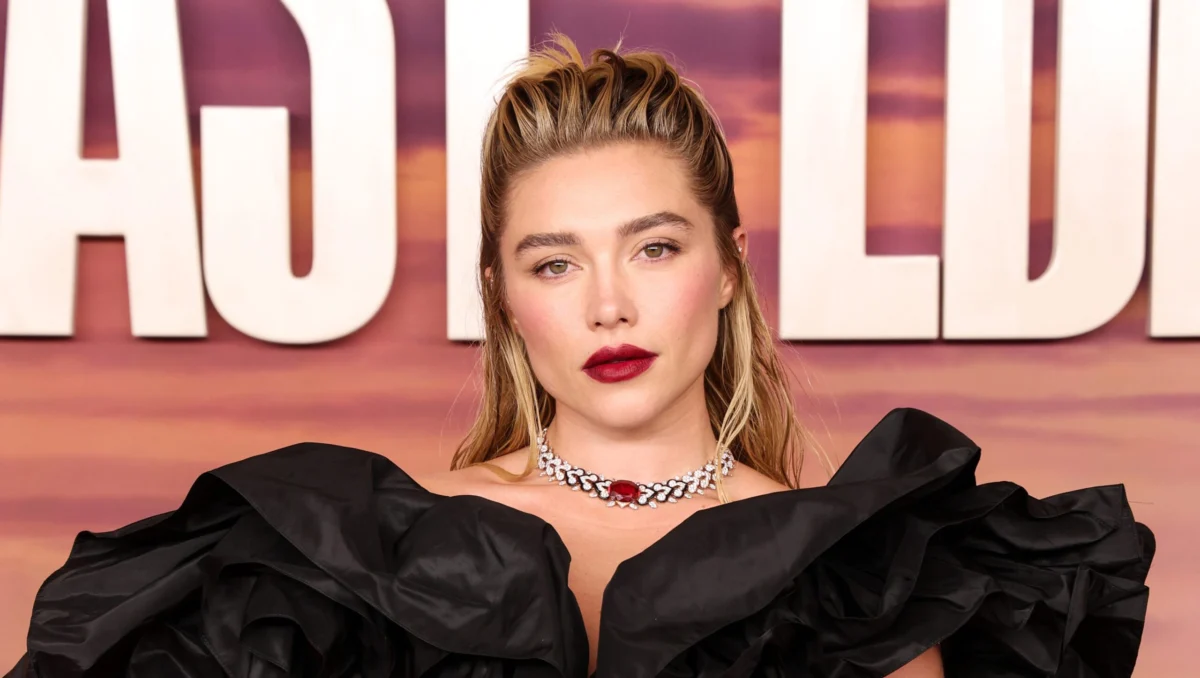
Award-nominated actress Florence Pugh recently revealed she felt no fear in publicly expressing her solidarity with Palestine, despite anticipating and experiencing significant backlash, including the loss of hundreds of thousands of social media followers. Pugh, known for her roles in critically acclaimed films and major franchises, elaborated on her motivations in a candid interview for Vanity Fair, questioning why it took a prolonged period for individuals to acknowledge and empathize with the suffering in the region.
The Genesis of Pugh’s Public Stance
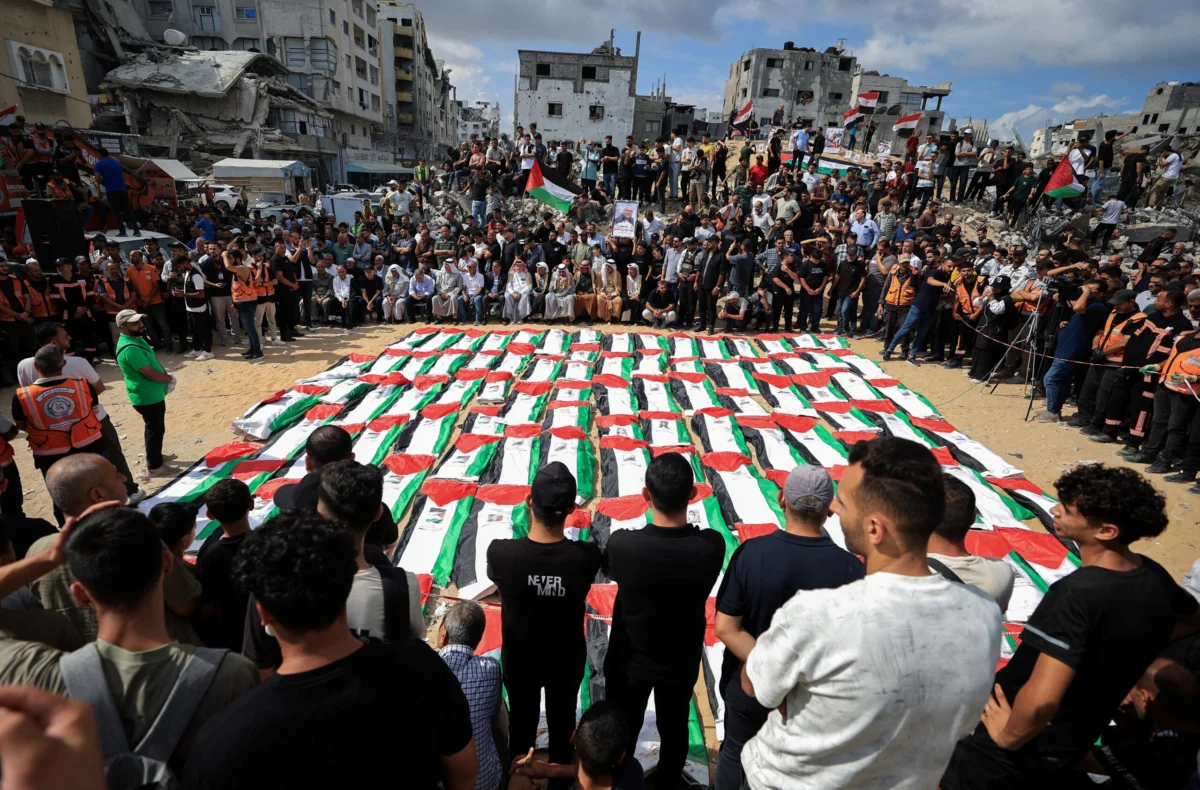
Florence Pugh’s decision to voice her support for Palestine emerged amidst a global landscape marked by escalating conflict and humanitarian concerns. In September of last year, Pugh participated in the "Together for Palestine" event, a gathering intended to raise awareness and foster support for the Palestinian people. During her appearance, she delivered a powerful statement that resonated widely across digital platforms: "Silence in the face of such suffering is not neutrality, it is complicity, and empathy should not be this hard and it should have never been this hard." This declaration underscored her conviction that remaining silent on humanitarian crises equates to an indirect endorsement of ongoing injustices, a sentiment she has consistently upheld.
Her remarks at the event and subsequent social media posts ignited a fervent debate, drawing both fervent praise and sharp criticism. The immediate consequence, as Pugh recounted, was a notable reduction in her social media following, which she estimated to be in the hundreds of thousands. This digital exodus highlights the polarizing nature of the Israeli-Palestinian conflict and the considerable pressure faced by public figures who choose to engage with such politically sensitive topics.
Navigating the Waters of Celebrity Activism
The landscape of celebrity activism has become increasingly complex in the digital age. Public figures like Florence Pugh often grapple with the dilemma of using their influential platforms to advocate for causes they believe in, balancing potential career repercussions with their moral imperatives. Pugh’s recent comments to Vanity Fair underscore her firm resolve in this regard. "I don’t know why it took so long for people to start talking and for people to actually feel sympathy," she stated, reflecting a broader frustration with perceived global inaction or apathy. Her assertion, "But no, I was never scared of it," directly challenges the notion that fear of professional or public reprisal should deter individuals from speaking out against humanitarian crises.
This fearless approach is particularly notable given the pervasive “cancel culture” phenomenon, where public figures can face severe professional and personal consequences for perceived missteps or controversial opinions. Pugh’s willingness to risk her public image and social media metrics for a cause she deeply believes in sets her apart, demonstrating a commitment that transcends the typical calculations of celebrity branding. Her perspective suggests that the moral obligation to address human suffering outweighs the potential for professional inconvenience or fan disapproval.
The Broader Context of Empathy and Complicity
Pugh’s central argument hinges on the idea that silence in the face of suffering is a form of complicity. This concept has deep roots in ethical philosophy and social justice movements, suggesting that neutrality is often an illusion when severe human rights violations are occurring. By equating silence with complicity, Pugh urges a more active and empathetic response from individuals and the global community alike. Her observation that "weirdly, because so many people actively weren’t [talking], that made me even more confused – and kind of probably even more in the right to talk about it," speaks to a sense of moral clarity derived from the perceived vacuum of public discourse.
This stance resonates with broader discussions about the responsibilities of global citizens in an interconnected world, where information about distant conflicts is readily accessible. The humanitarian situation in the Palestinian territories has been a subject of international concern for decades, characterized by ongoing challenges related to displacement, access to resources, and civilian casualties. Pugh’s focus on the plight of "babies still dying" and "mothers still in pain" directly highlights the human cost of the conflict, framing her advocacy not as a political endorsement but as a plea for basic human empathy and recognition of suffering.
Industry Reactions and Personal Convictions
In an industry often cautious about public figures taking strong political stances, Pugh’s team reportedly offered an unusual degree of support. The Vanity Fair article highlighted that her representatives never "advised her to keep quiet on the subject," a testament to either a progressive approach within her management or a profound respect for Pugh’s personal convictions. This internal backing allowed her to attend the "Together for Palestine" event, even though it conflicted with her production schedule for a major film, Avengers: Doomsday. Such flexibility from a major studio underscores the growing recognition of artists’ autonomy and the changing dynamics of talent-management relationships.
Pugh’s continued reflections on the juxtaposition of her professional life with global tragedies reveal a profound internal struggle common to many public figures. "It’s really horrible to be watching such pain when so much of our lives just seem to be moving forward," she lamented. This sentiment encapsulates the moral dissonance experienced by those living in relative comfort while witnessing immense suffering through digital media. She further articulated this dilemma: "How can I say I’m having a really good time when literally one scroll up, I’m looking at a baby that’s motherless and fatherless?" This rhetorical question powerfully conveys the inescapable nature of global suffering in the age of instant information and the ethical quandary it poses for individuals, especially those with platforms.
The Impact on Public Discourse and Media Consumption
Florence Pugh’s outspokenness contributes significantly to the ongoing public discourse surrounding the Israeli-Palestinian conflict, particularly among younger demographics who are highly influenced by celebrity opinions and social media trends. Her willingness to take a stand encourages others to consider their own roles in addressing global issues, pushing back against apathy and promoting active engagement. The loss of social media followers, while a tangible consequence, also underscores the self-selection inherent in online communities, where users often curate their feeds to align with their existing beliefs.
Her comments also prompt a re-evaluation of media consumption habits. Pugh’s reference to "one scroll up" illustrates the often jarring and emotionally taxing experience of navigating social media, where personal updates, entertainment news, and images of humanitarian crises frequently appear side-by-side. This constant exposure challenges users to reconcile their daily lives with global suffering, making it harder to ignore or compartmentalize difficult realities. Pugh’s voice, therefore, serves as a catalyst for introspection, urging her audience to move beyond passive observation to active empathy and, potentially, action.
Florence Pugh’s Continued Trajectory and Influence
Despite the controversies and follower loss, Florence Pugh’s career trajectory shows no signs of faltering. She is slated for a prominent role in Netflix’s upcoming adaptation of John Steinbeck’s East of Eden, set for release on October 1. Her involvement in Avengers: Doomsday for Marvel, scheduled for December 18, further solidifies her position in one of Hollywood’s most lucrative franchises. Additionally, she is set to appear in Dune: Part Three, which coincidentally shares the same release date as Avengers: Doomsday. These high-profile projects indicate that her outspokenness on Palestine has not derailed her professional standing within the entertainment industry.
Pugh’s sustained success, coupled with her unwavering commitment to humanitarian advocacy, sends a powerful message to both the public and her peers in Hollywood. It suggests that principled stands on complex global issues, even those that invite controversy, do not necessarily equate to career suicide. Instead, for figures like Pugh, they can be seen as an authentic expression of their values, potentially deepening their connection with audiences who appreciate sincerity and moral courage. Her consistent focus on the humanitarian aspect of the conflict, rather than specific political positions, helps frame her advocacy as a universal appeal for compassion.
Ultimately, Florence Pugh’s decision to speak out on Palestine, and her subsequent reflections, highlight the evolving role of public figures in an increasingly interconnected world. Her refusal to be silenced, coupled with her candid acknowledgment of the personal and professional challenges involved, underscores a growing conviction among some celebrities that their platforms carry a responsibility to advocate for human dignity. Her actions and words serve as a potent reminder that, for her, empathy is not a choice but a moral imperative, and silence is not an option when suffering persists.