A viral fashion trend featuring ultra-long, wide-legged trousers has ignited a global conversation regarding the physical risks inherent in contemporary garment design. Dubbed "Zara death pants" by social media users, the £25.99 ($33.00) flowing trousers from the Spanish retail giant have become the center of a growing controversy as customers report a surge in tripping-related injuries. While the "puddle" aesthetic—where fabric pools around the feet—dominates current runways and high-street collections, medical professionals and tailors warn that the disconnect between runway proportions and real-world anatomy is creating a public safety hazard.
The phenomenon gained traction on TikTok and Instagram, where users began sharing videos of themselves losing their balance, face-planting on sidewalks, and sustaining injuries ranging from bloodied knees to bone fractures. One viral video featured a shopper leaving a hospital in a wheelchair, claiming the trousers caused a fractured knee and demanding that the retailer include safety warnings with the product. Despite the mounting evidence of physical harm, the garment remains a top seller, highlighting a persistent tension between aesthetic trends and functional safety.
The Rise of ‘Zara Death Pants’ and the Puddle Aesthetic
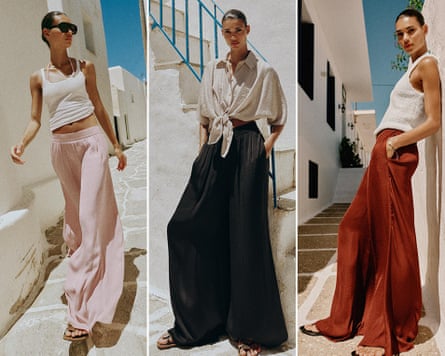
The specific garment at the center of the controversy is a pair of flowing, wide-leg trousers that Zara describes on its website as being "longer than usual" with a "loose fit." The marketing imagery explicitly showcases the fabric dragging on the floor, a style choice known in the industry as the "puddle hem." This look, which suggests a relaxed and effortless elegance, has been adopted by high-end designers such as Victoria Beckham and Stella McCartney, subsequently trickling down to high-street retailers like Mango, H&M, and Next.
Data from major retailers suggests that the demand for this silhouette is not slowing down. John Lewis, a prominent UK-based department store, reported a 61% year-on-year increase in searches for wide-leg trousers, with interest in linen versions skyrocketing by 225%. However, as the style moves from the controlled environment of a fashion shoot to the unpredictable terrain of city streets and staircases, the practical implications of excess fabric are becoming painfully apparent to consumers.
From High Heels to ‘Zara Death Pants’: How Fashion Falls Foul of Women’s Safety in Sizing
The primary cause of the tripping hazard lies in the standardized sizing and manufacturing processes used by fast-fashion conglomerates. Ruby Slevin, a professional tailor and founder of Banshee of Savile Row, notes that the issue stems from an unrealistic baseline for garment length. Most high-street brands utilize "fit models" who typically stand around 5 feet 10 inches tall. In contrast, the average height for women in the United Kingdom is approximately 5 feet 4 inches, with similar averages found in the United States.
To minimize production costs, many brands forgo live fit models entirely for certain stages of development, opting instead for stationary mannequins that reflect aspirational rather than realistic body types. When a garment designed for a 5-foot-10-inch frame is worn by a person of average height, the inseam becomes disproportionately long. Slevin argues that the width of the trouser leg must also be adjusted in proportion to the wearer’s height and hip measurements; failing to do so results in a garment that is fundamentally unsafe to navigate in daily life.

Medical Consequences of Impractical Garment Design
The physical toll of these fashion choices is well-documented by healthcare providers. Lucy McDonald, a spokesperson for the Chartered Society of Physiotherapy, reports that injuries stemming from restrictive or hazardous clothing are a recurring theme in clinical practice. While high-heeled shoes have historically been the most frequent cause of fashion-related falls, the resurgence of floor-length, wide-leg trousers has introduced a new set of risks.
Common injuries associated with these falls include fractured wrists, as individuals instinctively extend their hands to break a fall, as well as ligament tears in the ankles and knees. When a wearer’s foot becomes entangled in excess fabric, the resulting trip can be more violent and less predictable than a standard slip. Depending on the severity of the impact and the bone health of the individual, recovery can range from six weeks for minor fractures to nine months or more for complex ligament reconstructions and hip injuries.
A History of Hazardous Style and Women’s Safety
The "Zara death pants" are merely the latest entry in a long history of fashion trends that prioritize silhouette over survival. Fashion historian Virginia Hill points out that wide-legged trousers first gained mainstream popularity in the 1920s as "beach pajamas" or "house pajamas," though they were originally intended for leisure in private spaces. The transition of such voluminous styles to public spheres has often been met with practical difficulties.
Perhaps the most infamous example of hazardous attire was the "hobble skirt," introduced by Parisian designer Paul Poiret in 1910. The skirt featured a hem so narrow that women could only take tiny, shuffling steps. The style was so restrictive that it led to several high-profile accidents, including one instance where a woman tripped and fell onto a set of train tracks. Media reports from the era noted that "locomotion is seriously impeded and speed is impossible," reflecting a similar sentiment to today’s social media warnings.
The history of fashion is also marred by fatal accidents involving accessories. In 1927, the legendary American dancer Isadora Duncan was killed when her long silk scarf became entangled in the open spokes of a moving car’s wheel, leading to her strangulation. These historical parallels suggest that the industry has a recurring tendency to push the boundaries of fabric volume and length until they reach a point of physical danger.
High Heels to ‘Zara Death Pants’: How Fashion Falls Foul of Women’s Safety on the Catwalk
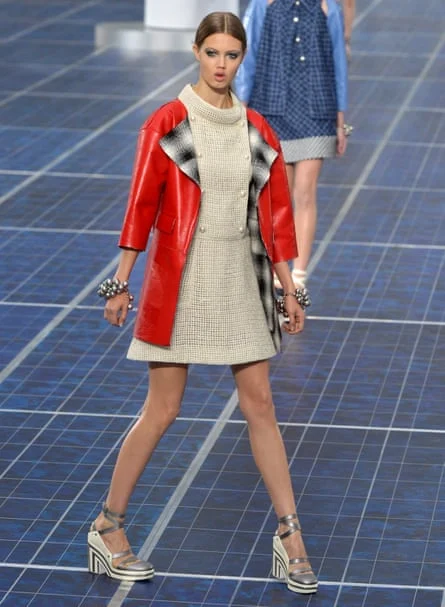
The dangers of impractical clothing are not limited to the general public; they are an occupational hazard for professional models. In 2009, model Abbey Lee Kershaw suffered a torn ligament after falling in high heels during a Rodarte runway show. Similarly, Lindsey Wixson, a prominent figure in the fashion world, was forced to take a career hiatus in 2017 due to a series of catwalk-related injuries, including a linear tear on her toe and chronic joint issues.
If highly trained professionals, who are accustomed to walking in avant-garde designs, cannot safely navigate these garments, the risk to the average consumer is significantly higher. The "puddle" look seen on runways is often pinned or adjusted for the duration of a twenty-minute show, a luxury not afforded to a commuter rushing to catch a subway or a parent navigating a grocery store.
Consumer Responsibility and the Principle of Buyer Beware
In the eyes of the law, the principle of caveat emptor, or "buyer beware," remains a dominant force in the retail industry. While consumer protection laws exist to ensure that products are fit for purpose, the definition of "purpose" in fashion is often subjective. If a brand explicitly markets a pair of trousers as being "longer than usual" and provides imagery of the fabric dragging on the floor, they can argue that the consumer was fully informed of the product’s characteristics prior to purchase.
However, the "Zara death pants" phenomenon raises questions about the ethical obligations of mass-market retailers. When a product becomes a "bestseller" despite a documented history of causing physical injury, the industry must decide whether to continue profiting from the trend or to implement design changes, such as offering varied inseam lengths (short, regular, and tall) as a standard practice rather than a niche offering.
Mitigating Risks in a High-Trend Environment
For consumers who wish to embrace the wide-leg trend without risking a trip to the emergency room, experts suggest several proactive measures. Professional tailoring remains the most effective solution; having trousers hemmed to clear the floor by at least half an inch can drastically reduce the risk of entanglement. Many dry cleaners offer basic alterations for a fraction of the cost of a new garment, making it an accessible option for high-street shoppers.
Physiotherapists also advise consumers to be mindful of the footwear they pair with wide-leg trousers. Wearing a slight heel or a platform shoe can lift the hem off the ground, though this introduces the separate risk of instability associated with elevated footwear. Ultimately, the advice from medical professionals is straightforward: if a garment impedes natural movement or increases the likelihood of a fall, it is a safety hazard that outweighs any aesthetic benefit.
As the "puddle" trend continues to evolve, the conversation surrounding "Zara death pants" serves as a reminder that fashion does not exist in a vacuum. The intersection of design, manufacturing standards, and physical safety remains a critical area of concern for the modern consumer. Until the industry aligns its sizing standards with the reality of the human form, the burden of safety will likely continue to rest on the shoulders—and the feet—of the buyer.