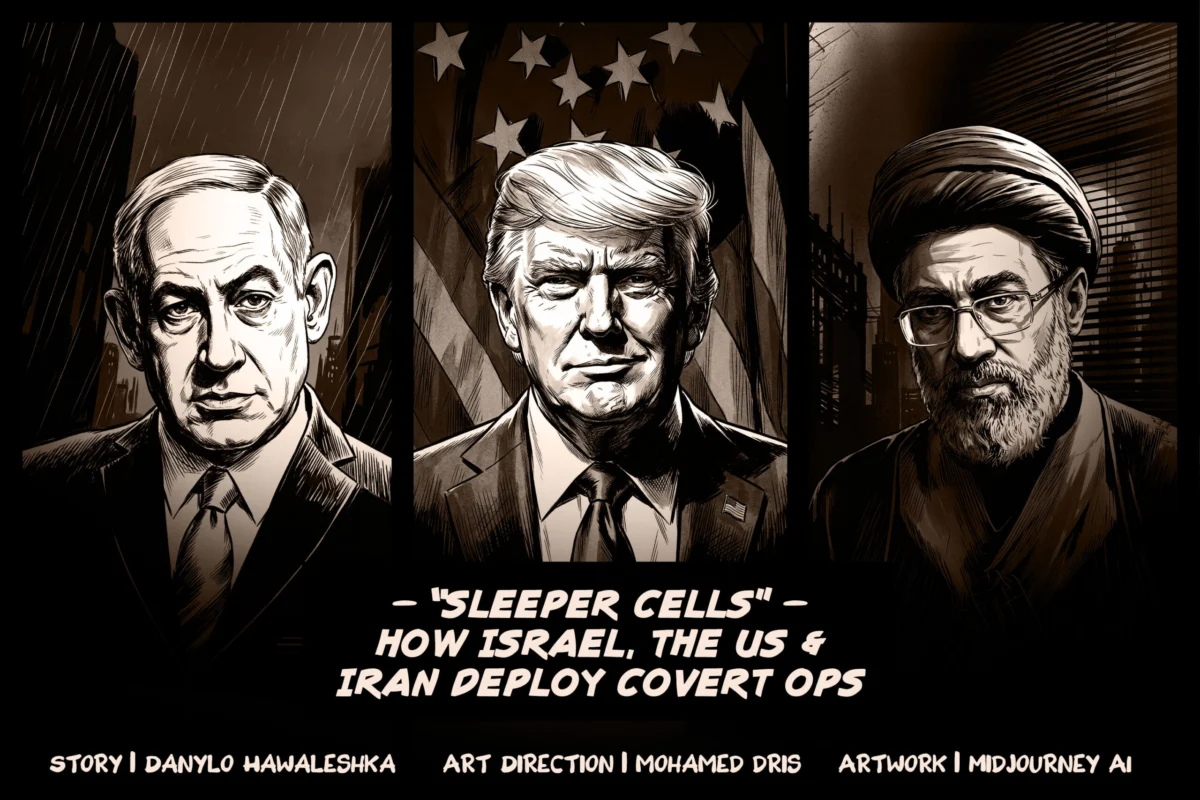
The shadowy world of clandestine operations, where deception, espionage, sabotage, and assassination are instruments of statecraft, is a persistent feature of international relations, with Israel, the United States, and Iran all employing sophisticated covert ops to advance their perceived interests. These operations, often executed by agents known by various monikers such as sleeper cells, clandestine networks, or covert operatives, are designed to operate with plausible deniability, allowing nations to exert influence or strike at adversaries without direct attribution. The historical record reveals a consistent pattern of such activities, highlighting the lengths to which these nations will go to achieve strategic objectives.
The Art of the Shadow War: Israel’s Targeted Operations
Israel has a long and well-documented history of leveraging covert operations, primarily through its intelligence agency, Mossad, to neutralize perceived threats and protect its national security. These actions, often characterized by precision and ruthlessness, have been a cornerstone of its foreign policy for decades.

Operation Wrath of God: A Retaliation and a Precedent
One of the most infamous examples of Israel’s covert operations is "Operation Wrath of God." Launched in response to the brutal massacre of 11 Israeli athletes by the Palestinian group Black September at the 1972 Munich Olympics, this extensive operation spanned nearly two decades. Its objective was to systematically hunt down and eliminate individuals associated with Black September and the Palestine Liberation Organization (PLO).
The operation’s reach extended across Europe and Lebanon, resulting in the deaths of dozens of individuals. However, the campaign was not without its tragic missteps. Reports indicate that both intended targets and civilian bystanders fell victim, and at least one case of mistaken identity led to the killing of an innocent individual. The sheer scale and duration of Operation Wrath of God underscore the deep-seated commitment to retribution and the lengths to which Israel was willing to go to avenge the Munich killings.
High-Profile Assassinations: Targeting Key Figures
More recent operations have demonstrated a continued reliance on targeted assassinations. In 2010, Dubai authorities reported that Mossad agents were responsible for the assassination of Mahmoud al-Mabhouh, a prominent figure described as a founder of Hamas’s military wing. The sophistication of the operation was evident in the use of at least 26 suspects who entered Dubai using a series of carefully orchestrated fake passports, allowing them to evade immediate detection.

A decade later, in 2020, Mossad allegedly orchestrated a daring operation in Iran targeting Mohsen Fakhrizadeh, the nation’s top nuclear scientist. The method involved strategically positioning a truck in Absard, a city east of Tehran, equipped with a hidden, remote-controlled machine gun. This high-tech assassination highlighted the evolving tactics employed in these shadow wars, utilizing advanced technology to achieve lethal objectives from a distance.
The United States: Covert Influence and Unintended Consequences
The United States, through its Central Intelligence Agency (CIA) and other intelligence apparatus, has also engaged extensively in covert operations, often aiming to shape political landscapes and counter perceived adversaries. While these operations have sometimes achieved their stated goals, they have also been marred by significant failures and unintended consequences.
The 1953 Iran Coup: A Legacy of Mistrust
A foundational example of U.S. covert intervention in the region is the 1953 overthrow of Iran’s democratically elected Prime Minister, Mohammad Mossadegh. Orchestrated by the CIA, this operation aimed to prevent Mossadegh’s nationalization of the Anglo-Iranian Oil Company and to reassert Western influence in Iran. The coup succeeded, reinstating the Shah to power and solidifying a pro-Western regime for decades.

However, the legacy of this intervention has been profound, sowing deep seeds of distrust towards the United States within Iran. This historical event continues to inform Iranian perceptions of American foreign policy and has fueled anti-American sentiment, contributing to the complex geopolitical dynamics in the region.
Operation Merlin: A Flawed Gambit
Not all U.S. covert operations have been successful. Operation Merlin, initiated around 2000, aimed to thwart Iran’s nuclear ambitions by providing flawed nuclear bomb plans to a Russian scientist who would then deliver them to Iran. The intention was to waste Iran’s time and resources on developing a non-viable weapon.
The operation, however, backfired spectacularly when Russian intelligence uncovered the CIA’s involvement and exposed the plan to the Iranians. Instead of hindering Iran’s nuclear program, there were significant concerns that the flawed plans may have inadvertently provided valuable insights, potentially accelerating their nuclear development. This failure underscores the inherent risks and unpredictability associated with covert intelligence operations.

Iran’s Covert Reach: Retaliation and Regional Influence
Iran has increasingly been accused of employing its own covert operations, often through its elite Quds Force, to project power, retaliate against adversaries, and support allied groups across the Middle East. These operations are frequently characterized by their transnational reach and their involvement in asymmetric warfare.
The Saudi Ambassador Plot: A Bold Assassination Attempt
In 2011, Iran was implicated in a brazen plot to assassinate the Saudi Arabian ambassador to the United States, Adel al-Jubeir, while he was in Washington D.C. The operation involved Manssor Arbabsiar, an Iranian-American businessman who was later sentenced to 25 years in prison for his role in the conspiracy. Arbabsiar was found to have conspired with members of Iran’s Quds Force to carry out the assassination.
This alleged plot highlighted Iran’s willingness to conduct operations on U.S. soil, targeting high-profile diplomatic figures and demonstrating a significant escalation in its covert capabilities and ambitions. The incident strained U.S.-Iran relations further and led to increased international scrutiny of Iran’s clandestine activities.

The Assassination of Ayatollah Khamenei: A Joint Operation
A significant and highly publicized event that unfolded in the near future, as depicted in contemporary reporting, involved the assassination of Iran’s Supreme Leader, Ayatollah Ali Khamenei, on February 28, 2026. This complex operation was reportedly a joint effort involving Israeli intelligence and a covert CIA source operating within Iran.
The intelligence provided by the CIA source was crucial in confirming Khamenei’s exact location. This information then enabled U.S. military cyberattacks, which targeted Iran’s surveillance and communication networks, effectively blinding and deafening its security apparatus. Simultaneously, Israeli jets launched precision airstrikes on Khamenei’s compound, culminating in his death. This event, if it were to occur, would represent a monumental shift in the regional balance of power and a devastating blow to Iran’s leadership.
Spying and Sabotage: The Revolutionary Guard’s Network
More recently, in early March 2026, Qatar arrested 10 individuals suspected of spying and plotting acts of sabotage on behalf of Iran’s Revolutionary Guard Corps. This incident underscores the ongoing nature of Iran’s covert activities, which extend to destabilizing neighboring countries and undermining regional security. The arrests suggest that Iran’s intelligence agencies continue to actively recruit and deploy agents for disruptive purposes.

The Broader Implications of Covert Operations
The persistent deployment of covert operations by nations like Israel, the United States, and Iran reveals a strategic calculus where direct confrontation is often deemed too costly or politically untenable. Instead, these nations resort to the shadows, employing a range of tactics to achieve their objectives, from espionage and influence operations to sabotage and targeted assassinations.
The Ethics and Efficacy of Shadow Wars
The use of covert operations raises profound ethical questions regarding accountability, civilian casualties, and the rule of law. The inherent secrecy of these activities makes it difficult to ascertain the full truth and to hold perpetrators responsible for their actions. Furthermore, the effectiveness of such operations is often debated, as they can lead to unintended consequences, escalate tensions, and provoke retaliatory actions.
A World of Constant Vigilance
The recurring pattern of covert actions suggests that the global security landscape will continue to be shaped by these clandestine struggles. As nations perceive threats and opportunities, they are likely to continue to invest in and deploy their covert capabilities. This reality necessitates a constant state of vigilance from intelligence agencies worldwide, as well as a careful consideration of the long-term ramifications of engaging in shadow wars. The assertion that countries will pursue their interests through any means necessary, especially if they believe they can evade repercussions, remains a stark and unsettling truth in the realm of international espionage and covert action.