Award-winning international correspondent Luke Harding, a veteran of front-line reporting across the Middle East and Eastern Europe, has issued a stark assessment of the geopolitical shifts that paved the way for the current war in Ukraine. Drawing on decades of experience in Afghanistan, Iraq, Libya, and Syria, Harding argues that a long-standing pattern of Western appeasement toward the Kremlin directly emboldened Russian President Vladimir Putin to launch his full-scale invasion in 2022. The veteran journalist’s career, which has spanned the transition from early-2000s satellite phone reporting to the modern era of drone warfare, provides a unique lens through which to view the erosion of international norms and the increasing dangers faced by members of the press.
The career of international correspondent Luke Harding is defined by a commitment to documenting the human cost of high-stakes political maneuvering. From his early days on the road in Afghanistan to his recent work in Kyiv, Harding has witnessed the evolution of conflict firsthand. His reporting often focuses on the intersection of state-sponsored espionage and overt military aggression, a theme that has become central to his work on the Russian Federation. In recent years, his focus has shifted toward the systemic ways in which authoritarian regimes exploit the perceived weaknesses of democratic institutions.
The Legacy of High-Stakes Foreign Reporting
In an era where the nature of information gathering has been transformed by digital technology, the role of the foreign correspondent has undergone a significant evolution. Traditional war reporting, once dominated by legendary figures who broke stories that resonated globally for months, has faced challenges from the 24-hour news cycle and the rise of social media. However, international correspondent Luke Harding maintains that the core necessity of the profession—courageous, boots-on-the-ground reportage—remains more vital than ever.
Harding points to the legacy of reporters like Robert Fisk and Marie Colvin as foundational to the craft. Colvin, who was killed while covering the siege of Homs in Syria, and Fisk, known for his extensive work in the Middle East, represented a period of journalism where deep historical context and physical presence were the primary tools of the trade. While some observers suggest that the era of the globe-trotting "star" reporter is fading, Harding emphasizes that a new generation of journalists, particularly local reporters in conflict zones, has stepped into the breach.
In Ukraine, Harding has worked alongside local colleagues who document the invasion of their country at immense personal risk. He acknowledges that many Ukrainian journalists have been killed or injured since the start of the conflict, underscoring the shift in risk from international staff to those living within the crosshairs of the war. This transition highlights a broader trend in global journalism: the increasing reliance on local expertise and the devastating toll taken on those who cannot simply leave when a story concludes.

Tracing the Roots of Modern Geopolitical Instability
A central pillar of international correspondent Luke Harding’s work involves the investigation of Russian state activities. His extensive coverage of the 2006 murder of Alexander Litvinenko, a former KGB agent poisoned with radioactive polonium-210 in London, remains a definitive account of Kremlin-ordered assassination on foreign soil. Harding, who has maintained a close relationship with Litvinenko’s widow, Marina, views the case as a pivotal moment that the West fundamentally misunderstood.
According to Harding, the British government’s response to the Litvinenko poisoning was "unimaginative and lackluster." While the administration of Gordon Brown expelled a small number of diplomats, the subsequent government under David Cameron sought to "reset" relations with Moscow. This culminated in a controversial decision to invite Vladimir Putin to the 2012 London Olympics, where the Russian leader was photographed watching judo alongside British officials. Harding argues that these gestures of diplomacy were interpreted by the Kremlin not as olive branches, but as signs of European weakness.
The timeline of Russian aggression, as documented by Harding, shows a clear progression. From the 2006 poisoning in London to the 2014 annexation of Crimea and the shooting down of flight MH17, the lack of a robust, unified Western response served as a green light for further escalation. The 2018 Salisbury nerve agent attack, which targeted Sergei Skripal, further demonstrated the Kremlin’s belief that it could operate with near-total impunity in Western capitals. This sequence of events, Harding asserts, led directly to the decision to launch the 2022 invasion of Ukraine.
The Litvinenko Poisoning and Western Policy Failures
The consequences of the Litvinenko case extended beyond the immediate diplomatic fallout. Harding’s book on the subject, A Very Expensive Poison, was later adapted into a stage play by Lucy Prebble, bringing the details of the assassination to a wider public audience. The work details the meticulous planning required to transport a radioactive substance across international borders and the brazenness of the agents involved. For international correspondent Luke Harding, the case was never just about a single murder; it was a demonstration of a new kind of hybrid warfare.
The failure to impose significant costs on the Russian leadership in the wake of such "dark deeds" created a vacuum in international security. Harding suggests that the West’s desire for economic stability and cheap energy often overrode the necessity of defending democratic values. This prioritization of commerce over security allowed the Russian state to build a sophisticated network of influence within Western financial and political circles.
Harding’s analysis also touches on the role of disinformation. In his work Betrayal, he explored the possibility of Russian influence within the highest levels of the U.S. government, specifically during the Trump administration. By examining the connections between Russian intelligence and political figures, Harding has highlighted how traditional espionage has been augmented by digital interference and psychological operations designed to fracture Western alliances.
Literary Influences and the Craft of the International Correspondent
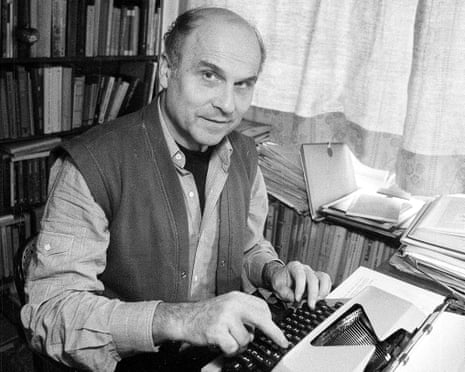
Despite the grim nature of his subject matter, international correspondent Luke Harding finds inspiration in the literary traditions of journalism. He cites two figures as his primary influences: James Cameron and Ryszard Kapuscinski. Cameron, a British journalist known for his poetic and deeply observant style, and Kapuscinski, a Polish writer who covered dozens of coups and revolutions, represent the pinnacle of narrative non-fiction.
Harding describes Kapuscinski’s Imperium—a sweeping account of the fall of the Soviet Union—as a masterpiece of the genre. The book’s ability to combine travelogue with profound political observation is a quality Harding strives to emulate in his own writing. Similarly, James Cameron’s works, such as An Indian Summer and Point of Departure, are lauded by Harding as "literary gems" that demonstrate how journalism can transcend the ephemeral nature of daily news to become a lasting record of history.
These influences are evident in Harding’s own books, which often read like thrillers while maintaining the rigorous factual standards of high-level investigative reporting. By blending the immediacy of the front line with the depth of historical analysis, he aims to provide readers with a comprehensive understanding of why conflicts occur and what they mean for the future of the global order.
Covering the Frontlines: From Afghanistan to Ukraine
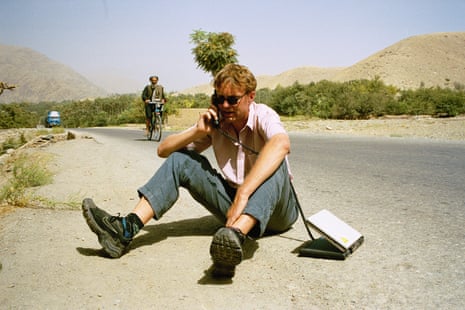
The physical reality of reporting from war zones has changed dramatically over the course of Harding’s career. In the early 2000s, reporting from remote areas of Afghanistan required heavy satellite equipment and limited connectivity. Today, the battlefield in Ukraine is defined by real-time data, drone footage, and the constant threat of electronic surveillance. International correspondent Luke Harding has adapted to these changes, recently documenting the work of Ukraine’s drone strike forces.
This modern form of warfare, which Harding describes as a battle between "democracy and totalitarianism," has shifted the tactics of both the military and the media. Drones have made the battlefield transparent, but they have also made the work of journalists more precarious, as any signal can be tracked and targeted. Harding’s reporting on the Ukrainian "drone strike force" highlights how decentralized, tech-savvy units are taking the fight to a much larger Russian military, a dynamic that he believes represents the future of armed conflict.
Harding’s interviews with key figures, including Ukrainian President Volodymyr Zelenskyy, provide insight into the psychological state of a nation under siege. His reportage emphasizes the isolation of the Russian leadership and the resilience of the Ukrainian people. By focusing on the personal stories of those on the front lines, Harding ensures that the human element of the war is not lost in the broader geopolitical analysis.
The Future of International Reporting and Global Security
As the conflict in Ukraine continues, international correspondent Luke Harding remains focused on the long-term implications for global security. He argues that the outcome of the war will determine the viability of international law for decades to come. A Russian victory, or even a frozen conflict that rewards aggression, would signal to other authoritarian regimes that the post-World War II order is effectively dead.
The role of the international correspondent in this context is to act as a witness to history and a check on the narratives promoted by state propaganda. Harding’s work serves as a reminder that the "lackluster" responses of the past have real-world consequences, often measured in lives lost and nations upended. His commitment to documenting the "dark deeds" of the Kremlin and the bravery of those who resist them continues to shape the public’s understanding of the 21st century’s most defining struggles.
Looking ahead, Harding suggests that the international community must learn from the mistakes of the early 2000s. He advocates for a more imaginative and proactive approach to defense and diplomacy, one that recognizes the reality of hybrid threats and the necessity of supporting those on the front lines of democracy. Through his books, articles, and public engagements, Harding continues to provide the essential context needed to navigate an increasingly volatile world.