Iran has significantly widened the scope of its military operations, launching a series of missile and drone strikes against key American partners across the region as hostilities between Washington and Tehran enter a volatile second week. The shift in strategy has seen Tehran move beyond direct exchanges with U.S. forces to target the critical infrastructure of neighboring states, including Kuwait, Jordan, and Bahrain, sparking fears of a total regional conflagration.
The escalation comes in the wake of continued U.S. airstrikes on Iranian soil, which have targeted military installations and logistics hubs for seven consecutive nights. As the conflict intensifies, the maritime corridor of the Strait of Hormuz has become a primary flashpoint, with both sides reporting engagements that threaten the stability of global energy markets.
Targeting Critical Infrastructure in Kuwait
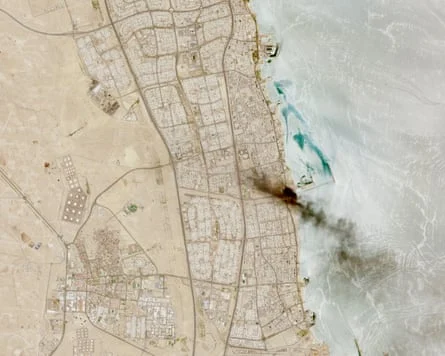
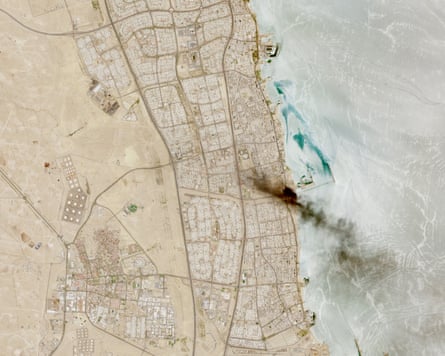
Kuwaiti officials issued a formal protest on Saturday, accusing the Iranian military of deliberately targeting civilian sites and vital infrastructure. Among the most significant targets was a major power and water desalination plant, a facility essential for the survival of the arid nation. Kuwait relies on desalinated water for approximately 90% of its total drinking water supply, making any disruption a direct threat to public health and safety.
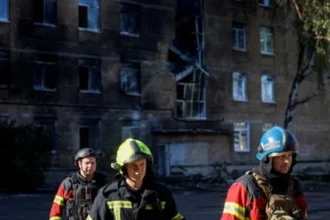
The strikes on the desalination facility and an adjacent oil installation resulted in several injuries. The Kuwait Petroleum Corporation confirmed that the attacks caused "significant material losses" and triggered massive fires that required hours to contain. Local emergency services reported that several Kuwaiti firefighters and at least one industrial worker were injured while battling the blazes sparked by the incoming Iranian projectiles.
In response to the detected threats, Kuwaiti authorities were forced to temporarily shutter the nation’s airspace. Military officials confirmed that air defense batteries successfully intercepted several Iranian missiles and drones, though the debris from these interceptions contributed to ground-level damage. The Kuwaiti Foreign Ministry characterized the strikes as a "systematic hostile approach" designed to endanger the lives of civilians by dismantling the country’s most basic survival systems.
Rising Toll on US Personnel and Regional Air Defenses
The geography of the conflict expanded further as Iran attacks US allies in Middle East through sophisticated aerial assaults on Jordan and Bahrain. On Friday, U.S. Central Command (CENTCOM) confirmed that two American military personnel were killed in Jordan while defending against an Iranian drone and missile swarm. The personnel were stationed at a support facility near Azraq, which has become a focal point for U.S. defensive operations in the Levant.
Jordan’s state-run Petra news agency reported that the kingdom’s air defense systems were active throughout the weekend, successfully downing multiple Iranian missiles that had entered Jordanian airspace. Despite these interceptions, the Islamic Revolutionary Guard Corps (IRGC) claimed through state media that they had successfully "destroyed" a U.S. radar facility at the Ali Al Salem airbase and struck a support center at Camp Arifjan in Kuwait.

In Bahrain, air raid sirens echoed across the capital as the government warned residents to seek immediate shelter following the detection of incoming threats. Iranian state media later claimed that the IRGC had successfully targeted the Sheikh Isa airbase in Bahrain, alleging that the site was being used as a staging ground for U.S. combat aircraft. They also claimed to have struck a regional intelligence data center located within the island nation.
Maritime Tensions and the Strait of Hormuz
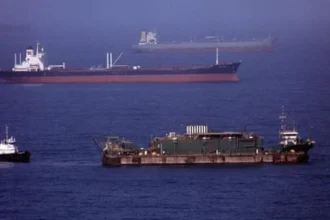
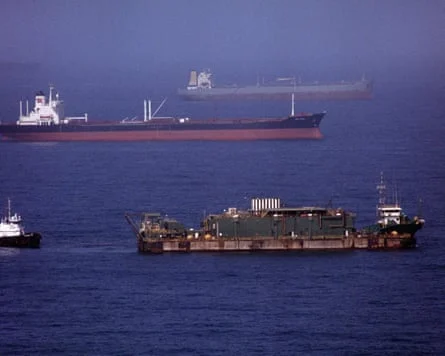
The maritime theater remains the most dangerous arena of the ongoing conflict. Late Friday, the IRGC claimed that two oil tankers had exploded after striking mines in the Strait of Hormuz. Iranian officials alleged the vessels were being directed by "deceptive American intelligence agencies," though the U.S. military has dismissed these claims as fabrications intended to justify Iranian interference with commercial shipping.
The IRGC further announced on state television that they had "stopped" four vessels attempting to transit the critical waterway, which serves as the transit point for nearly 20% of the world’s daily oil consumption. Tehran’s ability to disrupt the strait remains one of its most potent levers of influence, and the recent activity suggests a willingness to use that lever to pressure the international community to intervene in the U.S.-led bombing campaign.
While the U.S. Navy has increased its presence in the Persian Gulf to safeguard commercial lanes, the threat of "asymmetric" naval warfare—including the use of limpet mines, fast-attack boats, and suicide drones—has led to a sharp spike in maritime insurance rates. Shipping companies are increasingly rerouting vessels, adding significant costs and delays to global supply chains already strained by the regional instability.
The American Retaliatory Campaign
The Pentagon has maintained that its operations are strictly defensive and designed to "degrade" Iran’s ability to project power against U.S. interests and regional partners. Since the resumption of hostilities, the U.S. Air Force and Navy have conducted seven consecutive nights of strikes, hitting a wide array of targets across Iran.
According to a Saturday morning briefing from CENTCOM, overnight strikes successfully hit Iranian surveillance sites, military logistics infrastructure, and underground weapons storage facilities. The U.S. also targeted Iran’s maritime capabilities, specifically focusing on sites used to launch the drones and missiles currently being utilized as Iran attacks US allies in Middle East.
Reports from within Iran indicate that explosions were heard in several major cities, including Ahvaz, Yazd, and the coastal city of Sirik. The Iranian Health Ministry has claimed that the U.S. strikes have killed at least 50 people and wounded more than 500 since the second week of the conflict began. For the first time on Friday, Tehran acknowledged that the U.S. had successfully damaged its domestic power infrastructure, leading to widespread outages in southern provinces currently grappling with a severe heatwave.
Escalating Rhetoric from Tehran’s Leadership
The political dimensions of the conflict have become increasingly fraught. Mojtaba Khamenei, the son of the Supreme Leader and a figure of growing influence in the Iranian hierarchy, issued a stern warning on Saturday. In a statement read on state television, he threatened the United States with "unforgettable lessons" if the aerial campaign against Iranian territory continues.
Mojtaba Khamenei has remained out of the public eye since the war began, but his statement underscores the hardline position currently dominating the Iranian leadership. This sentiment was echoed by Major General Mohsen Rezaee, a senior military adviser to the Supreme Leader. Rezaee warned that Tehran is prepared to transition from "retaliatory, like-for-like responses" to "full-scale offensive operations" within the next 48 to 72 hours.
"Iran will no longer limit itself," Rezaee stated, according to the IRIB news agency. "No political border will be safe." This rhetoric suggests that the IRGC may be preparing to launch even more direct attacks against the capitals of U.S. regional allies, moving beyond infrastructure targets to include government centers and command-and-control hubs.
Humanitarian and Economic Implications
The humanitarian impact of the conflict is being felt most acutely in Kuwait and Iran. In Kuwait, the threat to the water supply has led to a run on bottled water and increased anxiety regarding the long-term viability of the desalination network. The Gulf Cooperation Council (GCC) has condemned the attacks, with Secretary-General Jasem Mohamed al-Budaiwi labeling the targeting of civilian infrastructure as "war crimes."
Al-Budaiwi called for international accountability, stating that the deliberate targeting of facilities essential for civilian survival is a grave violation of the United Nations Charter. The GCC has signaled that it may seek a formal resolution at the UN Security Council, though such a move would likely face diplomatic hurdles depending on the positions of other global powers.
In Iran, the energy crisis is compounding the misery of the civilian population. With power plants damaged and the electrical grid failing during a period of extreme heat, the Iranian Energy Ministry has pleaded with citizens to minimize their power usage. The combination of military casualties and the breakdown of public utilities is creating a domestic pressure cooker for the regime, though there are no signs yet of a strategic retreat.
Geopolitical Stakes and the Path Ahead
As the conflict enters its second week, the international community is watching with growing alarm. The shift toward targeting U.S. allies represents a significant expansion of the war’s theater, drawing in nations that had previously sought to maintain a degree of neutrality or purely defensive posture. The deaths of U.S. personnel in Jordan have also increased the political pressure on the White House to deliver a more decisive blow to Iranian military capabilities, even as critics warn of the risks of a "forever war" in the Middle East.
The economic consequences are already being felt globally. Crude oil prices have seen heightened volatility as the IRGC continues to harass shipping in the Strait of Hormuz. If the waterway were to be fully blocked, analysts warn of a global energy shock that could trigger a recession in multiple major economies.
For now, neither side appears willing to blink. The U.S. continues its nightly sorties to dismantle Iranian military assets, while Iran attacks US allies in Middle East to demonstrate that the cost of American intervention will be shared by the entire region. With both sides moving toward "full-scale offensive" postures, the window for a diplomatic resolution appears to be closing, leaving the Middle East on the precipice of its most significant military confrontation in decades.