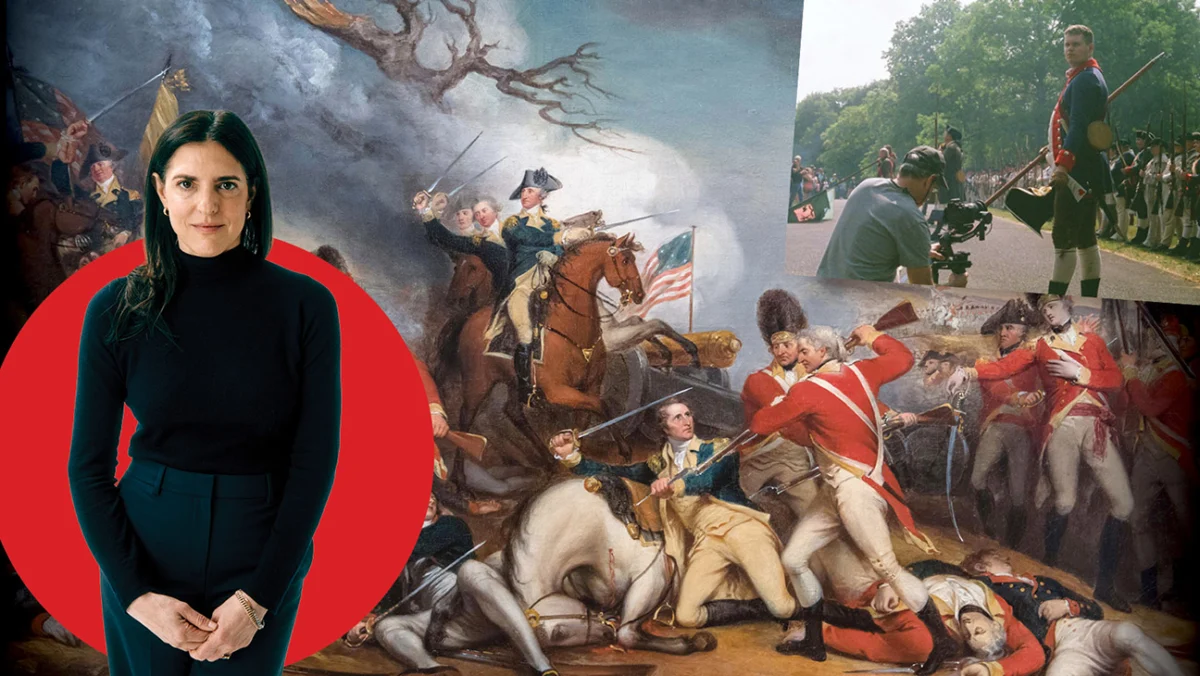
The Emmy-winning filmmaker Ken Burns has once again turned his lens on a pivotal moment in American history, arguing in his latest documentary, The American Revolution, that the nation’s founding conflict was far from a unified march toward independence. Instead, the ambitious six-part, 12-hour docuseries posits the struggle as a messy, agonizing civil war, profoundly shaped by its inherent contradictions as much as its lofty ideals. This fresh perspective challenges generations of sanitized historical narratives, prompting a national conversation about the complexities woven into the fabric of American identity from its very inception.
Reconsidering the Genesis of a Nation
For decades, the popular understanding of the American Revolution has often been distilled into a heroic narrative of united colonists rising against tyranny, driven by a shared vision of liberty and self-governance. Burns, along with co-directors Sarah Botstein and David Schmidt, meticulously dismantles this simplified view, presenting a more nuanced and often disquieting account. Their work suggests that the divisions and debates that characterize contemporary American society are not anomalies but echoes of conflicts present at the nation’s birth.
Botstein emphasizes this continuity, stating, "We’re obviously very polarized right now, but we were divided at our founding, and we’ve been divided at every celebration of the American Revolution." She adds, "We are a complicated country. We are not quite sure what kind of country we want to be, and we are continuously debating and swaying one view to the other. That is true in pretty much all of American history." This sentiment underpins the documentary’s core thesis: to fully comprehend modern America, one must confront the foundational fissures that have persisted for centuries.
A Decade of Development and Scholarly Depth
The genesis of The American Revolution itself was a monumental undertaking, requiring more than nine years of intensive research and production. This extensive timeline allowed the filmmakers to draw upon the wealth of new historical scholarship that has emerged, particularly since the nation’s Bicentennial in 1976. This period saw a significant shift in historical inquiry, moving beyond traditional accounts of great men and grand battles to explore the experiences of ordinary people and marginalized groups.
Show writer Geoffrey C. Ward, a frequent collaborator with Burns, played a crucial role in synthesizing this vast body of knowledge. The series incorporates over 400 voices and nearly 200 first-person accounts, brought to life by a distinguished cast of more than 50 actors, including Meryl Streep, Samuel L. Jackson, and Tom Hanks. This approach ensures a rich tapestry of perspectives, allowing the audience to hear directly from individuals whose stories have long been overlooked in mainstream historical accounts.
Expanding the Revolutionary Narrative
One of the documentary’s most significant contributions is its deliberate effort to broaden the scope beyond the familiar figures of the Founding Fathers. While George Washington, Thomas Jefferson, and Benjamin Franklin are undeniably central to the story, The American Revolution endeavors to elevate the voices and experiences of women, children, and people of color. Botstein points out that these individuals were not peripheral but were "baked into the history" of America’s founding, their lives intrinsically linked to the conflict and its outcomes.
The series meticulously details how these diverse groups navigated a war that often pitted them against their own interests. Enslaved Black people, for instance, found themselves in an agonizing dilemma, exploited by both British and American forces with promises of freedom that were frequently broken. Lord Dunmore’s Proclamation, offering liberty to enslaved people who joined the British, and similar, albeit often unfulfilled, pledges from the Continental Army, highlight the brutal transactional nature of their engagement in the fight for liberty that largely excluded them.
Similarly, Indigenous nations faced an existential threat, regardless of their allegiances. Caught between competing colonial powers, they were forced to choose sides in a conflict that ultimately accelerated European expansion, leading to further land dispossession, genocidal policies, and cultural erasure. Botstein poignantly observes that the American Revolution, while a struggle for independence from a "mother country" and a "very serious civil war where families and communities were torn apart," was also fundamentally "a war for the prize of North America and what is and should be remembered as Indian land." This reframing underscores the devastating consequences for those who were already on the land before the arrival of European settlers.
The Civil War Within the Revolution
The documentary’s characterization of the American Revolution as an "agonizing civil war" is not merely a rhetorical flourish. It reflects the profound internal divisions that tore through colonial society. Loyalists, who remained committed to the British Crown, constituted a significant portion of the population—estimates vary, but some historians suggest they comprised 20-30% of the white population, with many more remaining neutral. Families were indeed fractured, communities polarized, and neighbor often turned against neighbor, a reality frequently overshadowed by the more celebrated unity of purpose among the Patriots.
This internal conflict manifested in guerrilla warfare, brutal reprisals, and a constant struggle for allegiance, particularly in the Southern colonies. The series explores how these deep-seated divisions informed the military strategies, political maneuvering, and social unrest of the period, demonstrating that the fight for independence was as much an internal struggle for the soul of the nascent nation as it was an external battle against British rule.
Lessons from Past Wars for a Modern Audience
Sarah Botstein brings a wealth of experience to The American Revolution, having previously collaborated with Burns on acclaimed documentaries like The Vietnam War and World War II. Her work on those projects, she notes, helped her "think about ways to visualize a war that seems very far away and sanitized in our history books." This commitment to de-sanitizing history is evident throughout The American Revolution, which strives to present the raw, often uncomfortable truths of the past.
The filmmakers’ dedication to challenging simplistic narratives resonates deeply in the current socio-political climate. As the nation grapples with its foundational stories and their relevance to contemporary issues of race, justice, and national identity, Burns’s latest work offers a critical lens. Botstein articulates this imperative: "We have a responsibility to every generation to tell good history so they can understand the geopolitics of where we are right now." This approach positions historical inquiry not as an academic exercise but as an essential tool for civic understanding and informed decision-making in the present.
Unprecedented Streaming Success and Cultural Impact
The documentary’s immediate impact was significant, transcending traditional public television viewership. The American Revolution made history by becoming the first PBS title to crack Nielsen’s top 10 streaming ratings. This achievement underscores a growing public appetite for in-depth, nuanced historical content, particularly when presented with the gravitas and accessibility that are hallmarks of Burns’s work. The participation of celebrated actors in reading first-person accounts likely also contributed to its broad appeal, drawing in viewers who might not typically engage with historical documentaries.
The success of The American Revolution on streaming platforms signals a cultural shift, demonstrating that serious historical inquiry can compete effectively for audience attention in an increasingly fragmented media landscape. It suggests that many Americans are eager to engage with a more complex, honest reckoning with their national origins, even if it means confronting uncomfortable truths.
An Ongoing Dialogue About American Identity
The release of The American Revolution is more than just a television event; it is a catalyst for an ongoing national dialogue about identity, memory, and the very definition of America. By presenting the founding as a period of profound internal conflict, marked by both extraordinary ideals and deeply troubling contradictions, Burns and his team invite viewers to re-examine what it means to be an American.
This deep dive into the nation’s origins, particularly its focus on the exploitation of enslaved Black people and the displacement of Indigenous populations, directly informs contemporary discussions about systemic racism, historical reparations, and the contested legacy of the Founding Fathers. The documentary serves as a powerful reminder that history is not static; it is a dynamic process of interpretation and re-evaluation, constantly shaped by new evidence and evolving societal perspectives. As the United States continues to navigate its complex present, understanding the multifaceted and often painful realities of its founding becomes an indispensable endeavor for fostering a more inclusive and equitable future.