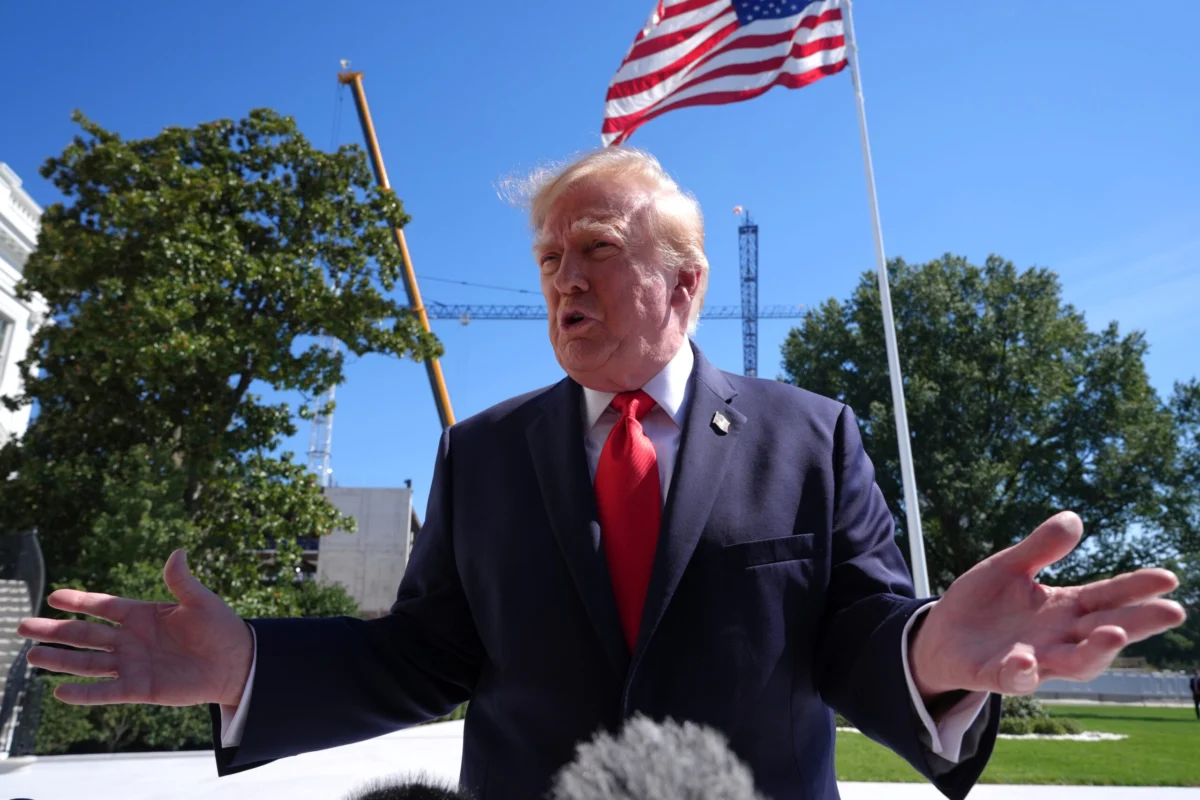
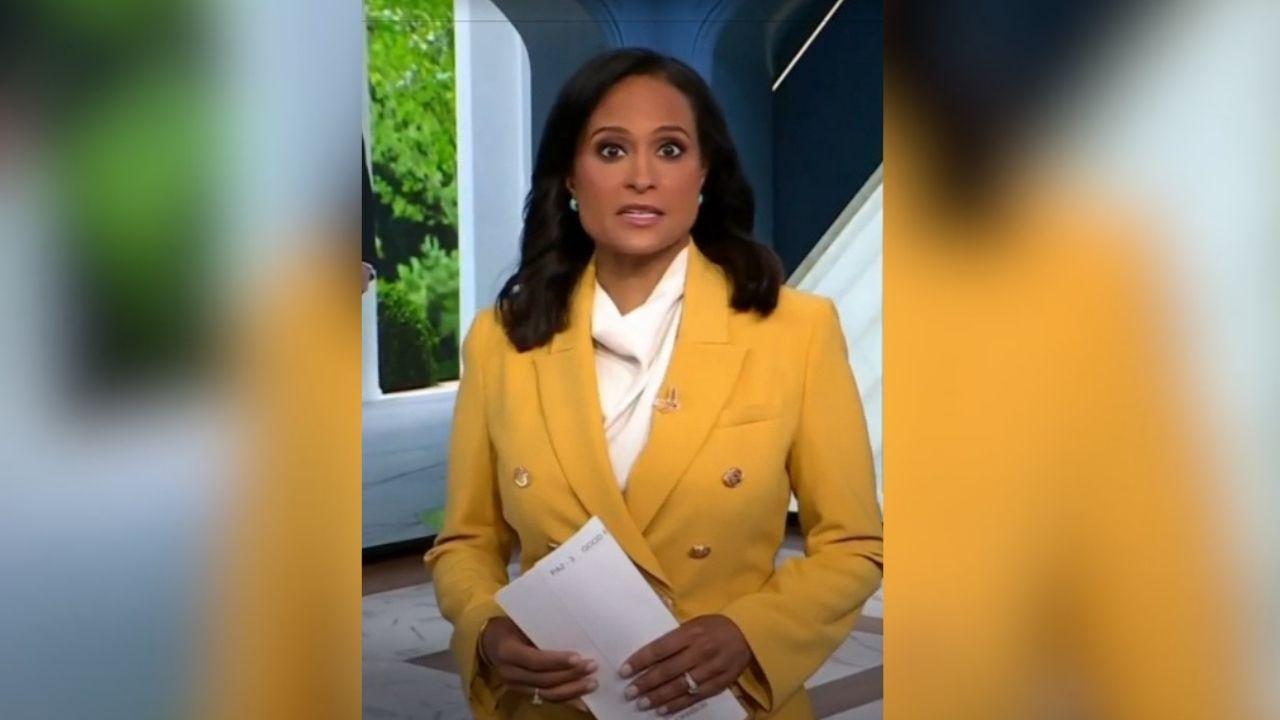
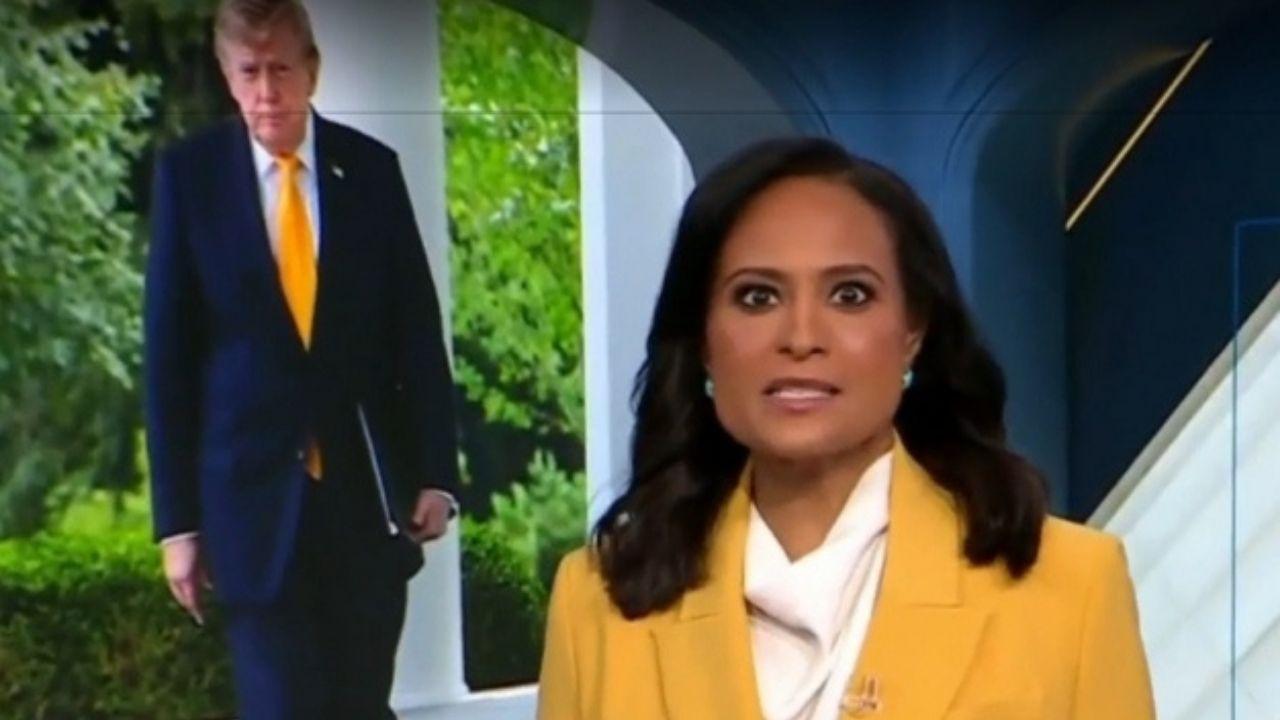
NBC News anchor Kristen Welker’s recent commentary regarding Donald Trump’s record of endorsements in Republican primaries has provoked a furious response from the former president on his social media platform, Truth Social. Welker characterized Trump’s endorsement outcomes as "mixed results," a descriptor that immediately drew a fiery rebuke and a threat of formal complaint to the Federal Communications Commission (FCC) from Trump, who vehemently asserted a near-perfect success rate. The incident highlights the persistent tension between prominent media figures and the former president, whose critiques of news organizations often escalate into public confrontations.
Background of the Broadcast and Trump’s Endorsement Strategy

The controversy began during a promotional segment for NBC 4 Washington’s Meet the Press on Sunday morning, August 31, 2026. Kristen Welker, a seasoned political journalist and the program’s host, was previewing an upcoming discussion on Trump’s enduring influence within the Republican Party, particularly through his endorsements of candidates in various GOP primary races. Her remarks, which noted that Trump had experienced "mixed results" with his chosen candidates over several months, were framed as an observation widely reported by various news outlets tracking the 2026 election cycle.
Welker specifically cited the recent primary victory of Darline Graham in South Carolina, a candidate backed by Trump, who is now set to challenge Dr. Annie Andrews in the general election. While acknowledging this success, her overarching assessment of Trump’s endorsement record as "mixed" appeared to be the catalyst for the former president’s strong reaction. Trump has historically viewed his endorsements as a definitive measure of his political power and a key indicator of his continued sway over the Republican base.
Trump’s Swift and Vehement Social Media Counterattack

Within hours of Welker’s broadcast, Donald Trump took to Truth Social, his preferred social media platform, to unleash a tirade against the NBC anchor and the broader media landscape. He began by deriding Welker as "the Unpopular ‘Hostess’ of the once great Meet the Press, now considered Meet the Fake Press." Trump directly challenged her characterization of his endorsement record, asserting that his recent wins for candidates like Darline Graham and Mike Mazzei demonstrated a "100% for the U.S. Senate, and 98% for the U.S. House, recently and over the long term."
Trump questioned how such statements could be made by someone "working for freely given Public Airwaves," suggesting a breach of journalistic responsibility. His post escalated to a direct threat, stating, "Because of this purposeful inaccuracy, she will be reported to the FCC for rebuke or punishment." He accused "The Radical Left News" of deliberately seeking to "harass, demean, and libel anything ‘TRUMP’," portraying Welker’s comments as part of a concerted effort to undermine his political standing. He maintained that his endorsement record was "without question, the strongest Endorsement in the History of Politics," highlighting specific victories he believed were underreported by the media.
The Nuance of Endorsement Success and Media Scrutiny

The debate over the "mixed results" versus "100% success" of Trump’s endorsements often hinges on differing metrics and interpretations. While Trump frequently touts individual victories as proof of his unmatched influence, political analysts and media outlets often employ a broader lens. This includes examining not just whether an endorsed candidate won their primary, but also the competitiveness of the race, the financial investment made by Trump’s political action committees, and whether the candidate was already a strong contender prior to the endorsement.
For example, a candidate winning a primary in a solidly Republican district or against weak opposition might be counted as a "win" for Trump, but may not necessarily demonstrate a transformative effect of his endorsement. Conversely, a candidate who was struggling and then surged to victory after Trump’s backing would more strongly support his claim of powerful influence. The term "mixed results" typically acknowledges both significant victories and instances where Trump’s endorsed candidates faced unexpected losses, performed below expectations, or failed to secure a primary win, even if those instances are fewer in number. Media scrutiny aims to provide a comprehensive picture rather than solely focusing on selected successes.
Implications for Journalistic Independence and Media-Politics Relations
Trump’s demand for FCC intervention and his accusation of "purposeful inaccuracy" underscore a broader ongoing challenge to journalistic independence. News organizations, including NBC News, operate under the principle of factual reporting and analysis, which may at times conflict with the self-perceptions or preferred narratives of political figures. The former president’s frequent characterization of unfavorable news coverage as "fake news" or "libel" has fostered an environment where media figures often face intense public pressure and personal attacks.
NBC News swiftly responded to Trump’s attack with a statement to Mediaite, firmly standing by its anchor. "Kristen is one of the best in the business and we stand by her," an NBC News spokesperson affirmed. This steadfast support is crucial for maintaining morale within newsrooms and reinforcing the commitment to independent reporting, even in the face of significant political backlash. The incident highlights the difficult position journalists occupy in an increasingly polarized political landscape, where reporting on political outcomes can be immediately framed as partisan attacks.
The Role of the FCC and Broader Public Impact
Donald Trump’s threat to report Kristen Welker to the FCC raises questions about the commission’s jurisdiction and the likelihood of such a complaint being pursued. The FCC primarily regulates broadcast content to ensure it adheres to certain standards, such as obscenity laws, and oversees broadcast licenses. While the FCC does have rules regarding political advertising and equal time for candidates, it generally does not adjudicate claims of journalistic inaccuracy or bias in news reporting content. Intervening in editorial judgments about a reporter’s analysis of political outcomes would be a significant and highly unusual departure from its established role. Historically, attempts by politicians to leverage the FCC to silence or punish critical media coverage have met with little success.
The incident serves as another high-profile example of the contentious relationship between Donald Trump and mainstream media. Such confrontations tend to energize Trump’s base, who often share his distrust of traditional news outlets, while simultaneously galvanizing media organizations and their supporters in defense of press freedom. This dynamic contributes to the ongoing polarization of public discourse, where information is often consumed through partisan lenses, and trust in institutions remains deeply divided. As the 2026 election cycle progresses, similar clashes over factual interpretations and journalistic assessments are likely to continue shaping the political narrative and the public’s perception of both candidates and the media.