The Lindsay Clancy murder trial reached a dramatic impasse on Friday as jurors informed the court they were hopelessly deadlocked, prompting Judge William Sullivan to prepare a formal declaration of a mistrial. After more than 38 hours of deliberation spanning over a week, the 12-person jury sent a final, poignant note to the bench stating that "with a heavy heart," they could not reach a unanimous verdict. The development marks a stunning, if inconclusive, chapter in a case that has become a national flashpoint for discussions surrounding maternal mental health and criminal responsibility.
The deadlock follows a six-week trial in Plymouth, Massachusetts, where 36-year-old Lindsay Clancy faced three counts of first-degree murder for the January 2023 strangulation deaths of her children: 5-year-old Cora, 3-year-old Dawson, and 8-month-old Callan. While the judge was prepared to dismiss the jury immediately following their third notification of a stalemate, defense attorney Kevin Reddington secured a one-hour stay to file an emergency appeal with the Massachusetts Supreme Judicial Court. The defense is seeking a last-minute intervention regarding a specific juror who has allegedly refused to follow the law regarding reasonable doubt.
The atmosphere inside the Plymouth County Superior Court was heavy as the jury’s note was read aloud. The prosecution, led by the Plymouth County District Attorney’s office, signaled its agreement that a mistrial was necessary given the duration of the deliberations. However, the defense argued that the jury should be sent back to continue their work, citing concerns that a single "holdout" juror was acting in bad faith.

The Conflict Over the Holdout Juror and the Emergency Appeal
The tension within the deliberation room became public earlier this week when the jury foreperson sent a letter to Judge Sullivan. The note suggested the jury was split 11-1 in favor of an acquittal, but that one juror "acknowledged doubt but refuses to apply it to the verdict." The foreperson alleged that this individual was ignoring the court’s instructions on the legal standard of reasonable doubt.
In response to these allegations, the defense team filed an emergency request for relief with the state’s highest court. Defense attorney Dana Goldblatt argued that the court has the discretion to inquire into the ability of the identified juror to apply the law or to remove them if they are found to be biased. The filing emphasized that "intervention is necessary in this case to avoid an avoidable mistrial of a case that is so time and labor intensive."
Judge Sullivan had previously declined to question the juror individually, reminding the panel that they must follow the law "whether they like it or not." He maintained that there was no clear evidence the juror was refusing to deliberate, but rather that they simply disagreed on the interpretation of the evidence. This legal friction has left the fate of the Lindsay Clancy murder trial in a state of temporary limbo as the Supreme Judicial Court considers the defense’s petition.
The Tragedy at Duxbury: A Timeline of Events
The core facts of the case are as undisputed as they are horrific. On the evening of January 24, 2023, Lindsay Clancy, a former labor and delivery nurse, waited for her husband, Patrick Clancy, to leave their Duxbury home to pick up take-out dinner and a prescription. During the roughly 20-minute window he was away, Lindsay used exercise bands to strangle her three children in the basement of the home.
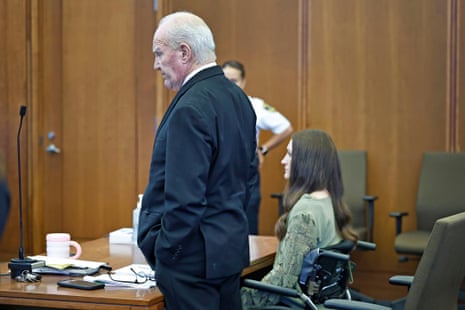
When Patrick returned, he found his wife had jumped from a second-story window in a suicide attempt. The fall resulted in spinal injuries that have left Lindsay paralyzed from the waist down. Patrick discovered the children in the basement; Cora and Dawson were pronounced dead shortly after, while infant Callan survived for several days in a hospital before succumbing to his injuries.
Prosecutors have consistently characterized the killings as "coldly and efficiently executed." They pointed to Clancy’s use of a pharmacy and restaurant tracker to time her husband’s movements as evidence of "deliberate premeditation." The state argued that Clancy was a "functioning mom" who knew right from wrong and acted with "extreme atrocity and cruelty."
Postpartum Psychosis at the Center of the Lindsay Clancy Murder Trial
The defense’s case rested entirely on the claim that Clancy was suffering from postpartum psychosis, a rare and severe psychiatric emergency. Kevin Reddington argued that his client was in the "depths of despair" and was compelled by auditory hallucinations—specifically a male voice—to harm her children and herself. The defense portrayed Clancy not as a murderer, but as a victim of a "lousy" medical system that failed to treat her deteriorating mental state.
Medical experts testified that Clancy had been prescribed a "cocktail" of 13 different medications for anxiety, depression, and insomnia in the months leading up to the tragedy. Dr. Phillip Resnick, a renowned forensic psychiatrist, testified that Clancy was "frankly psychotic" on the day of the killings. He argued that her history of generalized anxiety disorder had spiraled into a severe depressive episode with psychotic features following the birth of her third child.

The Lindsay Clancy murder trial has brought unprecedented attention to the spectrum of perinatal mental health conditions. Postpartum psychosis affects approximately one to two out of every 1,000 women after childbirth. Unlike the more common "baby blues" or postpartum depression, psychosis involves a total break from reality, characterized by delusions, hallucinations, and rapid mood swings.
Medical Perspectives and Societal Myths
Experts not involved in the trial have noted that the case highlights significant gaps in how society and the medical community handle maternal mental health. Dr. Soudabeh Givrad of Stanford Medicine explained that postpartum psychosis is a psychiatric emergency where symptoms can "wax and wane," making it difficult for providers to identify during brief clinical visits. This "window of lucidity" often complicates the diagnosis.
Bonnie Kerker, a professor at the NYU Grossman School of Medicine, noted that societal myths often prevent women from seeking help. The expectation that pregnancy and the postpartum period should be the "happiest time of a woman’s life" can lead to intense shame and the masking of symptoms. In Clancy’s case, the defense argued she had checked herself into a psychiatric facility just weeks before the killings, yet was discharged without a diagnosis of psychosis.
The prosecution countered this narrative by highlighting Clancy’s ability to maintain a household and perform daily tasks. They argued that her "meticulous planning" was incompatible with the disorganized thinking typically seen in a psychotic break. This fundamental disagreement over the intersection of mental illness and criminal intent appears to be the primary cause of the jury’s deadlock.

Public Impact and the Conversation on Reform
The trial, frequently referred to as "America’s saddest murder trial," has deeply divided public opinion. Outside the Plymouth courthouse, supporters of Clancy have gathered throughout the proceedings, calling for "compassion, not incarceration." They argue that the case should lead to legislative changes and better screening for new mothers.
Conversely, others have expressed outrage at the possibility of Clancy avoiding prison. They emphasize the suffering of the three young victims and argue that mental illness should not serve as a "get out of jail free" card for such a violent act. The national conversation has extended to the adequacy of the "insanity defense" in Massachusetts, which requires a defendant to prove they lacked the substantial capacity to appreciate the wrongfulness of their conduct.
The outcome of this trial—or the lack thereof—carries significant weight for future cases involving perinatal mental health. Advocates argue that a "not guilty" verdict would have set a precedent for recognizing the severity of postpartum psychosis in the legal system, while a conviction would have reaffirmed the primacy of premeditation in murder charges.
The Future of the Case and Potential Retrial
If the judge formally declares a mistrial, the legal process for Lindsay Clancy is far from over. The Plymouth County District Attorney’s office will have several options: they can choose to retry the case with a new jury, offer a plea agreement, or drop the charges entirely. Given the high-profile nature of the case and the severity of the charges, legal analysts suggest a retrial is the most likely path.

Kevin Reddington has stated he is prepared to "try the case next week" if necessary. In the interim, Clancy will remain held in the psychiatric facility where she has been receiving care since the start of the legal proceedings. Her physical condition remains unchanged; she remains paralyzed and requires around-the-clock medical assistance.
Furthermore, a civil dimension to this tragedy is looming. Both Lindsay and Patrick Clancy have filed a medical malpractice claim against her former healthcare providers. They allege that the failure to properly monitor and treat her condition led directly to the deaths of their children. This civil suit will likely proceed regardless of the outcome of the criminal trial.
As the legal community waits for the Supreme Judicial Court’s response to the emergency appeal, the "heavy heart" expressed by the jury reflects the collective sentiment of a community and a nation haunted by the Duxbury tragedy. The inability to reach a verdict underscores the profound difficulty of balancing the demands of justice with the complexities of severe mental illness. For now, the Lindsay Clancy murder trial remains an open wound, with no clear resolution for the families involved or the public watching from afar.