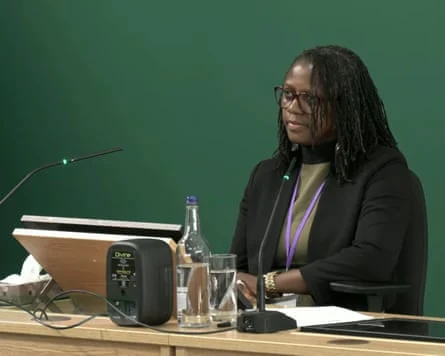
The chief executive of the prominent mental health charity Mind has issued a significant admission, stating that advocacy organizations have historically avoided addressing the potential for violence among a small minority of individuals with severe mental illnesses. Dr. Sarah Hughes, who has led the organization for four years and spent nearly four decades in the mental health sector, warned that this reluctance has contributed to a systemic failure in protecting both patients and the public. Her comments come as a public inquiry concludes into the 2023 Nottingham attacks, a case that has become a flashpoint for critics of the current psychiatric care system.
Dr. Hughes’ statement represents a paradigm shift for mental health groups, which have traditionally focused on reducing stigma and highlighting that the vast majority of people with mental health conditions are not dangerous. However, the severity of the Nottingham case—in which three people were killed by a man with a long history of untreated paranoid schizophrenia—has forced a reckoning within the sector. Hughes acknowledged that in an effort to prevent harassment and discrimination against the mentally ill, charities may have inadvertently "softened the truth" about the risks associated with the most severe cases.
The Nottingham Attacks and the Failure of Oversight
The scrutiny on mental health groups follows the tragic events of June 13, 2023, in Nottingham, England. Valdo Calocane, a 32-year-old man who had been diagnosed with paranoid schizophrenia years earlier, fatally stabbed 19-year-old University of Nottingham students Barnaby Webber and Grace O’Malley-Kumar. He then killed 65-year-old school caretaker Ian Coates before attempting to kill three other pedestrians with a stolen van. In early 2024, Calocane was sentenced to an indefinite hospital order after pleading guilty to manslaughter on the grounds of diminished responsibility.
The subsequent public inquiry has unearthed a series of systemic failures that allowed Calocane to remain at large despite a history of violent behavior. Evidence presented to the inquiry revealed that Calocane had been sectioned—involuntarily detained for mental health treatment—four times in the two years leading up to the attacks. Despite these interventions, he repeatedly refused to take his prescribed medication and frequently disappeared from the oversight of community health teams.
The inquiry has focused on the "events, acts, and omissions" of local authorities, including the Nottinghamshire Healthcare NHS Foundation Trust and the local police. Testimony from health professionals and Calocane’s own family painted a picture of a "broken" system where red flags were ignored and communication between agencies was virtually non-existent. Calocane’s mother, Celeste Calocane, testified that the family had tried to warn authorities about his deteriorating state, but their pleas for more intensive intervention were largely disregarded.
Why Mental Health Groups Have Failed to Acknowledge Risk of Violence
In an exclusive discussion regarding the sector’s future, Dr. Sarah Hughes explained that the decision to downplay the risk of violence was rooted in a fear of regressing toward more restrictive and institutionalized forms of care. For decades, mental health advocacy has been centered on the "de-institutionalization" movement, which seeks to integrate patients into the community rather than confining them to long-stay hospitals.
"We, as a charity sector, have failed to acknowledge that violence does happen in some circumstances," Hughes stated. She noted that while the narrative that most people with mental health issues are non-violent is statistically accurate, it is not the complete story. By brushing the most difficult topics "under the carpet," she argued, the sector has left itself unable to articulate the complexities of mental health and public safety to the general public.
This internal reluctance was present even within Mind, one of the world’s most influential mental health organizations. Hughes admitted there was internal hesitation to speak openly about the risk of violence, fearing it would deepen the stigma that already makes it difficult for people to seek help. However, she concluded that the public is ready for a more honest conversation and that continuing to avoid the topic only serves to undermine the credibility of mental health advocates when tragedies occur.
The Statistical Reality of Severe Mental Illness and Violence
The debate over the risk of violence is often polarized between those who fear a return to "asylum-style" lockdowns and those who believe current community care models are dangerously inadequate. Seena Fazel, a professor of forensic psychiatry at the University of Oxford, provided expert context during a recent roundtable organized by Mind. According to Fazel, high-quality research into schizophrenia consistently shows a small but statistically significant elevated risk of violence compared to the general population.
Fazel noted that this risk is not inherent to the diagnosis itself but is often exacerbated by external factors. "The risk increases when other factors are present, particularly drug or alcohol problems, a history of violence, or having been a victim of violence themselves," Fazel explained. Crucially, he emphasized that modern treatments—when consistently administered—are highly effective at mitigating these risks. The failure in cases like Calocane’s, experts argue, is not that the condition is untreatable, but that the system lacks the resources to ensure treatment compliance for those at the highest risk.

The "absolute risk" of a person with schizophrenia committing a serious violent act remains low, but for the families of victims, these statistics offer little comfort. The focus of the inquiry has been on why a known high-risk individual was allowed to fall through the cracks of a system that is supposed to provide "assertive outreach"—a proactive form of care designed for patients who are difficult to engage.
Impact on Victims’ Families and Public Trust
The shift in stance from Mind has been welcomed by the families of the Nottingham victims. Emma Webber, the mother of Barnaby Webber, has been a vocal critic of the mental health services and the legal handling of the Calocane case. She described the previous silence from mental health groups regarding the risk of violence as a deliberate attempt to quieten a necessary conversation.
"Had the risks in Calocane’s case been understood, then I genuinely believe we wouldn’t be having this conversation today," Webber said. She argued that acknowledging that some individuals are dangerous does not mean stigmatizing the entire community of people with mental health struggles. Instead, she believes that a realistic assessment of risk is the only way to prevent future killings.
The Nottingham attacks have also led to a broader investigation into the Nottinghamshire Healthcare NHS Foundation Trust for corporate manslaughter. This rare and serious legal move underscores the perceived level of negligence involved in the management of Calocane’s care. For the public, the case has highlighted a terrifying gap in public safety: the existence of "revolving door" patients who are released from hospitals only to stop treatment and become a danger to themselves and others.
A New Strategy for Public and Patient Safety
In response to the inquiry and the internal realization of past failures, Mind is preparing to launch a new mental health strategy. This plan aims to bridge the gap between patient rights and public safety, asserting that the two are not mutually exclusive. The strategy calls for a significant increase in the number of psychiatric hospital beds, which have seen a steady decline over the last decade due to funding cuts and the shift toward community-based care.
The proposed strategy also emphasizes the need for better "assertive outreach" teams and improved communication between mental health services, the police, and the judiciary. In the Calocane case, there were several instances where police were called to deal with his violent outbursts, yet this information was not effectively integrated into his clinical care plan. Dr. Hughes argued that for the system to work, there must be a clear line of accountability and a willingness to intervene before a patient reaches a crisis point.
"Our efforts to reduce stigma have, at times, meant that some of the most difficult topics have been brushed under the carpet," Hughes said. "We have to show that patient and public safety are possible if we want to change our mental health system."
Future Implications for Mental Health Policy
The admission by the Mind chief is likely to have long-term implications for mental health policy in the United Kingdom and potentially abroad. It signals an end to the era where advocacy groups focused almost exclusively on the "mild-to-moderate" end of the mental health spectrum—such as anxiety and depression—while avoiding the more challenging realities of forensic psychiatry.
Legislators are now under pressure to review mental health laws to determine if they provide enough power for clinicians to mandate treatment in the community for high-risk individuals. There is also a growing demand for a "victims’ voice" in the mental health system, ensuring that families of those affected by psychiatric violence are heard during the policy-making process.
As the inquiry into the Nottingham attacks draws to a close, the focus remains on ensuring that the "omissions" that led to the deaths of three innocent people are never repeated. For Dr. Sarah Hughes and Mind, the path forward involves a difficult balancing act: continuing the vital work of reducing discrimination while being "more comfortable" with the uncomfortable truth that, for a small minority, mental illness can lead to grave consequences if left unmanaged.