Chancellor Friedrich Merz described the far-right Alternative for Germany (AfD) triumph in Saxony-Anhalt as a seismic shift that necessitates a fundamental reckoning for the nation’s political establishment. Speaking at a press conference in Berlin following a crisis meeting of the Christian Democratic Union (CDU) executive committee, Merz conceded that the result represents the most severe election defeat his party has suffered in decades. The Chancellor’s somber tone reflected a growing sense of emergency within the mainstream government as the far right secures its strongest foothold in German governance since the end of World War II.
The Saxony-Anhalt state election results have sent shockwaves across the European continent, signaling a potential collapse of the "firewall" that mainstream parties have long maintained against the AfD. With the party surging into first place, though falling just short of an absolute majority, the political landscape in Germany’s east has been fundamentally altered. Merz emphasized that the government cannot ignore the fact that nearly 60% of voters in the state cast ballots for parties that openly question the country’s democratic institutions. This shift, he argued, is not a temporary fluctuation but a structural challenge to the federal republic’s political order.
The Magnitude of the ‘Shock’ AfD Victory in Key German State
The final confirmed results from Saxony-Anhalt indicate a historic breakthrough for the AfD, which has successfully tapped into deep-seated economic anxieties and dissatisfaction with federal migration policies. The party’s ability to mobilize previous non-voters was a critical factor in its success, a development Alice Weidel, the party’s co-leader, described as a "dream result" and a triumph for democracy. The CDU, which has traditionally been the dominant force in the region, found itself relegated to a distant second place, unable to counter the populist surge despite a campaign focused on stability and economic continuity.

Chancellor Merz admitted to reporters at the Konrad Adenauer House that the outcome was unexpected in its severity. "We are all deeply shocked by the result in Saxony-Anhalt," Merz stated. "We did not expect it to turn out this way. It is an election result we cannot simply move past as if nothing happened." The Chancellor noted that the level of international attention garnered by the vote underscores its significance, with congratulations pouring in for the AfD from nationalist figures across the globe.
The defeat has placed Merz under immense personal pressure. Grainy images published by German media outlets showed the Chancellor looking dejected in the backseat of his car following the announcement of the exit polls. During the press conference, he was directly asked at what point he would accept that his leadership approach was failing. Merz responded by stating that while he is "not the sort of person that wears their emotions on their sleeve," he is thinking hard about how to return the CDU to shared political success. "Giving up is not an option," he insisted, dismissing suggestions that he might step down before the next federal cycle.
Internal Crisis within the CDU and the Ruling Coalition
The fallout from the election has exposed deep fractures within the CDU and the broader federal coalition involving the Social Democrats (SPD). Outgoing Saxony-Anhalt Premier Sven Schulze was blunt in his assessment, stating that the CDU "no longer has a mandate to govern" in the state and will move into the opposition. Schulze’s concession that the mandate now lies with the AfD has created a vacuum of power that may lead to a minority government or a complete deadlock in the state parliament.
Merz acknowledged that the government must become more effective at explaining its actions and the rationale behind its reforms. He called for "fundamental reforms" to address the country’s future viability, focusing on reducing bureaucracy and increasing economic competitiveness. However, the immediate challenge remains the ideological gap between the coalition partners. Merz noted that while "we need to talk" between partners, the government must demonstrate that its current path is the right one to regain public trust.
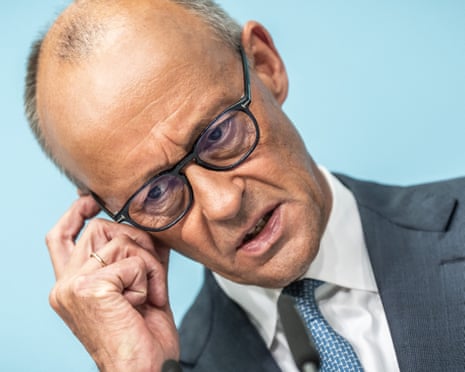
Reports from internal party meetings suggest the mood is even more dire than the public statements indicate. The newspaper Bild reported that Merz told party bosses the AfD win had shaken the CDU to its core. "This shakes our party to its very foundations," Merz reportedly said during the closed-door crisis talks. "We cannot simply carry on as before, nor can I, nor can the federal government."
The AfD’s Path to Victory in Saxony-Anhalt and Future Ambitions
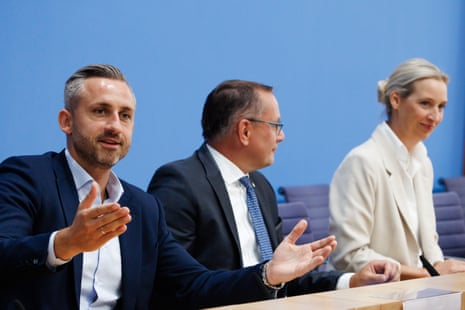
The AfD’s leadership is already looking beyond the state level, viewing the Saxony-Anhalt result as a springboard for the 2029 federal elections. Alice Weidel predicted that the party would achieve at least a 40% vote share in the next national race, arguing that the electorate has lost all trust in the established parties. "The people of this country want a change in policy; they want politics that serves the interests of our country," Weidel said. She highlighted irregular migration, energy policy, and tax reductions as the primary pillars of the party’s platform.
In Saxony-Anhalt, AfD lead candidate Ulrich Siegmund has signaled a willingness to open talks with other parties, though he stressed that the AfD would not compromise on its core principles. Siegmund appeared to invite defections from other groups, stating he would hold discussions with any individual MPs willing to join the party in its "historic task." While CDU leaders in the state have denied that any of their members would defect, the sheer mathematics of the new parliament may make governing without the AfD nearly impossible.
The AfD’s triumph is not an isolated event but part of a broader trend of right-wing gains across Europe. Analysts point to upcoming elections in Sweden, Latvia, and Bulgaria as the next potential flashpoints. The focus is also shifting toward the 2027 French presidential elections and key parliamentary races in Italy, Spain, and Poland. As Hungarian Prime Minister Viktor Orbán noted in his congratulatory message to the AfD, the continent should "buckle up" for a sustained period of political volatility.

Minority Groups Express Alarm Over the Election Result
The prospect of an AfD-led government, or even a strong AfD presence in the state parliament, has sparked significant fear among minority communities in Saxony-Anhalt. Human rights organizations and minority representatives have warned of a potential increase in xenophobia and a rollback of protections for vulnerable groups. Merz was asked during his press conference to address these concerns, to which he responded that all state governments must abide by the constitution. "That holds true today, and will hold true tomorrow," he said, though the assurance did little to quell the anxiety of those who feel targeted by the AfD’s rhetoric.
European Leaders React to the ‘Serious Moment’ for the Continent
The reaction from European capitals has been swift and largely critical. Polish Prime Minister Donald Tusk issued a particularly harsh statement, asserting that in Poland, "only idiots or traitors can rejoice at the triumph of the AfD in Germany." Foreign Minister Radosław Sikorski echoed this sentiment, calling the win a "very worrying" signal for the future of European integration.
In France, Europe Minister Benjamin Haddad described the election as a "serious moment," warning that nationalism and xenophobia are never solutions to complex modern problems. He emphasized the need for mainstream politicians to listen to the concerns of voters with humility while remaining firm in their commitment to democratic values. French Finance Minister Roland Lescure added that Europe faces a major challenge in the face of a "populist wave" sweeping the continent.
The Italian government appears divided in its response, reflecting the internal tensions within Giorgia Meloni’s ruling coalition. Deputy Prime Minister Matteo Salvini, leader of the far-right League, celebrated the AfD’s "resounding success" as a mandate for change and security. In contrast, Foreign Minister Antonio Tajani, who leads the center-right Forza Italia, called the result "terrible news," arguing that the AfD represents a political force antithetical to Western liberal values. Prime Minister Meloni has yet to issue a formal public statement, though reports suggest her views may align more closely with Tajani’s cautious approach.
Geopolitical Tensions and the Russian Influence
A significant subtext of the Saxony-Anhalt election is the perceived influence of Russia on German domestic politics. Chancellor Merz pointedly noted that the election results were being celebrated "2,500 kilometers in the east," a clear reference to Moscow. "That comes as no surprise, given who tried to foster and bring about this outcome," Merz said. "In that sense, we know exactly who we are dealing with here."
The AfD has long been criticized for its pro-Kremlin stance, including its calls to end military support for Ukraine and its opposition to granting refugee status to Ukrainians. German Interior Minister Alexander Dobrindt underscored this threat during a political rally in Bavaria, stating that German freedom is under attack from both "Russian drones in our skies" and "Moscow’s ideological low-flyers in our parliaments." The warning comes in the wake of a drone attack at the Leipzig/Halle airport in August, which Berlin has officially blamed on Russian operatives.
The Broader European Landscape: Belgrade and Beyond
As Germany grapples with its internal political crisis, other events across Europe highlight the ongoing struggle between democratic values and nationalist revisionism. In Belgrade, the funeral of convicted Bosnian Serb war criminal Ratko Mladić has ignited a firestorm of controversy. Despite international condemnation, thousands of supporters gathered to pay tribute to the man responsible for the Srebrenica massacre, the worst act of genocide in Europe since World War II.
The Organization for Security and Co-operation in Europe (OSCE) expressed serious concern over the live broadcast of the memorial services on Serbian television, noting that content glorifying a war criminal was amplified without adequate editorial context. The European Union’s foreign policy spokesperson stressed that "any glorification of war criminals, genocide denial, and revisionism contradict the most fundamental European values." The funeral serves as a grim reminder of the persistence of murderous ideologies and the challenges of reconciliation in the Western Balkans.

Meanwhile, European Commission President Ursula von der Leyen’s trip to Greenland highlights the strategic competition for influence in the Arctic. Amid renewed U.S. interest in the territory, von der Leyen’s visit underscores the EU’s efforts to secure critical raw materials and bolster its presence in a region increasingly affected by climate change and geopolitical maneuvering.
The Future of German Democracy Following the Saxony-Anhalt Vote
The AfD victory in Saxony-Anhalt marks a turning point for the German Federal Republic. The "shock" of the result has forced a reassessment of political strategies across the spectrum. For Chancellor Merz, the challenge is twofold: he must find a way to stabilize his party and the federal coalition while simultaneously addressing the underlying grievances that have fueled the far-right’s rise.
The upcoming state elections in Berlin and Mecklenburg-Vorpommern will be the next major tests for the CDU and the SPD. If the AfD continues its winning streak, the pressure for a snap federal election may become irresistible. For now, the German government remains in a state of high alert, acknowledging that the political order established in the post-war era is facing its most significant internal threat to date.
The "shock" AfD victory in a key German state is indeed an election result that Europe cannot simply move past. It serves as a stark warning that the continent’s political landscape is shifting, and the traditional methods of governance may no longer be sufficient to hold back the tide of populism and nationalism. As Merz concluded, the future of the country and the opportunities available to future generations are at stake, and the government must act decisively to ensure those opportunities are not squandered.