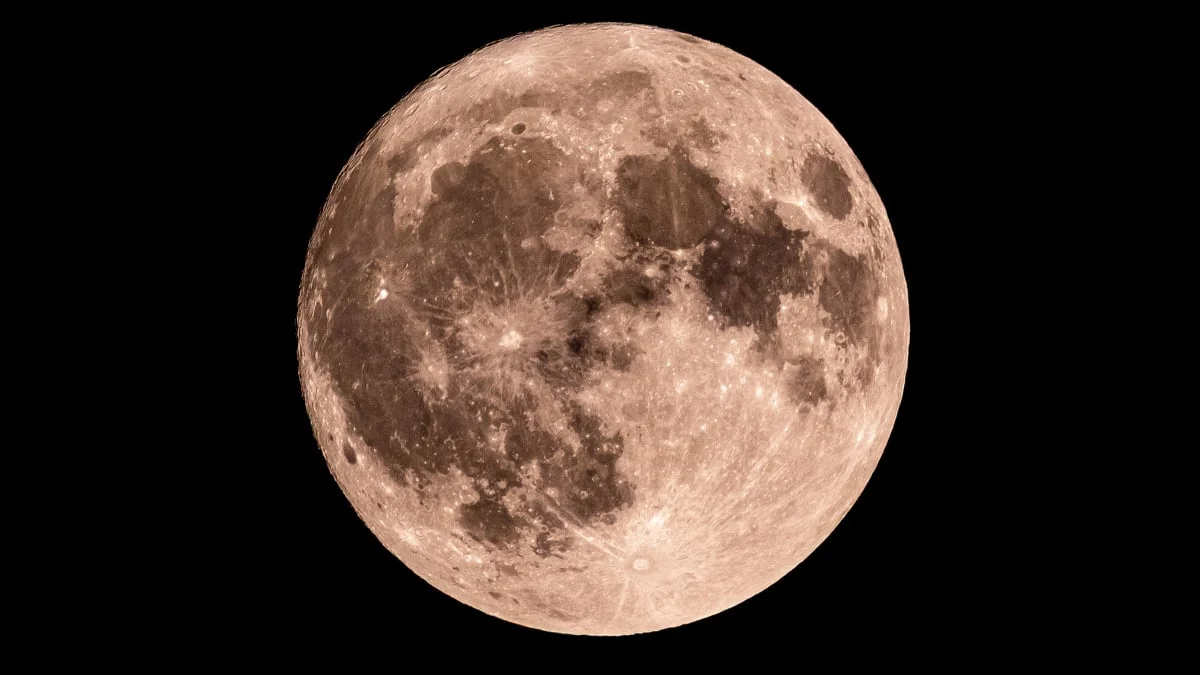
The lunar cycle reaches its First Quarter phase on Tuesday, July 21, 2026, positioning the Moon exactly halfway between its New Moon and Full Moon stages. According to data provided by NASA’s lunar observation trackers, the Moon will display approximately 48% illumination as it high-steps through the evening sky, offering a prime opportunity for both casual observers and professional astronomers to study the lunar terminator—the line dividing the light and dark sides of the lunar surface. This specific phase is characterized by the Moon appearing as a "half-moon" to the naked eye, with the right side illuminated for observers in the Northern Hemisphere.
This celestial alignment occurs as the Moon reaches a 90-degree angle in its orbit relative to the Earth and the Sun. At this juncture, the Sun’s rays strike the lunar surface from the side, creating long, dramatic shadows that accentuate the topographical features of the Moon’s rugged landscape. For residents of the Northern Hemisphere, the Moon will rise around midday and reach its highest point in the sky at sunset, remaining visible until approximately midnight.
Understanding the Lunar Mechanics of the July 21 First Quarter Phase
The First Quarter phase represents a critical milestone in the 29.5-day synodic month, which is the time it takes for the Moon to cycle through all its phases. While the Moon’s physical composition remains unchanged, its appearance from Earth is dictated by the changing geometry of the Earth-Moon-Sun system. On July 21, 2026, the Moon’s position in its orbit allows us to see exactly one-half of the day-side of the Moon.
During this waxing phase, the Moon is "growing" in illumination. Following the New Moon, which occurred roughly a week prior, the sliver of light has expanded from a Waxing Crescent into the current First Quarter. Over the next several days, the Moon will transition into a Waxing Gibbous phase, eventually culminating in a Full Moon on July 29, 2026. This progression is a fundamental aspect of orbital mechanics, driven by the Moon’s counterclockwise journey around our planet.
The illumination level of 48% is technically just shy of a perfect 50%, a common occurrence due to the specific timing of the quarter-phase peak. Because the Moon is constantly in motion, the exact moment of the First Quarter may occur when the Moon is below the horizon for certain geographical regions, leading to slight variations in perceived brightness throughout the night of July 21.
Identifying Key Geological Features During the Moon Phase Today
The First Quarter is widely considered the best time for lunar observation because the "terminator" line—the boundary between day and night on the Moon—is currently cutting through some of the most complex geological formations on the lunar surface. On July 21, 2026, observers using basic equipment can identify several prominent features that are often washed out by the intense glare of a Full Moon.
Naked-eye observers will be able to distinguish the Mare Crisium (Sea of Crises) and the Mare Fecunditatis (Sea of Fertility). These are large, dark basaltic plains formed by ancient volcanic eruptions. The Mare Crisium is particularly notable for its isolated position away from the other major lunar maria, appearing as a dark oval near the Moon’s edge.
For those utilizing binoculars, the level of detail increases significantly. The Endymion Crater, located near the northeastern limb, and the Posidonius Crater, situated on the edge of the Mare Serenitatis, become clearly visible. Additionally, the Mare Nectaris (Sea of Nectar) offers a glimpse into the Moon’s violent history of impact and volcanic flooding. The shadows cast within these craters during the First Quarter provide a sense of depth and scale that is otherwise difficult to perceive.
Advanced Observation: Craters and Apollo Landing Sites
Telescopic observation on July 21, 2026, reveals even more intricate details, including the Rupes Altai, a dramatic mountain range that forms a scarp or cliff face. This feature is particularly striking during the First Quarter as the low-angled sunlight highlights its jagged peaks and steep drops. The Rupes Altai is part of the ancient impact basin that formed the Mare Nectaris, stretching over 300 miles across the lunar surface.
Perhaps most significant for space enthusiasts is the visibility of historic lunar landing sites. Under the lighting conditions of the First Quarter, the regions surrounding the Apollo 11 and Apollo 17 landing spots are well-positioned for viewing. Apollo 11, the site of the first human landing in 1969, is located in the southwestern part of the Mare Tranquillitatis. While the lunar modules themselves are too small to be seen even with the most powerful backyard telescopes, the surrounding craters and topographical landmarks used by NASA astronauts for navigation are clearly discernible.
Apollo 17, the final mission of the Apollo program, landed in the Taurus-Littrow valley. On July 21, the shadows cast by the surrounding mountains provide a clear view of the valley’s entrance, allowing observers to pinpoint exactly where humans last walked on the lunar surface more than five decades ago.
The Broader Impact of Lunar Cycles on Earth
The Moon phase today explained goes beyond mere aesthetics; it has tangible effects on Earth’s biological and physical systems. The most immediate impact is on the tides. During the First Quarter, the Earth experiences "neap tides." This occurs because the Sun and the Moon are at right angles to each other, causing their gravitational pulls to partially cancel each other out. Consequently, the difference between high and low tide is at its minimum during this period.
Beyond the oceans, the lunar cycle continues to influence agricultural practices and wildlife behavior. Many migratory birds and marine organisms rely on lunar light for navigation and mating cycles. The 48% illumination provided on July 21 offers a moderate level of nocturnal light, which can affect the hunting patterns of nocturnal predators and the foraging habits of prey species.
In the realm of modern technology, lunar phases remain a consideration for satellite communications and deep-space tracking. NASA and other international space agencies coordinate their missions based on lunar illumination to ensure optimal visibility for landing craft and to manage the thermal loads on spacecraft electronics.
Future Lunar Outlook: The Road to the July 29 Full Moon
Following the events of July 21, 2026, the Moon will continue its eastward trek across the sky, gaining roughly 12 to 13 degrees of position each day. As it moves, the portion of the Moon reflecting sunlight will increase, leading into the Waxing Gibbous phase. This period is often preferred by photographers who wish to capture the "Earthshine" phenomenon, where sunlight reflected off the Earth dimly illuminates the dark portion of the Moon.
The cycle will reach its peak on July 29, 2026, with the arrival of the Full Moon. Unlike the First Quarter, the Full Moon will rise at sunset and set at sunrise, remaining visible throughout the entire night. While the Full Moon is the most brilliant phase, it lacks the depth-defining shadows of the First Quarter, making it less ideal for studying individual craters but perfect for viewing the extensive "ray systems" that emanate from younger craters like Tycho and Copernicus.
The transition from the First Quarter on July 21 to the Full Moon on July 29 serves as a reminder of the constant motion inherent in our solar system. For educators and scientists, these dates provide a recurring opportunity to engage the public in the science of astronomy and the ongoing efforts to return humans to the lunar surface through programs like the Artemis missions.
Scientific Significance of Lunar Topography in 2026
As of 2026, the Moon has become a focal point of international geopolitical and scientific interest. The First Quarter phase allows researchers to conduct "shadow measurements," a technique used to determine the height of lunar mountains and the depth of craters by measuring the length of the shadows they cast. This data is vital for mapping potential landing zones for future robotic and crewed missions.
The features visible on July 21, such as the Mare Crisium, are of particular interest due to their mineralogical composition. Scientists believe these areas contain high concentrations of titanium and helium-3, resources that could one day support long-term lunar bases or serve as fuel for future deep-space exploration. By observing these regions during the First Quarter, scientists can better understand the geological evolution of the Moon and its relationship to the early history of the Earth.
Furthermore, the study of the lunar terminator during this phase assists in the calibration of orbital sensors. Satellites orbiting the Moon use the sharp contrast of the light-dark boundary to test the sensitivity of their imaging equipment, ensuring that future maps of the lunar poles—where water ice is thought to exist—are as accurate as possible.
Observing the July 21 Moon: Tips for the Public
For those planning to view the Moon on July 21, 2026, experts recommend finding a location away from heavy light pollution, although the Moon is bright enough to be seen clearly even from major cities. Because the First Quarter Moon is high in the sky during the early evening, it is an ideal target for families and students.
To get the most out of the experience, observers should:
- Check the Weather: Clear skies are essential, as even thin cloud cover can obscure the fine details of the lunar craters.
- Use a Tripod: If using binoculars or a small telescope, a steady mount is necessary to prevent the image from shaking, which allows the eye to pick up more detail.
- Start Early: The Moon will be visible in the afternoon sky, but the best viewing begins just after sunset when the sky darkens enough to provide high contrast.
- Identify the Terminator: Focus on the line between light and dark; this is where the most dramatic views of the lunar mountains and craters will be found.
The Moon phase today explained serves as a bridge between ancient celestial observation and modern space science. As the Moon hangs in its First Quarter on July 21, 2026, it offers a glimpse into both the history of our solar system and the future of human exploration. Whether viewed through a sophisticated telescope or simply noticed during a walk at dusk, the Moon remains Earth’s most constant and fascinating celestial companion.