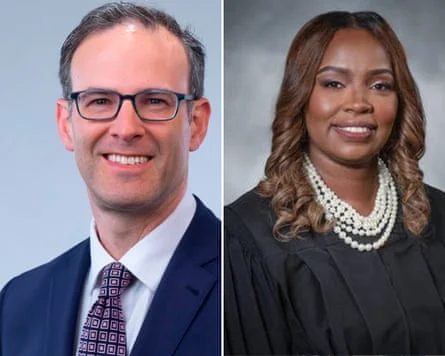
A New Orleans state court judge has initiated a criminal complaint against a local CBS affiliate following an investigative broadcast that scrutinized a high-value real-estate transaction involving her personal residence. Judge Kimya Holmes, who serves on the New Orleans Criminal District Court, filed the police report against WWL Louisiana after the station aired a segment detailing how she acquired a $765,000 home from a man facing federal fraud charges. The legal escalation has sparked significant concern among First Amendment advocates, particularly as the judge invoked a specific provision of state law that had been repealed and no longer carries criminal penalties.
The dispute represents the latest flashpoint in an increasingly volatile relationship between the Louisiana judiciary and the investigative press. According to David Hammer, the veteran investigative reporter at the center of the story, the judge’s criminal complaint targets the station’s decision to air images that included her home address and the license plate of a vehicle associated with her former fiancé. However, legal experts and legislative records indicate that the statutory grounds for such a criminal case were removed by the state legislature weeks before the report was even broadcast.
Investigative Reporting Triggers Judicial Backlash
The controversy began on August 24, when WWL Louisiana aired a report by Hammer—a reporting partner of The Guardian—concerning a gated-community residence in New Orleans. The investigation revealed that the $765,000 property was donated to Judge Holmes in 2025 by Arthur Allen, an accountant to whom she was engaged at the time. The timing of the real-estate transfer was of particular interest to investigators, as it occurred just weeks after federal authorities charged Allen with fraudulently obtaining more than $712,000 in taxpayer-funded Covid-19 pandemic relief.
Judge Holmes has defended her actions, telling Hammer that her relationship with Allen did not begin until four years after the alleged crimes were committed. She further maintained that she remained unaware of the federal charges against Allen until shortly before he entered a guilty plea in April, a period by which she says the couple had already separated. Despite the end of their romantic engagement, the report noted that Holmes continued to reside in the home while Allen continued to make mortgage payments on the property.
The timing of the broadcast was also politically sensitive. Judge Holmes was in the midst of a competitive re-election campaign for the November 3 race, facing off against a colleague whose judicial section had been eliminated by a recent change in state law. The investigative report placed a spotlight on the judge’s personal finances and associations at a critical juncture in her career, leading to immediate pushback from the courthouse administration.
The Role of the Judicial Administrator and Outdated Statutes
On September 10, roughly two weeks after the initial story aired, the judicial administrator for the New Orleans Criminal District Court, Robert Kazik, sent a formal letter to WWL Louisiana. The letter demanded that the station scrub its digital platforms of any public records or footage showing the specific address of the home Allen had gifted to Holmes. Additionally, Kazik demanded the removal of images showing the license plate of a Corvette leased by Allen, which a station source had photographed while it was parked in the courthouse’s restricted garage.
Kazik’s letter went a step further, requesting that the news outlet reveal the identity of the individual who took the photograph of the vehicle. In making these demands, the judicial administrator cited a Louisiana statute that supposedly required "third parties," including news organizations, to unpublish certain personal information about judges within three days of a formal request. The statute cited in the letter carried a penalty of up to 90 days in jail and a $1,000 fine for non-compliance.
However, the legal foundation of the demand was fundamentally flawed. The Louisiana legislature had recently moved to repeal the specific portions of the law that mandated the removal of published information by news outlets. Those repeals also stripped away the misdemeanor criminal penalties associated with the act. These legislative changes took effect on August 1, nearly a month before Hammer’s report and the subsequent letter from the judicial administrator.
New Orleans Judge Files Criminal Case Against CBS Affiliate Over Reporting and Public Records
Despite the repeal of the criminal penalties, Judge Holmes moved forward with a formal police complaint on September 11. She alleged that WWL Louisiana had violated the law by "revealing her home address and vehicle information." In response to the initial administrative pressure, WWL had briefly taken the videos offline on the morning of September 11 to review the legal claims. The station later reposted the content with the address and license plate numbers blurred but refused to comply with the demand to reveal its confidential sources.
The New Orleans Police Department (NOPD) confirmed that an investigation into the judge’s complaint is ongoing. This has led to a sharp rebuke from media lawyers, who argue that the judge and the judicial administrator are attempting to enforce a "ghost law" that no longer exists. Scott Sternberg, a prominent New Orleans media attorney who lobbied for the repeals, expressed disbelief that a public official would attempt to criminalize accurate reporting on a real-estate transaction.

Sternberg noted that the original provisions were likely unconstitutional under the First Amendment, which generally protects the publication of truthfully obtained information on matters of public concern. "I can’t imagine a public official filing a criminal complaint in response to reporting that seems to be accurate," Sternberg said. He added that the NOPD has likely not made any arrests because, quite simply, no crime has been committed under the current revised statutes of Louisiana.
Legislative Delays and Information Gaps
The confusion surrounding the law appears to stem, at least in part, from the state’s own digital infrastructure. When WWL questioned Holmes’ campaign spokesperson about the legal basis for the criminal complaint, the spokesperson provided an email from the judge that included an out-of-date version of the law. This version, which still listed the criminal penalties, was pulled from the Louisiana legislature’s official website.
A spokesperson for the state legislature admitted that updating the website to reflect newly passed or repealed laws can take "many months" following a session. The website includes a disclaimer stating that it makes "no guarantee" regarding the accuracy of the posted statutes and that the provisions are not official or authoritative until edited for publication. This lag in information meant that Judge Holmes and other members of the judiciary were relying on a version of the law that was no longer in effect.
Records show that the misinformation may have spread through the judicial ranks. On August 26, two days after the home donation story broke, state appellate court judge Tiffany Gautier Chase sent an email to colleagues notifying them of "protections against the dissemination of certain personal information." This email apparently included the outdated statute, which may have emboldened the subsequent legal actions taken against the CBS affiliate.
Broader Implications for Press Freedom in Louisiana
The criminal case against the CBS affiliate is not an isolated incident but rather part of a broader pattern of legal and physical intimidation of journalists in Louisiana. In July, deputies at the New Orleans criminal courthouse handcuffed investigative producer Danny Monteverde and station attorney Elana Beiser. The two were at the courthouse covering an indictment against the state’s attorney general—a case that was later dismissed.
Furthermore, the state’s highest court has been involved in litigation against the press. In August, a jury awarded $300,000 to Louisiana Supreme Court Justice Jeff Hughes in a libel lawsuit against The Advocate newspaper. The suit centered on an editorial, and the verdict has sent shockwaves through the legal community. Many press freedom advocates fear the ruling could undermine the "actual malice" standard established by the U.S. Supreme Court in New York Times Co. v. Sullivan, which protects journalists from being sued by public officials unless it can be proven that the information was published with the knowledge that it was false.
These combined events have created a chilling atmosphere for investigative journalism in the region. When judges—who hold the power to interpret the law—file criminal complaints based on repealed statutes, it raises fundamental questions about the abuse of power and the protection of the Fourth Estate.
Legal Challenges and the Path Forward
WWL Louisiana’s attorney, Mary Ellen Roy, has formally contacted the NOPD to ensure that the detectives assigned to the case are aware that the law cited by Judge Holmes was repealed on August 1. Roy has requested that the investigation be closed immediately, arguing that there is no legal basis for a criminal inquiry. Despite this, the NOPD stated as recently as Tuesday that the case remains open.
The outcome of this dispute will likely have lasting consequences for how public records are used in investigative reporting. While judges often cite safety concerns as a reason to keep their home addresses private, journalists argue that when those homes are part of suspicious financial transactions or gifts from federal defendants, they become matters of significant public interest.
As the NOPD continues its investigation, the legal community is watching closely to see if the police department will dismiss the complaint or if the conflict will move further into the court system. For now, the case stands as a stark reminder of the friction between judicial privacy and the public’s right to know, particularly in a state where the boundaries of press freedom are being actively tested in the halls of justice.