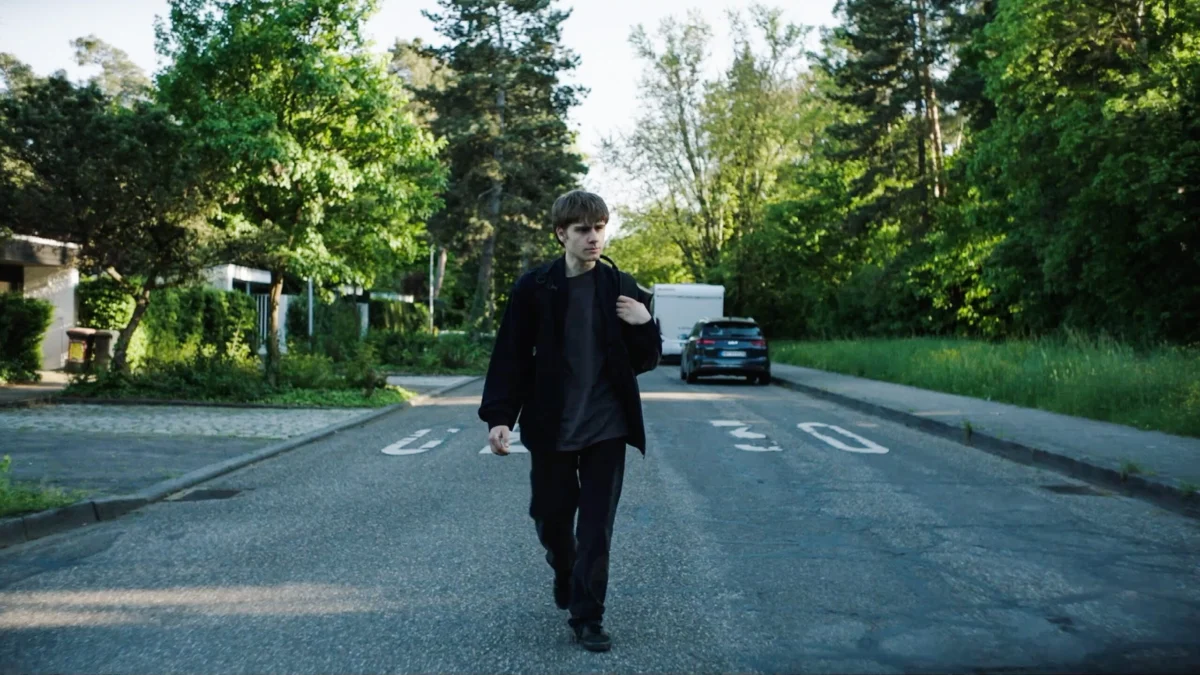
German writer-director Jannis Lenz is poised to challenge audiences at the 83rd Venice Film Festival with his feature debut, Oasis, a compelling and often difficult exploration of exclusion, adolescent rage, and the elusive nature of a safe place in the digital age. The film, which premieres on September 6 in the Horizons section, delves into the dark undercurrents of school life and the various forms violence can take, prompting viewers to confront uncomfortable truths about contemporary society. Lenz describes violence as akin to a "virus," adapting its form but perpetually spreading across social strata and geographical boundaries, a central tenet of his thought-provoking work.
The word "Oasis" itself has a notable presence at this year’s Venice festival, with at least two films bearing the title. While one, Will Lovelace and Dylan Southern’s Oasis: Don’t Look Back in Anger, offers a nostalgic look at the famous English rock band, it is Lenz’s Oasis (originally Oase) that promises to deeply resonate with—and potentially unsettle—attendees. Lenz, making his feature-length directorial debut, uses a tense narrative to probe whether true safety is a physical location, a state of mind, or something entirely constructed.
The film’s premise centers on a disturbing viral video featuring a student threatening classmates, which swiftly circulates online and ignites concern among faculty, parents, and students alike. The student in the video, along with two other social outcasts, seeks refuge in a nearby forest. What begins as a form of play gradually morphs into a ritualistic escape, where pain becomes a vehicle for release. As the boundaries between the trio become increasingly fluid, old wounds resurface, challenging their fragile sanctuary and redrawing the lines of their shared experience.

Lenz’s personal history heavily informed the genesis of Oasis. Having returned to his childhood home in Germany after spending a significant portion of his life in Vienna, the director found himself reconnecting with nature, specifically the woods where he played as a child and now visits with his own children. This immersion, coupled with his older child’s entry into school, triggered a flood of memories and a renewed sense of urgency to address the complexities of adolescent life. The production even utilized Lenz’s former elementary school as a filming location, adding an authentic, almost cyclical, layer to the narrative.
The film serves as a poignant commentary on the evolution of social pressures and violence in the modern era. Lenz observes that while the core problems of exclusion and ostracism remain constant, their manifestations have drastically shifted. He notes that for today’s youth, the pervasive feeling of "always being watched" in the digital realm fundamentally alters their experiences and behaviors. Unlike previous generations where violence might have been more direct, current forms of aggression often operate on a digital level, presenting a different, yet equally potent, challenge for young people. This digital layer, Lenz contends, makes violence more like a "virus" – constantly changing its form, spreading indiscriminately, and transcending borders and social classes.
Behind the camera, Lenz fostered an environment of intense collaboration, mirroring the film’s thematic exploration of fluid boundaries. He co-wrote the screenplay with Alexander Dirninger, who also served as the director of photography—a rare combination that Lenz credits for fostering a cohesive visual and narrative vision from the outset. Melisa Krasniqi contributed to the editing process, further cementing the team’s shared creative approach. This integrated methodology ensured that the film felt like a unified whole, greater than the sum of its individual departmental parts.
The cast of Oasis blends established German talent with promising newcomers. Florian Geißelmann (known for Sound of Falling), Anton Petzold (Home Stories), and Mathilda Smidt (Almania) portray the central trio of outcasts, bringing raw authenticity to their roles. Veteran actor Godehard Giese (Transit, Babylon Berlin) plays one of their fathers and a teacher, while Britta Hammelstein (Woman of the Dead) features as the school principal, and Ioana Iacob (Do Not Expect Too Much From the End of the World) as a school staff member. Lenz, drawing from his documentary background, adopted a unique casting process that prioritized chemistry and trust over traditional scene rehearsals. He brought potential actors together for conversations, allowing their natural interactions to dictate the final selections, especially for the core group of three.

A significant aspect of Oasis is its immersive sensory experience, particularly its intricate sound design. Lenz collaborated with Benedikt Palier, a renowned sound designer with whom he has a long-standing working relationship. Palier’s approach is organic, building the soundscape from elements already present in the film, such as a choir or guitar sounds, which then evolve into the musical score. This method creates a deeply atmospheric and visceral journey for the audience, inviting them to "let go" much like the characters themselves.
Given the film’s exploration of challenging and sensitive themes, Lenz prioritized the psychological safety and well-being of his cast and crew. He consulted with a psychologist throughout the writing process to ensure the subject matter was handled with appropriate gravity. Additionally, an intimacy coordinator was involved from casting through rehearsals and on-set production, especially for demanding scenes. This proactive approach aimed to create a "safe space" for the actors, fostering trust and enabling them to navigate the film’s intense emotional landscape responsibly.
The title Oasis itself emerged late in the production, chosen for its symbolic depth rather than a literal depiction. Lenz clarifies that the "oasis" in the film is not a physical place the characters find, but rather a mental construct they create for themselves—a non-material state of mind. He deliberately avoids romanticizing the forest setting, depicting it as a modern landscape marked by logging and wind turbines, where human noise often drowns out nature. This conscious decision also serves to distance the film from historical misuses of nature imagery, such as Nazi propaganda that co-opted the woods to evoke a sense of belonging and identity.
Lenz’s directorial ethos extends to the film’s challenging, open-ended conclusion. Eschewing simplistic answers for complex issues, Oasis intentionally leaves audiences with questions, designed to provoke introspection and dialogue. The film also examines the adults and teachers not as one-dimensional antagonists, but as individuals driven by fear—a motivation Lenz identifies as inherently counterproductive. By observing their struggles with the same attentiveness applied to the teenagers, the film offers a nuanced perspective on the systemic challenges facing school communities.

The thematic threads in Oasis are consistent with Lenz’s previous short films, which frequently delve into themes of the body, identity, and violence. His earlier works, such as Shadowboxer (2015), the European Film Award-nominated Wannabe (2017), and the award-winning Soldat Ahmet (2021), have all explored these intense subjects. Notably, actor Ahmet Simsek has been a recurring collaborator, portraying a young boxer in Shadowboxer, a soldier in Soldat Ahmet, and an anti-violence trainer in Oasis, demonstrating a continuous artistic dialogue with Lenz on these critical topics. Lenz’s early filmmaking roots in Parkour and Freerunning, where he intuitively filmed bodies interacting with urban spaces, undoubtedly shaped his ongoing fascination with physical expression and the human form.
Produced by Germany’s Zeitgeist Filmproduktion in co-production with Austria’s Wega Film and Germany’s Third Picture, alongside We Fade to Grey, Ocean Pictures Filmproduktion, and Totem Films, Oasis represents a significant European collaboration. Totem Films is managing international sales, with a German theatrical release slated for February 2027 via Mindjazz Pictures. As Oasis makes its debut at the Venice Film Festival, it stands as a powerful and timely cinematic statement, solidifying Jannis Lenz’s position as a director unafraid to confront the profound and often uncomfortable questions at the heart of contemporary human experience.