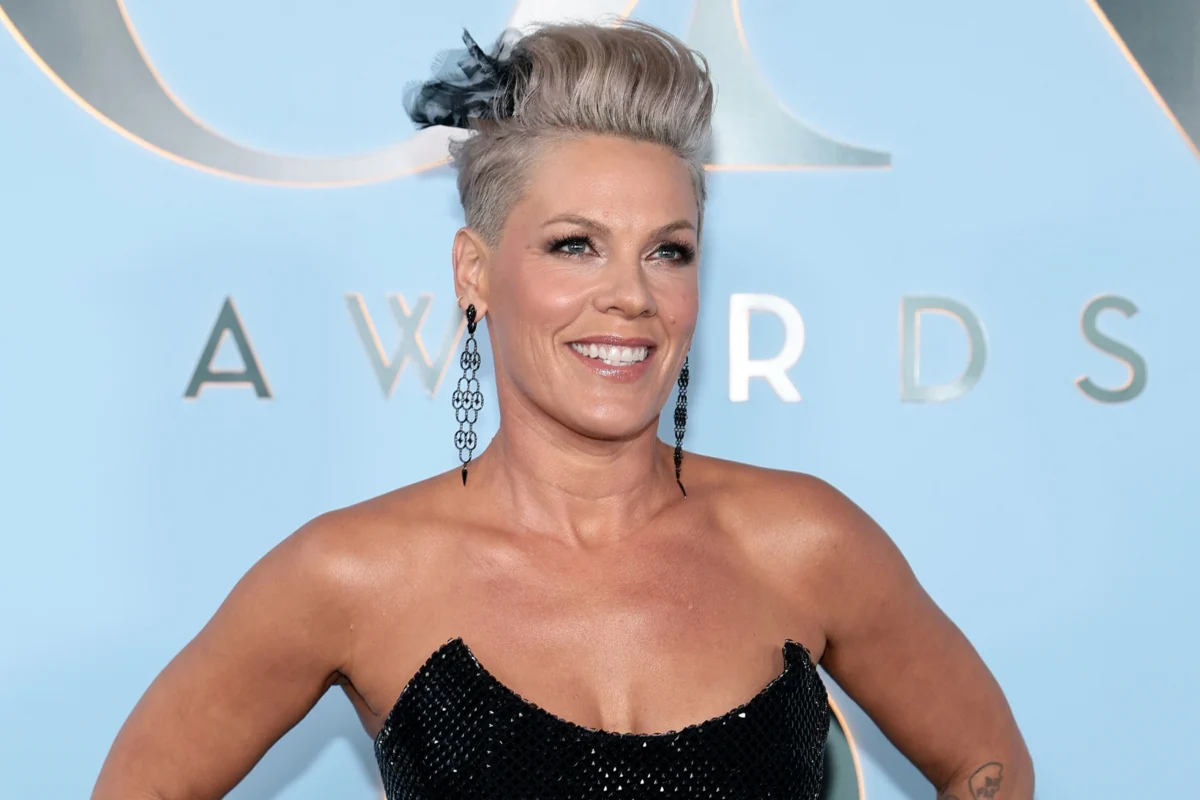
Pop superstar P!nk has directly addressed the significant backlash she faced following her reaction to rapper Macklemore’s onstage "Free Palestine" statements, asserting her stance is rooted in defending her own community and heritage. The Grammy-winning artist detailed her perspective in a lengthy social media statement, aiming to clarify her motivations and address the widespread criticism that followed her initial repost of a critical post.
P!nk Responds to Controversy Surrounding Macklemore’s Remarks
The controversy ignited after Macklemore, performing as an opening act for Ed Sheeran’s ongoing stadium tour, vocally supported Palestine during his sets at MetLife Stadium in New Jersey on September 4 and 5. These public declarations swiftly drew criticism, including from P!nk, who initially amplified a post from StopAntisemitism that condemned Macklemore’s remarks and called for his removal from Sheeran’s tour.
P!nk’s decision to reshare the critical post on social media, which was later amplified by various news outlets, prompted a wave of online discussion and debate. The pop singer, known for her outspoken nature and impactful music, felt compelled to issue a more comprehensive explanation of her actions and feelings.
Delving into P!nk’s Statement and Motivations
In her detailed Instagram post, P!nk began by acknowledging the initial repost, admitting that the sentiments expressed in the shared content were not entirely her own words. "It said things in words I didn’t write, and I wouldn’t have chosen all of them," she stated, highlighting the nuanced nature of social media interactions. She candidly described her tendency to respond to hurt with "snarky memes and act like I’m fine," a coping mechanism she now recognizes as insufficient.
The core of P!nk’s explanation revolved around her Jewish identity and the personal impact of Macklemore’s statements. "I was born a Jew. I didn’t pick it, and I’ve never hidden it," she declared, emphasizing that her heritage is an intrinsic part of who she is. She expressed frustration at being judged and having her beliefs assumed based on a single repost and the mention of her identity.
Navigating Complex Geopolitical Issues
P!nk was careful to distinguish her personal stance from political affiliations, stating, "I have never spoken for Israel, or for any government." She reiterated her firm belief that "Hamas is a terrorist organization" and that "Palestinians deserve a future that honors their humanity and their aspirations." Her message stressed the universal importance of protecting innocent life, stating unequivocally, "Protecting innocent life comes first, everywhere, and nobody should ever celebrate the death of a child. Anybody’s child."
Her commitment to humanitarian causes was further underscored by her long-standing role as a UNICEF ambassador. Over a decade, P!nk has actively worked to support children affected by conflict globally, regardless of their nationality or birthplace. This experience has deeply shaped her perspective, leading her to grieve for children impacted by war on all sides of conflict zones.

Recalling Past Incidents and Defining Boundaries
The singer also referenced a 2014 incident where Macklemore faced criticism for wearing a costume perceived as antisemitic. While Macklemore issued an apology at the time, P!nk recalled the collective understanding within the Jewish community regarding the costume’s offensive nature. She explained that she had "let it go" after his apology, as is often the practice within her community.
However, the recent incident at the stadium show struck a different chord. P!nk described the experience of seeing "violent images from a war on the screens" and then hearing Macklemore dedicate a song and subsequently tell "all of the Jews in the stadium that it wasn’t about them." She emphasized, "You don’t get to decide that for us." This perceived dismissal of Jewish concerns, particularly in the context of a sensitive geopolitical conflict, was the primary driver behind her repost.
The Nuances of Free Speech and Identity
P!nk was clear that her objection was not to the phrase "Free Palestine" or to any artist’s right to express their views. "I have never asked for another artist to be silenced and I’m not asking now," she asserted. Her focus was on the personal fear and concern her statement evoked within her community. She expressed her dismay at being told her fear is "just propaganda" or that she is "somehow cool with genocide because I noticed?"
She concluded her statement by reflecting on the timing of her message, coinciding with the 25th anniversary of the September 11 attacks and the start of Rosh Hashanah, the Jewish New Year. She extended a wish for a "shana tova" to her fellow Jewish people, underscoring the blend of personal identity and broader societal reflection.
Macklemore’s Stance and Broader Implications
Following his onstage comments, Macklemore publicly stood by his "free Palestine" statements. He posted on X (formerly Twitter), "Wanting all humans to be treated equal should never be controversial," accompanying his statement with video footage of his speech. This stance has cemented his position within the ongoing discourse surrounding the Israeli-Palestinian conflict.
The controversy has also prompted action from advocacy groups. The Israeli-American Council (IAC) launched a petition calling for Macklemore’s removal from subsequent Ed Sheeran tour dates, indicating the significant and organized opposition his remarks have generated.
The situation highlights the increasing scrutiny artists face when engaging with politically charged issues. Public figures are often compelled to navigate complex global conflicts while balancing artistic expression, personal beliefs, and the potential impact on their fan bases and professional relationships. P!nk’s detailed response offers a personal perspective on these challenges, emphasizing the importance of identity, community, and nuanced dialogue in an increasingly polarized world. The incident serves as a reminder of the profound ways in which global events intersect with individual identities and public platforms.