Prime Minister Anthony Albanese and New South Wales Premier Chris Minns have officially launched a significant gun buyback program in Sydney, as the national leader warned that firearm ownership in Australia has surpassed levels seen before the historic 1996 Port Arthur massacre. The initiative, sparked by the Bondi beach terror attack, arrives amid a busy week for the Australian judiciary as the high-profile appeal of convicted triple murderer Erin Patterson is set to begin in Melbourne.
Standing alongside Premier Minns, Albanese emphasized that while Australians remain proud of the country’s stringent gun control measures, the sheer volume of weapons currently in circulation presents a renewed challenge to public safety. The Prime Minister noted that today’s firearm numbers exceed those recorded when the Howard government implemented the landmark National Firearms Agreement nearly three decades ago. The new buyback scheme is a coordinated effort between the commonwealth and state governments, aimed at removing high-capacity and semi-automatic weapons from the community.

PM Warns Australia Has More Guns Than During Port Arthur Massacre
The Prime Minister’s warning highlights a growing concern among security experts regarding the gradual increase in registered and unregistered firearms over the last 30 years. Following the 1996 Port Arthur massacre, which claimed 35 lives, Australia enacted some of the world’s most comprehensive gun laws, including a massive mandatory buyback. However, population growth and various legal exemptions have allowed the total number of firearms to climb steadily.
Albanese stated that the federal government is a "willing partner" for any state or territory seeking to strengthen its local regulations. He pointed to the recent development of the first-ever national firearms register as a critical step in modernizing the country’s tracking capabilities. This register is intended to provide law enforcement with real-time data across state lines, closing loopholes that previously allowed owners to move weapons between jurisdictions with limited oversight.
The New South Wales buyback is structured as a two-phase operation, with costs split evenly between the federal and state treasuries. Under the first phase, the government will offer $1,000 for revolvers and $850 for semi-automatic handguns. Owners of double-barrel shotguns can receive $850, while single-barrel models are valued at $650. Rifles will fetch between $650 and $1,000, and air rifles have a fixed compensation rate of $450.

The Bondi Terror Attack and the Path to Reform
The current legislative push is a direct response to the Bondi beach terror attack, a tragedy that reignited the national conversation on weapon accessibility. Following a deadly shooting in December 2025, the National Cabinet convened to address both rising antisemitism and the need for tighter firearm restrictions. The resulting agreement led to the specific funding deal announced this week in Sydney.
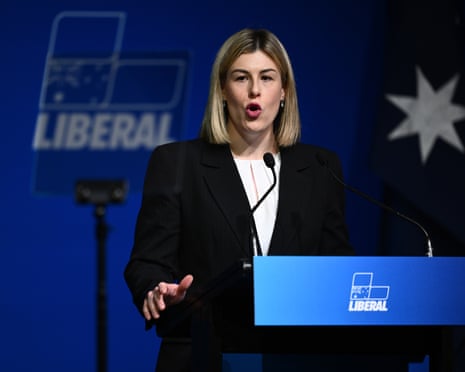
Despite the bipartisan support for public safety, the buyback has faced criticism from political opponents. NSW Opposition Leader Kellie Sloane accused the Minns government of "rushing" the scheme without providing adequate answers on its total cost or the resourcing of the NSW Police Force. Sloane has demanded clarity on whether compensation will extend to ammunition and accessories, and what safeguards are in place to protect law-abiding business owners and farmers from financial loss.
One Nation leader Pauline Hanson also voiced strong opposition, arguing that taxpayers should not be responsible for funding the program. Hanson, a licensed gun owner herself, claimed the buyback would unfairly target rural citizens who rely on firearms for pest control and agricultural management. She argued that different firearms serve specific utilitarian purposes and that the current plan fails to understand the needs of the farming community.
Erin Patterson’s High-Stakes Appeal in Victoria
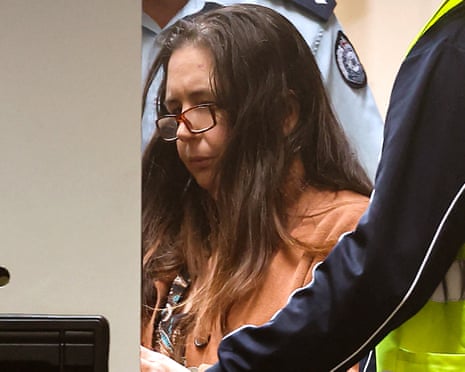
As the political debate over gun control intensifies, the Victorian legal system is preparing for the appeal of Erin Patterson, a case that has captivated the international public. Patterson was convicted in July 2025 for the murders of three relatives using poisoned mushrooms served during a lunch in 2023. Her appeal against the conviction is scheduled to begin this Wednesday in a Melbourne court.
Patterson was sentenced in September 2025 to life imprisonment with a minimum non-parole period of 33 years. The victims included her estranged husband’s parents, Don and Gail Patterson, and his aunt, Heather Wilkinson. A fourth guest, Ian Wilkinson, survived the meal but required weeks of intensive hospital care. Throughout her 11-week trial in Morwell, Patterson maintained her innocence, claiming she accidentally used death cap mushrooms in a beef Wellington dish.
While Patterson is challenging her conviction, the state is launching its own cross-appeal regarding her sentence. Prosecutors will argue before the Victorian Court of Appeal that a 33-year non-parole period is "manifestly inadequate" for a triple murder. The Crown intends to seek a true life sentence, arguing that Patterson should never be eligible for release. The state’s appeal specifically contests the original judge’s finding that Patterson faced a "substantial chance" of solitary confinement, an assessment they claim unfairly influenced the decision to grant a parole period.

Pauline Hanson and the Cost-of-Living Crisis
Beyond the gun buyback, One Nation leader Pauline Hanson has used the current political window to advocate for major changes to Australia’s financial and immigration policies. Speaking on News24, Hanson called for a relaxation of compulsory superannuation rules, suggesting that Australians struggling with high mortgage rates and inflation should be allowed to access their retirement savings early.
Hanson described the current superannuation system as "too rigid," arguing that the funds belong to the workers and should be available during times of crisis. She suggested that allowing first-home buyers and families under financial pressure to tap into these accounts would provide immediate relief from the cost-of-living crisis. This proposal, however, remains controversial among economists who warn that early withdrawals could severely diminish the long-term viability of the retirement system and increase future reliance on the age pension.
The One Nation leader also targeted the international education sector, calling for a dramatic reduction in student visas. Hanson characterized the industry as a "farce" and a "back door" for permanent residency. She alleged that many international students arrive in Australia only to change their courses or abandon their studies shortly after arrival to seek work and residency, contributing to housing shortages and infrastructure strain.
Regional Defense and the Pukpuk Treaty
In the realm of foreign policy and national security, Defense Minister Richard Marles is currently conducting a high-level diplomatic tour of Papua New Guinea and the Solomon Islands. On Sunday, Marles met with PNG Prime Minister James Marape and Defense Minister Elias Kapavore in Port Moresby to discuss the implementation of the Pukpuk treaty.
The Pukpuk treaty represents a historic shift in regional defense, marking the first major alliance of its kind since the Anzus pact. Under the agreement, PNG will provide troops to support Australian defense initiatives, fostering a deeper level of mutual cooperation. Marles emphasized that "Pacific security is most effective when it is led by Pacific nations," reinforcing Australia’s commitment to a stable and resilient Indo-Pacific region.
Following his stay in PNG, Marles is scheduled to travel to the Solomon Islands to meet with Prime Minister Matthew Wale. The visit coincides with the opening of the Western Border Outpost in the Shortland Islands. This new facility is designed to centralize police, customs, and biosecurity operations, providing a strategic hub for the Solomon Islands’ Guardian-class patrol boats, which were provided by Australia to enhance maritime security and combat illegal fishing.
Infrastructure and Social Services: Toll Caps and NDIS Reform
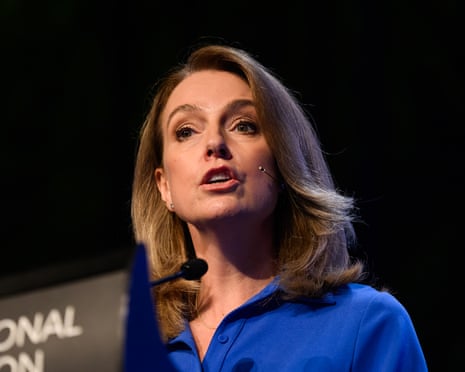
On the domestic front, infrastructure and social services have become central campaign pillars for state and federal representatives. In Victoria, Opposition Leader Jess Wilson announced a plan to implement a $50-per-week road toll cap starting July 1, 2027. The proposal is part of a broader ten-year economic plan aimed at reducing the burden on commuters, tradespeople, and small business fleets. Wilson argued that the cap would boost the local economy by leaving more disposable income in the pockets of Victorian families.
Concurrently, the Minister for the NDIS, Jenny McAllister, has been defending the government’s reforms to the National Disability Insurance Scheme. Appearing on the Insiders program, McAllister addressed concerns regarding the transition of children out of the NDIS and into "Foundational Supports." She confirmed that the "Thriving Kids" scheme is on track to commence on October 1, supported by a $10 billion agreement between the states and the commonwealth.
The transition aims to ensure that children with developmental delays receive appropriate early intervention without necessarily requiring long-term NDIS participation. McAllister noted that the government is working through "additional arrangements" for children who may be removed from the primary scheme, ensuring that foundational services are available through schools and community health centers.

Public Health and Diplomacy: Bird Flu and Thai Relations
As the week progresses, Australian authorities are also monitoring a burgeoning public health concern following the detection of bird flu in a little penguin on Phillip Island. This marks the first time the virus has been found in a penguin in Victoria, raising alarms for the state’s wildlife tourism and biodiversity. Authorities confirmed the death occurred just before a scheduled vaccination program was set to begin. The detection follows other positive cases in wild birds across two states, prompting a heightened biosecurity response to protect vulnerable avian populations.
On the diplomatic stage, Prime Minister Albanese announced that Thai Prime Minister Anutin Charnvirakul will visit Canberra this Wednesday. This will be Anutin’s first official visit to Australia since taking office. The leaders are expected to focus on deepening economic ties and discussing regional stability. Albanese praised the "warm relationship" between the two nations, noting the significant cultural and business contributions of the Thai-Australian community.
The convergence of these events—from the legal drama of the Patterson appeal to the systemic reforms in gun control and social services—underscores a period of intense activity in Australian public life. As the government moves to address the Prime Minister’s warning that Australia has more guns than during the Port Arthur era, the nation remains focused on the balance between individual liberties and collective security.