Prime Minister Anthony Albanese issued a sharp rebuke of One Nation leader Pauline Hanson on Sunday, asserting that Hanson should not ‘talk Australia down’ while traveling abroad to participate in conservative political conferences. The Prime Minister’s comments, delivered during a visit to the Tiwi Islands, come as the Australian political landscape faces simultaneous pressures from a high-stakes private school funding campaign and a massive surge in support for Hanson’s right-wing party.
The tension between the government and the One Nation leader escalated following Hanson’s appearance at the Conservative Political Action Conference (CPAC) in London. During her European tour, which included a holiday with billionaire mining magnate Gina Rinehart, Hanson recorded a podcast with far-right activist Tommy Robinson and met with various figures of the British right. Albanese argued that representatives of the Australian Parliament have a fundamental responsibility to project a positive image of the country when on the international stage.

“When I have the opportunity to represent Australia overseas, I talk Australia up,” Albanese told reporters. “I don’t talk Australia down. I go as someone who’s proud to represent our nation and proud to talk about what we are as a nation.” The Prime Minister emphasized that the world views Australia with envy due to its social and economic stability, suggesting that Hanson’s rhetoric undermines the national interest.
Albanese Asserts Hanson Should Not ‘Talk Australia Down’ During European Tour
The Prime Minister’s criticism highlights a growing concern within the Labor government regarding the international alignment of Australian fringe politicians with global far-right movements. Hanson’s participation in the London CPAC event saw her revive several of her most controversial talking points, including sharp critiques of multiculturalism and Islam in Australia. Her meeting with Tommy Robinson, a figure frequently associated with anti-immigrant unrest in the United Kingdom, has particularly drawn the ire of the government.
Despite the condemnation from the Prime Minister, the latest Newspoll data indicates that Hanson’s message is resonating with a significant portion of the electorate. One Nation’s primary vote has surged to 30%, placing the party on equal footing with the ruling Labor Party and well ahead of the Coalition, which currently sits at 19%. This shift suggests a deepening polarization in Australian politics, as voters move away from traditional major parties toward populist alternatives.

The controversy was further fueled by a televised special on Channel Seven’s Spotlight, which followed Hanson through her UK tour. The program captured awkward moments, including slim attendance at her London speeches and a confrontational street tour in Luton, Robinson’s hometown, which nearly resulted in a physical altercation with a local resident. Hanson used the platform to advocate for "mass deportation" policies similar to those proposed by the UK’s Reform Party, stating she would implement such measures for illegal residents if One Nation were to win government.
Private Schools Launch Strategic Ad Campaign for Increased Funding
While the government grapples with the rise of One Nation, it is also facing a coordinated lobbying effort from the private education sector. Independent Schools Australia (ISA), the peak body representing the nation’s private schools, has launched a major advertising blitz aimed at securing more government funding. The campaign is strategically timed to coincide with Labor’s national conference and targets specific "Teal" and Labor-held seats where affluent families are feeling the pinch of the rising cost of living.
The ISA campaign features digital advertising, billboards, and bus posters in inner-city federal seats, including Brisbane and Griffith in Queensland, and Melbourne. It also focuses on the Sydney seats of Mackellar and Wentworth, as well as Curtin in Perth—areas held by independent "Teal" candidates who unseated Liberal incumbents in the last election. The campaign’s slogan, “Parents are choosing, families are contributing, and policy needs to reflect that reality,” seeks to frame private school funding as a matter of fairness for tax-paying parents.
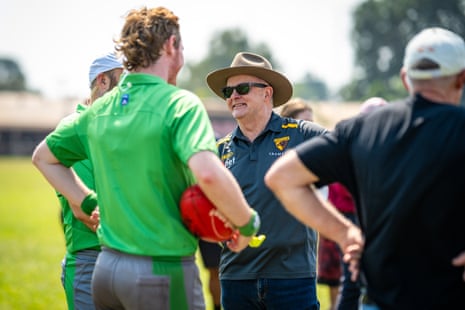
ISA Chief Executive Graham Catt defended the campaign, arguing that many private school families are under significant financial pressure. “Independent school families have been stereotyped for too long,” Catt said. “They are parents and taxpayers making careful decisions about their children’s education, often under real financial pressure. They deserve to be seen, they deserve to be heard.”
Disparities in Schooling Resource Standards Fuel National Debate
The demand for more private school funding has reignited a fierce debate over the Schooling Resource Standard (SRS), the funding formula established following the Gonski review. Critics of the ISA campaign point to data from the Australian Curriculum, Assessment and Reporting Authority (Acara) showing a stark disparity in how public and private schools are funded. According to 2023 figures, 98% of private schools are currently funded above the SRS, while more than 98% of public schools remain below it.
Education advocates argue that the government’s priority should be closing the gap for underfunded public schools rather than increasing subsidies for the private sector. The Labor government has previously committed to a deal to fully fund public schools, but officials have noted that the process could take a decade to complete. The ISA’s push for more money is seen by some as an attempt to lock in current advantages before the government shifts its focus toward the public system.

The political stakes of the education debate are high, as the "Teal" independents who represent many of the targeted seats often hold the balance of power on key legislation. If the ISA can successfully mobilize parents in these electorates, it could force the government to reconsider its current funding trajectory to avoid losing support in crucial battleground areas.
Corporate Regulator Secures Record $830 Million in Civil Penalties
In the financial sector, the Australian Securities and Investments Commission (ASIC) has reported a landmark year for enforcement. The corporate regulator announced it has won $830 million in civil penalties over the past fiscal year, a figure that exceeds the total penalties secured in the previous six years combined. The record-breaking haul is a result of a more aggressive litigation strategy aimed at strengthening corporate accountability and protecting consumers.
The centerpiece of ASIC’s enforcement success was a $300 million penalty awarded against the collapsed foreign exchange broker Union Standard. This represents the largest single penalty ever achieved in an ASIC case. Between 2019 and 2025, the regulator averaged only $137 million in annual civil penalties, making the 2025-26 results a significant outlier in the history of Australian corporate oversight.
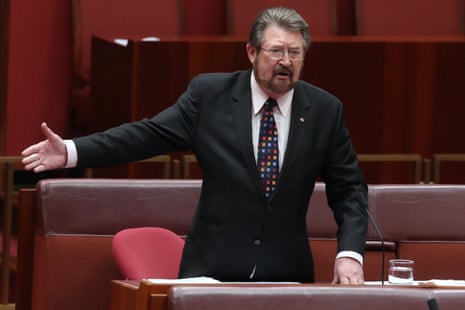
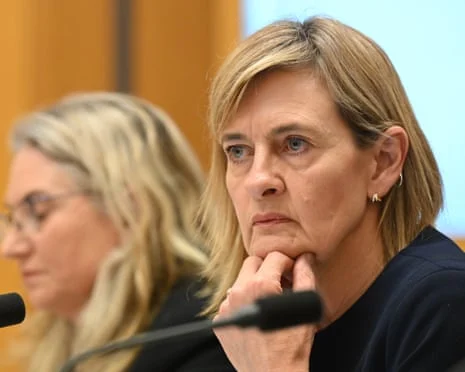
ASIC Chair Sarah Court stated that the penalties would lead to approximately $643.5 million in remediation and refunds for tens of thousands of affected investors. “Our enforcement work is focused on misconduct that causes real harm,” Court said. “We are delivering results, forcing change, and returning money to consumers.” The fines will also provide a substantial boost to the federal budget, providing the government with additional fiscal breathing room.
High-Tech Surveillance: WA Police Facial Recognition Trial Results in Real-Time Arrest
Law enforcement technology is also making headlines as Western Australia Police launched a first-of-its-kind mobile trial of real-time facial recognition technology. The debut of the system was marked by a dramatic live arrest during a press conference at Perth’s Mirrabooka bus station. As Police Commissioner Col Blanch addressed the media, a camera mounted on a nearby police van identified a woman in the crowd with an outstanding arrest warrant.
The system is capable of scanning hundreds of faces per minute and cross-referencing them against a database of 4,000 high-priority profiles, including registered sex offenders and missing persons. Commissioner Blanch defended the technology against immediate backlash from privacy advocates, noting that the arrest was proof of the system’s efficacy. “People are being arrested because they are wanted,” Blanch told reporters as officers led the woman away.

Privacy groups have raised concerns about the potential for "function creep" and the lack of a robust legislative framework governing the use of facial recognition in public spaces. The five-month trial will be closely watched by other state jurisdictions and civil liberties organizations, as it represents a significant step forward in the use of biometric surveillance by Australian law enforcement.
Strategic Defense Cooperation: Exercise Pitch Black 2026 Commences in Northern Australia
On the national security front, Prime Minister Albanese officially opened Exercise Pitch Black 2026 in Darwin. The event is Australia’s premier international air combat exercise and serves as a major platform for regional defense cooperation. Over the next three weeks, 100 aircraft and 2,500 personnel from 20 different countries will conduct high-end training exercises across the skies of Northern Australia.
Participating nations include the United States, Japan, France, Germany, South Korea, and several Southeast Asian partners. The exercise is designed to improve interoperability between the Royal Australian Air Force (RAAF) and its international allies. Albanese noted that the exercise is a demonstration of Australia’s commitment to regional stability. “Australia is strongest when we work closely with our partners,” the Prime Minister said, highlighting the importance of maintaining a secure and open Indo-Pacific.
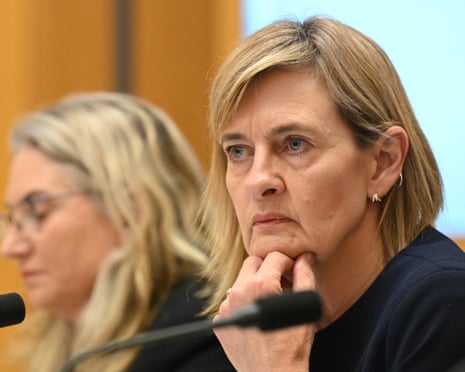
The scale of the 2026 exercise is the largest in the event’s history, reflecting the heightened geopolitical tensions in the region. The training will be centered at RAAF Bases Darwin and Tindal in the Northern Territory, with additional support from RAAF Base Amberley in Queensland.
Australia Bids Farewell to ‘The Human Headline’ Derryn Hinch
The nation also paused to remember veteran broadcaster and former senator Derryn Hinch, who was honored with a state funeral in Melbourne. Hinch, known as the “Human Headline,” died on July 10 at the age of 82. The service, held at the Timber Yard in Port Melbourne, was attended by a wide array of figures from the media and political worlds, reflecting Hinch’s long and often controversial career.
Hinch was remembered for his unwavering commitment to his principles, which frequently led to legal battles and even imprisonment for his refusal to name sources or comply with suppression orders. His transition from journalism to the Senate late in life further cemented his legacy as a public figure who was never afraid to court controversy in pursuit of what he believed was right.
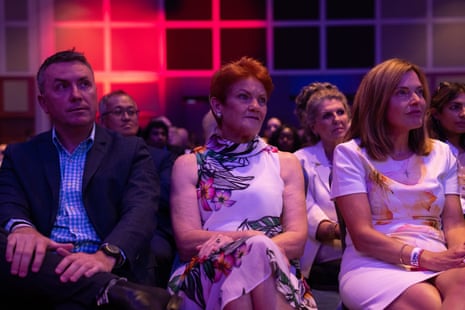
The funeral service, which was livestreamed to the public, included tributes from longtime colleagues like Ray Martin. A statement from the Victorian government praised Hinch for a life lived with "unwavering commitment" to standing up for the vulnerable. His death marks the end of an era for Australian media, closing the chapter on one of the country’s most recognizable and polarising voices.