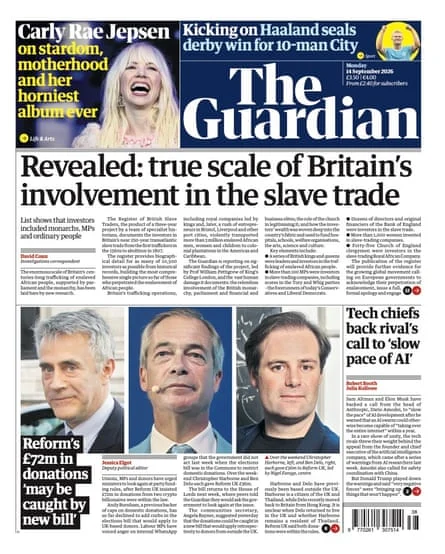
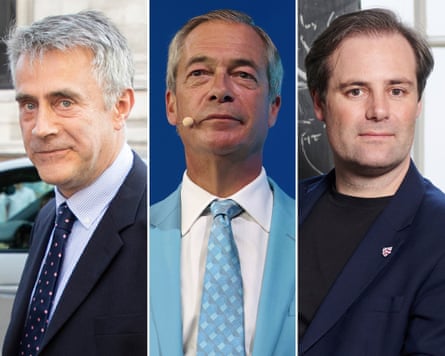
Nigel Farage and the Reform UK party have secured a historic financial windfall following two unprecedented £36 million donations from cryptocurrency magnates, totaling £72 million ($94.5 million) in a single weekend. These contributions, provided by entrepreneurs Ben Delo and Christopher Harborne, represent the largest single donations in the history of British politics and have the potential to fundamentally alter the nation’s electoral dynamics. The massive capital injection comes at a critical juncture for the party, which has recently struggled with internal financial scrutiny and a series of leadership scandals that threatened to overshadow its political platform.
The sheer scale of Reform UK’s record-setting donations has sent shockwaves through Westminster, as the total amount exceeds the combined spending of the seven largest political parties during the last general election. Financial analysts note that the £72 million figure is nearly double the total donations received by all UK political parties combined earlier this year. This sudden surge in liquidity provides Reform UK with the resources to mount a sophisticated, multi-front campaign as the country moves closer to a high-stakes election cycle.

The Scale of Reform UK’s Record-Setting Donations
To understand the magnitude of these donations, one must look at the historical context of British campaign finance. Historically, political parties in the United Kingdom have operated on budgets that are modest by American standards, with strict limits on spending during the regulated period of an election. However, the period leading up to an official election call allows for significant infrastructure building and "air war" advertising. Reform UK’s record-setting donations effectively eliminate the financial barriers that typically hinder third-party movements in the UK’s first-past-the-post system.
The donors behind this windfall are deeply entrenched in the high-stakes world of digital assets. Ben Delo, a co-founder of the cryptocurrency exchange BitMEX, contributed the first £36 million. Delo has a history of supporting Reform UK, but his latest contribution is of a different order of magnitude. His background is not without controversy; in 2022, he was convicted in the United States for failing to implement sufficient anti-money-laundering protocols at BitMEX. He was later pardoned by former U.S. President Donald Trump in 2025, a move that has added a layer of international intrigue to his political involvement in Britain.
The second £36 million came from Christopher Harborne, another billionaire with extensive holdings in the cryptocurrency sector. Harborne, who holds dual citizenship in the UK and Thailand, stated that his "competitive spirit" drove him to match Delo’s contribution. This is not Harborne’s first major gift to Farage’s cause; a previous £5 million donation to the Reform leader is currently the subject of an ongoing parliamentary standards investigation. The arrival of these funds has prompted immediate calls from rival parties for more stringent oversight of how such vast sums are vetted and utilized.
Strategic Use of Capital: Building a Political Machine
The primary question facing political observers is how Reform UK intends to deploy this unprecedented war chest. Early indications suggest a massive scaling of party infrastructure. The party has already moved its operations to Millbank Tower in London, a location famously associated with the professionalized "New Labour" operations of the late 1990s. This move is seen as a symbolic declaration of Reform’s intent to be viewed as a professional party of government rather than a populist protest movement.
With 60 current job vacancies, Reform UK is in the midst of a hiring blitz, seeking to fill roles for regional organizers, videographers, graphic designers, and policy researchers. A significant portion of the record-setting donations is expected to be funneled into granular data gathering. By investing in sophisticated voter-targeting software and ground-level intelligence, the party aims to identify and mobilize non-voters and disaffected supporters of the traditional Conservative and Labour blocs.
This "ground war" will be complemented by a massive digital "air war." In the absence of a formal election call, there are fewer restrictions on party spending for billboards, social media advertising, and the development of in-house media studios. Experts predict that Reform UK will use these funds to dominate social media feeds and bypass traditional media gatekeepers, a tactic Nigel Farage has successfully employed on a smaller scale for decades.

Legislative Battles and the Push for Donation Caps
The arrival of Reform UK’s record-setting donations has reignited a fierce debate in Parliament over the ethics of political financing. The House of Lords is currently deliberating on the Representation of the People Bill, a piece of legislation designed to tighten rules regarding foreign and domestic contributions. One of the bill’s key provisions involves capping donations from British citizens living abroad at £100,000 per year. Given that both Delo and Harborne have spent significant time living outside the UK, the timing of their donations is seen by many as a strategic move to bypass impending restrictions.
The Labour Party has faced internal pressure to support a universal cap on all political donations. While some MPs have advocated for a £100,000 annual limit, the proposal has met resistance from trade unions, which are traditional financial pillars of the Labour movement. Unions argue that such a cap would disproportionately weaken their influence while doing little to curb the power of individual billionaires. However, the sheer size of the Reform windfall has forced a reconsideration of this stance. Recent reports suggest that some union leaders may be willing to accept certain limitations if it prevents what they describe as the "buying of British democracy" by cryptocurrency tycoons.
Government officials, including Communities Secretary Angela Rayner, have indicated that the administration is looking closely at potential amendments to the elections bill. Rayner noted that while the government is wary of unintended consequences for legitimate fundraising, the scale of recent donations necessitates a review of the "level playing field" in British politics.

Impact on the Impending Election Cycle
As the political class speculates on the possibility of an early summer general election in 2026, the financial readiness of Reform UK has become a central factor in strategic planning. Recent polling shows Reform UK trailing the Labour Party by only a few percentage points while maintaining a lead over the Conservatives in several key regions. For the Conservative Party, the financial empowerment of Reform UK represents an existential threat, as it risks splitting the right-wing vote and handing a landslide victory to Labour.
Conversely, the Labour Party has used Reform UK’s record-setting donations as a fundraising tool of its own. Over the weekend, Labour leadership sent out urgent appeals to its base, warning that Farage’s movement could "drown out" the government’s message through sheer financial force. The narrative of "billionaires vs. the people" is likely to become a central theme in the upcoming campaign, as both major parties attempt to frame Reform UK as a vehicle for elite interests rather than a grassroots insurgency.
The influence of cryptocurrency in this financial surge also raises questions about the future of tech-sector lobbying in the UK. By aligning themselves with a radical political disruptor like Farage, Delo and Harborne may be seeking to ensure that future British regulations on digital assets remain light-touch. This intersection of high finance, emerging technology, and populist politics suggests that the 2026 election will be fought on a technological and financial battlefield unlike any seen before in British history.
Public Perception and the Future of Reform UK
While the £72 million provides Reform UK with undeniable tactical advantages, it also carries significant political risks. The party has long positioned itself as the voice of the "forgotten" working class, standing in opposition to a wealthy and out-of-touch political elite. The revelation that the party is now funded by cryptocurrency billionaires who have faced legal scrutiny in the United States could undermine this populist brand.
Critics argue that the party is no longer a grassroots movement but a corporate entity capable of being "bought." Whether the British public views these donations as a sign of momentum or a sign of corruption will likely determine the party’s ceiling in the next election. Nigel Farage remains confident, however, asserting that the funds are necessary to combat the entrenched advantages of the two-party system.
As the Metropolitan Police continue their inquiry into Reform UK’s wider finances and the Parliamentary Commissioner for Standards investigates previous gifts, the party remains under a microscope. The record-setting donations have guaranteed that Reform UK will have the visibility and the infrastructure to compete at the highest level, but they have also ensured that every penny spent will be analyzed by rivals, regulators, and a skeptical public. The coming months will reveal whether $94 million can truly buy a permanent place at the top of the British political order.