Mohanad Yaqubi’s new documentary, Revolutionaries Never Die, is set to premiere on August 9 in the Filmmakers of the Present competition program at the 79th Locarno Film Festival. The film offers a profound cinematic letter to the late Lebanese filmmaker and war reporter Jocelyne Saab, exploring her groundbreaking work from 1973 to 1983 and drawing startling parallels with contemporary geopolitical realities. Yaqubi, a Belgium-based Palestinian filmmaker, delves into Saab’s archives to illuminate her legacy and grapple with the enduring cycles of conflict and artistic commitment.
A Legacy Reimagined: Yaqubi’s Homage to Jocelyne Saab
The genesis of Revolutionaries Never Die lies in a poignant connection between Yaqubi and Saab, despite their never having met. Saab, a revered figure in Arab cinema, had extended an invitation to Yaqubi for collaboration just two months before her passing, an offer he regrettably did not answer at the time. This missed opportunity fueled Yaqubi’s eventual exploration of her early career, leading to a film that not only resurrects Saab’s pioneering voice but also confronts the striking resonance between her historical depictions and current global crises.
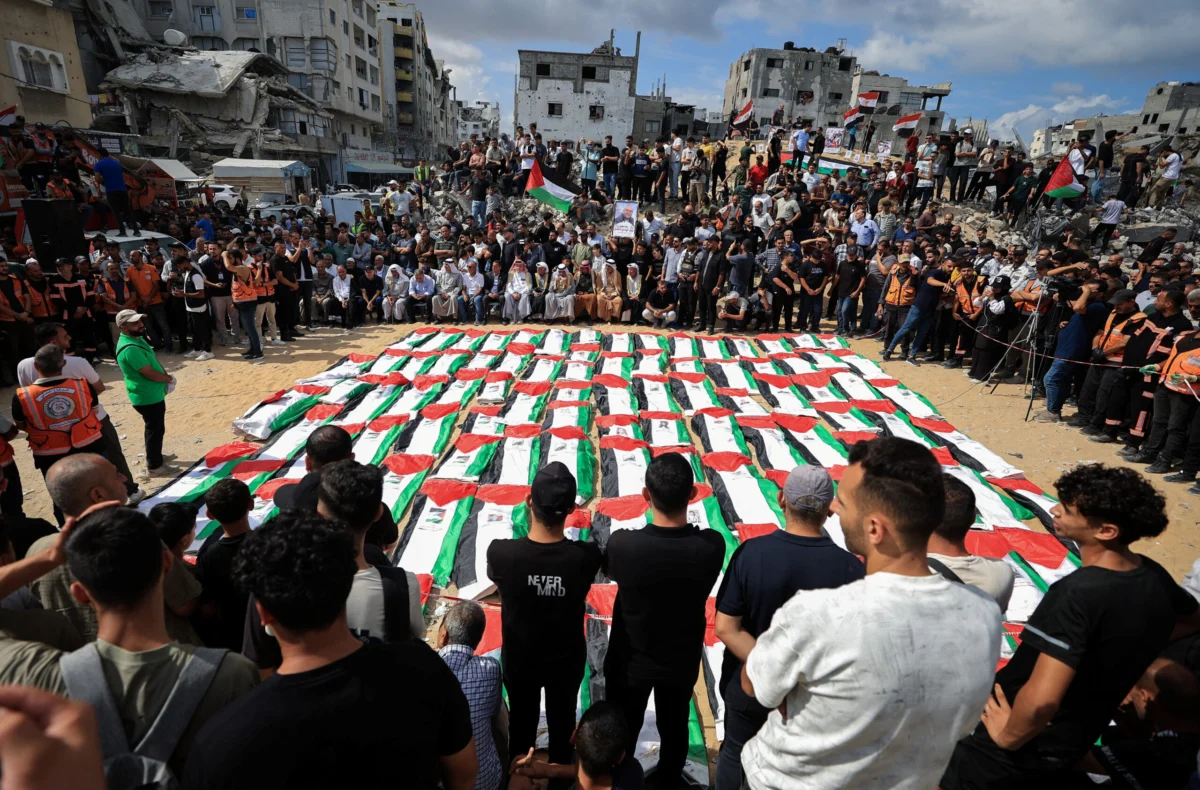
Saab’s 1982 film, Beirut My City, famously features her standing before her bombed and destroyed home, a stark image of personal loss amidst conflict. Decades later, Yaqubi experienced a similar tragedy when his family’s house in Gaza was bombed in April 2024. This shared trauma became a pivotal catalyst, transforming Yaqubi’s initial archival research into a deeply personal and urgent cinematic endeavor. The film’s international sales are being handled by Square Eyes, bringing this compelling narrative to a global audience.

Echoes of Conflict: Personal Histories and Cinematic Resonance
Yaqubi, known for his previous works like R21 AKA Restoring Solidarity and Off Frame AKA Revolution Until Victory, recounts how the parallels between his life and Saab’s became undeniably clear. His work on Saab’s archive began as a restoration project, initiated after Mathilde Rouxel, Saab’s assistant for seven years, approached him. With a film scanner in his office, Yaqubi started digitizing Saab’s material, gradually immersing himself in her oeuvre.
The turning point occurred after the bombing of his Gaza home. Invited to present his ongoing work at the Cinematek in Brussels, Yaqubi found himself unable to disconnect from the images of destruction on screen. Seeing Saab standing before her ravaged home in Beirut My City just days after his own family’s loss was an overwhelming experience. This visceral connection propelled him to examine these profound parallels more closely, shaping Revolutionaries Never Die into a reflection on collective memory, historical repetition, and the role of art in times of profound upheaval.
Rediscovering a Pioneer: Jocelyne Saab’s Enduring Influence
Jocelyne Saab carved a unique path in filmmaking, distinguishing herself as a war reporter and a groundbreaking female director in a predominantly male-dominated field. Her films often documented the tumultuous political landscape of the Middle East with an unflinching gaze. Locarno artistic director Giona A. Nazzaro lauded Revolutionaries Never Die as a significant homage to "the legacy of the magnificent Lebanese filmmaker," recognizing Saab’s prescient ability to document "with an uncanny eye for the future the onset of the Iranian revolution" and other critical events.

Nazzaro emphasized Saab’s role as "a living memory of what was going on," underscoring how Yaqubi’s film positions her entire body of work and life as a vibrant, breathing archive. Her contributions, particularly during the politically charged era of the 1970s and early 1980s, offered essential perspectives on conflict, displacement, and the human condition. Saab’s commitment to capturing reality, often at great personal risk, cemented her status as a vital voice in global cinema.
Beyond the Male Gaze: Unearthing Hidden Histories
Yaqubi admits that before embarking on this project, he was not extensively familiar with Saab’s work beyond some of her more famous films like Letter From Beirut. His primary focus had been on militant cinema from the 1960s and 1970s, particularly within the Palestinian context. He observed that while Saab’s name would occasionally surface, there was a noticeable lack of extensive scholarship or public recognition of her contributions compared to her male counterparts.
This changed when he participated in a film program called "Out of the Shadows," organized with the collective he works with and the Courtisane Film Festival. This program highlighted five pioneering female filmmakers from the Arab world: Saab, Heiny Srour, Atteyat Al-Abnoudy, Selma Baccar, and Assia Djebar. Yaqubi questioned why these politically committed women, who worked alongside their male colleagues, remained largely obscure. He attributes this oversight, in part, to a societal framework often based on the "male gaze," which historically marginalized the contributions of women, even in narratives of liberation.
The Filmmaker’s Mandate: Commitment in Turbulent Times

As the public programmer for the Palestine Film Institute and head of Idioms Film, Yaqubi sees Revolutionaries Never Die as more than just a film; it is a profound philosophical statement on the nature of cinematic commitment. He grapples with the question of what it truly means to be a "committed filmmaker" in an era of relentless conflict and atrocities. Yaqubi notes that traditional film schools rarely equip students with the tools or perspectives for this kind of deeply engaged, liberation-oriented filmmaking.
The escalating conflicts in the Middle East, particularly the events following October 7, further intensified his existential inquiry into the purpose of making films. Yaqubi reflects on the Frankfurt School’s analysis of genocide, violence, and Western ideologies, observing how these same ideologies continue to enable atrocities. This context pushed him to a critical juncture, compelling him to redefine his artistic mission. For Yaqubi, Revolutionaries Never Die, though his third feature, feels like his "first film" in its profound articulation of this re-envisioned commitment.
Disrupting the Loop: Cinematic Approach to History
Yaqubi’s film is not a conventional chronological biography. Instead, it is structured as a cinematic letter to Saab, a deliberate attempt to "cut through the repetition and disrupt it" while maintaining faith in the power of filmmaking. He explores the concept of time as a loop, where images and historical events appear to repeat endlessly. In Revolutionaries Never Die, this idea is conveyed through recurring imagery, such as scenes of Saab writing, which symbolize the collapse of time and space—a feeling Yaqubi believes resonates deeply with contemporary filmmakers.
This non-linear approach challenges traditional narrative structures, suggesting that a simple "shot after shot" chronology is no longer adequate to capture the complexities of current realities. By weaving together Saab’s archival footage with his own reflections and experiences, Yaqubi aims to create a dialogue across decades, highlighting the persistent themes of conflict, resilience, and the revolutionary spirit. His filmmaking becomes an act of re-contextualization, allowing past and present to inform each other in a continuous, urgent conversation.

The Enduring Spirit of Revolutionaries
The film’s title, Revolutionaries Never Die, was conceived from the outset and never changed. Yaqubi drew inspiration from an autobiographical book detailing conversations between Palestinian political leader George Habash and French journalist Georges Malbrunot, which explored revolutionary practices in the Palestinian struggle. For Yaqubi, the title encapsulates the idea that the pursuit of revolution—whether political, social, or artistic—is a continuous, essential act, particularly in the darkest of times, as the only means to prevent disappearance.
He emphasizes that Saab was a revolutionary in multiple dimensions: in the classical sense of political engagement, on a social level challenging norms, and as a pioneering woman filmmaker. This multifaceted revolutionary spirit, Yaqubi contends, imbues her legacy with an enduring quality. He cites an Arab proverb: one dies three times—first upon physical death, second upon burial, and third when nobody remembers them. Through Revolutionaries Never Die, Yaqubi ensures that Jocelyne Saab’s revolutionary spirit and profound contributions will continue to be remembered, fostering hope even amidst destruction, and projecting that resilience to new audiences.
Yaqubi highlights the profound optimism embedded in Saab’s work, even in the face of devastation. He recalls her reaction to her bombed house, expressing relief that no lives were lost and affirming the possibility to "continue" and "rebuild." This unwavering hope, Yaqubi believes, is a core message he aims to convey through his film. Revolutionaries Never Die serves as Yaqubi’s definitive answer and a new beginning in his journey as a committed filmmaker, striving to reconstruct meaning and disrupt cycles of violence through the powerful lens of cinema.