Romanian naval forces conducted a high-stakes military operation on the Danube River Monday, using heavy explosives to clear underwater obstructions and prevent a total shutdown of the nation’s primary nuclear power facility. The tactical demolition involved the use of 180 kilograms of explosives to dislodge a massive submerged rock formation that was severely restricting water levels necessary for the cooling systems of the Cernavodă nuclear power plant. This desperate measure comes as South-Eastern Europe faces a heatwave energy crunch that has pushed national power grids to their breaking point and forced multiple countries to declare states of emergency.

The controlled explosion, carried out near the village of Izvoarele, was designed to divert a larger volume of water into the branch of the river known as the Old Danube. Acting Defense Minister Radu Miruță hailed the mission as a tactical success, noting that every additional day the plant remains operational is worth significantly more than the cost of the military intervention. Despite the success of the blast, Miruță warned that the continuing extreme weather conditions mean the Cernavodă plant may still face a temporary suspension of operations if river levels continue to drop at their current rate.
Emergency Measures at the Cernavodă Nuclear Plant
The decision to use military-grade explosives highlights the severity of the drought currently paralyzing the region’s infrastructure. Last Friday, the Romanian government declared a nationwide state of emergency for the month of August, citing a catastrophic decline in electricity production. The Danube, a vital artery for both energy and commerce, has reached record low water levels, leaving the cooling intakes for nuclear and thermal plants high and dry.
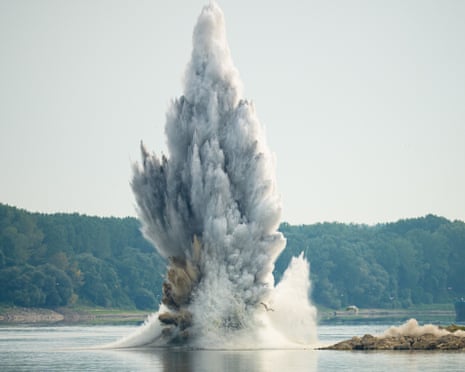
The Cernavodă facility is essential to Romania’s energy security, providing roughly 20% of the country’s total electricity. Earlier this week, state nuclear producer Nuclearelectrica was forced to take one of its two reactors offline as the water became too shallow to safely dissipate heat. Officials expect the second reactor to follow suit within days unless the recent diversion efforts yield an immediate and sustained increase in water depth. The "Pârjoaia" rock, the target of Monday’s explosion, had become a literal bottleneck, preventing the remaining flow from reaching the critical infrastructure downstream.
South-Eastern Europe Faces Heatwave Energy Crunch as Temperatures Soar
The crisis is not confined to Romania, as a massive heatwave that scorched Western Europe last week has now migrated eastward. Large swaths of Central and Southern Europe are bracing for temperatures exceeding 40 degrees Celsius (104 degrees Fahrenheit), a threshold that dramatically increases demand for air conditioning while simultaneously degrading the efficiency of power generation and transmission. Forecasters indicate that the peak of this weather event will arrive on Wednesday and Thursday, with some regions expected to challenge all-time record highs.
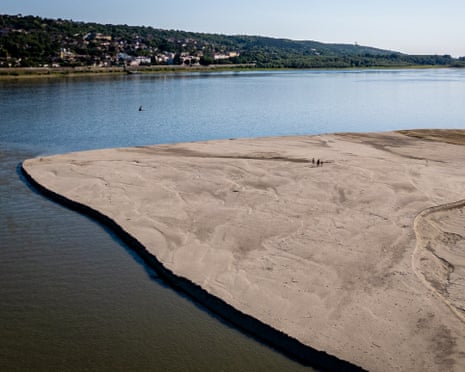
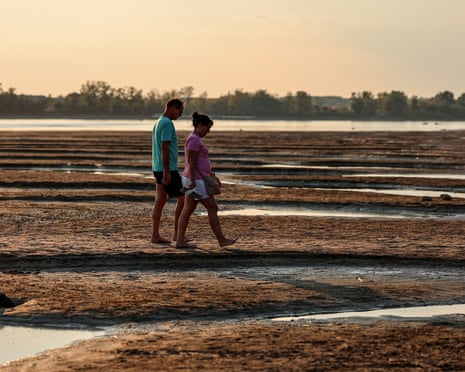
This convergence of extreme heat and diminished water resources has created a "perfect storm" for the regional energy market. In Hungary, Austria, and the Balkan states, the lack of rainfall has turned once-mighty rivers into series of disconnected pools and exposed sandbanks. As the heat intensifies, the ability of these nations to share power across borders is being curtailed by their own domestic shortages, leading to fears of localized blackouts and a total collapse of the regional energy equilibrium.
Hungary’s Paks Facility Shuts Down Amid Historic Drought
In neighboring Hungary, the energy situation has turned even more dire. For the first time in its 44-year history, the Paks nuclear power plant—the country’s sole nuclear facility—has been forced to shut down most of its capacity. The plant relies entirely on the Danube for cooling water, but the river has receded to such an extent that the facility can no longer operate safely. Prime Minister Péter Magyar issued a somber address on Monday, warning his citizens that "the hardest five days are ahead" as the heatwave reaches its zenith.

To combat the South-Eastern Europe faces heatwave energy crunch, Hungarian authorities have implemented drastic conservation measures. Starting Monday, digital advertising screens across major cities have been ordered off to reduce the load on the grid. Public buildings have also been instructed to limit air conditioning use. The Paks facility, which typically generates nearly half of Hungary’s domestic electricity, is expected to be completely powered down by the end of the week if projected river level declines hold true.
The Regional Impact on Hydropower and Coal Generation
The crisis extends into Serbia, where the energy infrastructure is reeling from the lack of water. At Djerdap 1, Serbia’s largest hydropower plant, production has plummeted to just 20% of its normal capacity. Davor Maljoković, the plant’s production director, reported that the shipping channel beside the facility has shrunk to the point where gravel bars and sandbanks are now fully exposed, making it impossible to maintain the pressure head required for the turbines.
Even coal-fired power plants, which are less dependent on river flow than hydroelectric stations, are feeling the heat. Serbia’s Kostolac coal plant has been forced to cut output because its cooling systems are unable to function with the limited, overheated water available from the river. This reduction in thermal power, combined with the loss of hydro and nuclear capacity elsewhere, has left the Serbian state power utility, EPS, scrambling to secure expensive emergency imports from more stable markets in the north.
Wildfire Tragedies and Emergency Response in Greece
As the heatwave dries out the landscape, the risk of fire has escalated into a deadly reality. In Greece, efforts to control a massive wildfire barrelling toward the outskirts of Athens took a tragic turn on Sunday. Two firefighting helicopters collided mid-air while battling flames west of the capital. The crash killed the two-person crew of one aircraft—confirmed to be a Greek and a Danish pilot—while the crew of the second helicopter was successfully rescued.
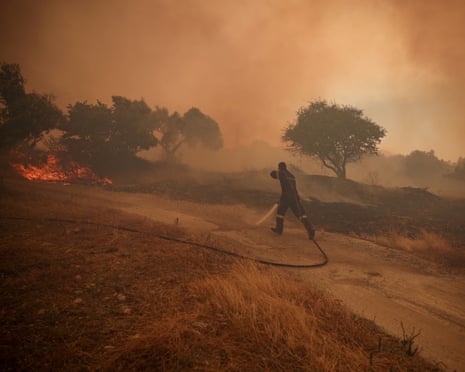
Gale-force winds have complicated the firefighting efforts, pushing flames through olive groves and into residential settlements on Athens’ western fringes. Greek Prime Minister Kyriakos Mitsotakis described the loss of the pilots as a national tragedy, occurring while the nation is at its highest state of alert. The intense heat, combined with these erratic winds, has made it nearly impossible for ground crews to contain the blazes, leaving aerial support as the primary, yet increasingly dangerous, line of defense.
Economic Consequences of Parched European Waterways
The economic impact of the record low water levels extends far beyond the energy sector. The Danube and the Rhine are the lifelines of European inland shipping, used to transport everything from grain and oil to coal and heavy machinery. As the waterways become unnavigable, the cost of logistics has skyrocketed. In the port of Rotterdam, Europe’s largest maritime hub, cargo is piling up as barges are unable to carry full loads into the interior of the continent.

Analysts at the commodities data firm Kpler suggest that the current crisis is unique because it is affecting the entire European landscape simultaneously, rather than being isolated to one region. Alessandro Armenia, a power analyst at Kpler, noted that the current dynamics leave Europe with two choices: accept the reality of rolling blackouts or commit to a massive, multi-billion-dollar investment in climate-resilient energy infrastructure. The financial strain on companies whose earnings are tied to river transport is expected to have a ripple effect on the broader European economy well into the autumn.
Political Fallout and Long-Term Infrastructure Challenges
The environmental and energy crises are also intersecting with long-standing political tensions. In Brussels, EU ambassadors met Monday to discuss the political fallout from a migration crisis in Ceuta, but the discussion was quickly overshadowed by the urgent need for a coordinated energy response. Interior ministers are scheduled to meet Tuesday, where the discussion is expected to shift toward how the bloc can support member states currently suffering under the South-Eastern Europe faces heatwave energy crunch.

As the Romanian Navy continues its work on the Danube, the operation serves as a stark reminder of the vulnerability of modern infrastructure to a changing climate. The use of explosives to maintain energy security is a tactic rarely seen in peacetime, yet it may become a recurring necessity as extreme weather events become more frequent and severe. Governments across the region are now facing the reality that their current energy strategies, heavily reliant on river-cooled thermal and nuclear power, may no longer be viable in a world of consistent 40-degree summers and parched riverbeds.
The immediate focus remains on surviving the current week. With temperatures in cities like Budapest, Vienna, and Zagreb expected to remain at or near 37 degrees Celsius for the next five days, the pressure on the grid will only intensify. Emergency crews, utility workers, and military personnel across South-Eastern Europe remain on high alert, working to keep the lights on and the cooling systems running as the region faces its most significant environmental challenge in decades.