Saudi-led coalition forces announced Saturday that their air defenses successfully intercepted a ballistic missile launched by Yemen’s Houthi rebels toward the capital, Riyadh, during the early morning hours. The coalition also reported thwarting simultaneous Houthi attempts to strike civilian areas in Bisha, Taif, Farasan, and Yanbu, underscoring a significant escalation in the protracted conflict. This incident marks the first time an air raid alert has been sounded in Riyadh since hostilities intensified in July, raising concerns about the widening reach of the Houthi offensive.
Houthi Missile Attack on Riyadh Thwarted
The Saudi coalition, engaged in a years-long military intervention in Yemen, confirmed the interception via a statement from coalition spokesman Major-General Turki al-Maliki, who posted on X, formerly Twitter. Al-Maliki emphasized that the Houthi attacks were specifically aimed at civilian populations and infrastructure, a tactic the coalition vehemently condemns. The successful defense by Saudi Arabia’s advanced air defense systems prevented any reported casualties or damage within the kingdom.
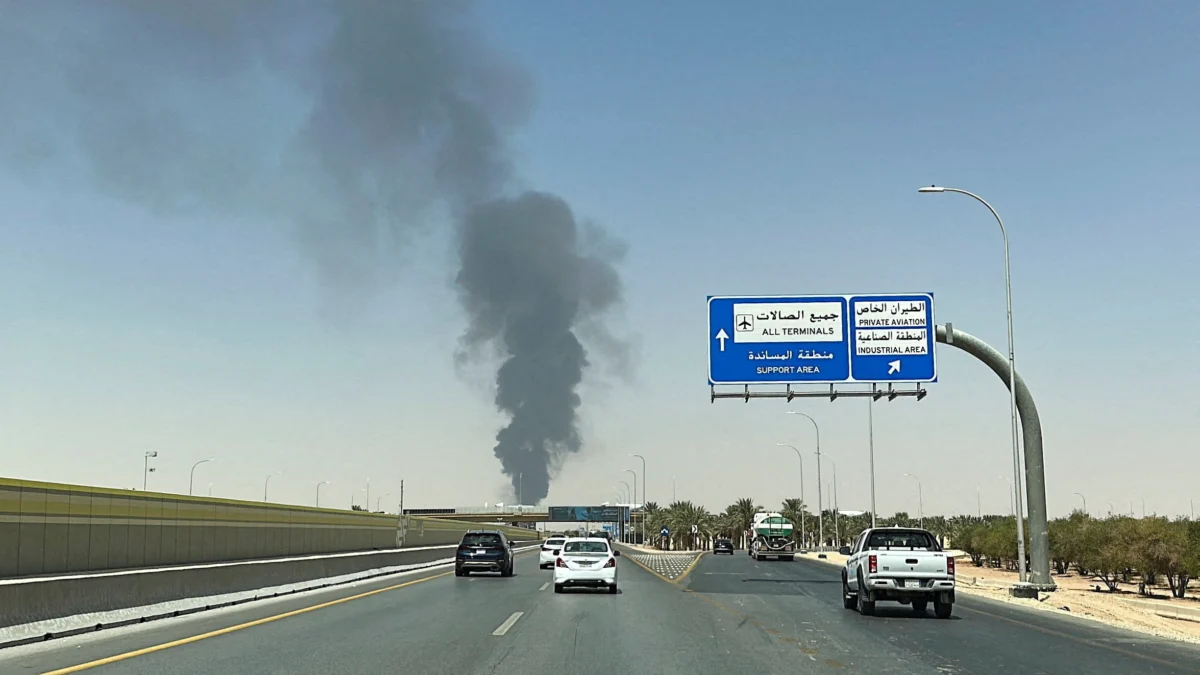
Residents in Riyadh reported hearing at least one explosion and observing a large plume of black smoke rising into the sky near the city’s airport on Saturday morning. The incident triggered a series of emergency alerts across the kingdom overnight Friday, as the Saudi military monitored for hostile aerial threats. The capital had remained largely untouched by direct Houthi missile fire since the current surge in fighting began.
Escalation in Yemen War Reaches Saudi Capital
The Houthi movement, which controls much of northern Yemen and its capital, Sanaa, claimed responsibility for the attacks earlier on Saturday. Houthi military spokesman Yahya Saree stated that the group had targeted "sensitive" sites in Riyadh, as well as an oil facility belonging to Saudi Aramco in the western coastal city of Yanbu. Saree asserted that the strikes were carried out using a combination of cruise missiles, ballistic missiles, and drones.
This latest offensive represents a concerning development in a conflict that has devastated Yemen and destabilized the wider region. The Houthi rebels, widely believed to be supported by Iran, have consistently demonstrated an evolving capability to strike deep within Saudi territory, posing a persistent security challenge to the kingdom. The targeting of civilian areas and critical infrastructure, including energy facilities, highlights the Houthi’s strategic objectives and their willingness to employ asymmetric warfare tactics.
Broader Regional Implications and Houthi Strategy
The increased tempo and reach of Houthi attacks have led analysts to reassess the group’s strategic positioning and its perceived control over the conflict’s escalation. Yasmeen al-Eryani, executive director for knowledge production at the Sanaa Center think tank, commented to Al Jazeera that the Houthis appear to be dictating the timelines and intensity of the conflict. "Depending on the current situation, it seems that the Houthis are the ones in control," al-Eryani noted, suggesting that their actions are often reactive to broader geopolitical shifts and perceived opportunities.
The targeting of Aramco facilities, in particular, carries significant economic and international implications, given Saudi Arabia’s pivotal role in global oil markets. Such attacks can disrupt supply chains, influence oil prices, and potentially draw international condemnation and diplomatic pressure. The Houthis have previously targeted oil infrastructure, aiming to exert maximum economic leverage and pressure on Saudi Arabia.
Ground Fighting Continues in Yemen
While the air war captures headlines, intense fighting also persists on the ground in Yemen. Forces loyal to the internationally recognized Yemeni government, supported by the Saudi-led coalition, reported thwarting a Houthi infiltration attempt in the al-Fuliahan sector of southern Marib province on Saturday. The government forces claimed to have killed 12 Houthi fighters and injured others during the engagement.
The clashes have resulted in casualties on both sides. The Yemeni army reported that 13 soldiers were killed in two days of fierce fighting with Houthi forces in the southwestern provinces of Taiz and Lahj. These ground battles are part of a broader military escalation that commenced in early July, marking the most significant period of intense combat since a fragile truce took hold in April 2022.
Challenges to Military Resolution
The ongoing ground battles in key Yemeni provinces, including Marib, Taiz, Lahj, al-Jawf, and al-Bayda, underscore the complexity and entrenched nature of the conflict. Al-Eryani pointed out that military options for countering the Houthis remain limited due to the challenging mountainous terrain that characterizes much of Yemen. This difficult geography makes it hard for opposing forces to gain and maintain control, complicating offensive operations.
The strategic limitations on the battlefield lead to a broader discussion about potential long-term solutions. Al-Eryani suggested that containing the Houthi movement, rather than achieving a decisive military defeat, might be a more realistic objective in the current climate. "Without controlling the peaks that are parallel to the coast, you will not be able to control the coast," she explained, highlighting the strategic importance of terrain in Yemen’s complex conflict dynamics. This perspective suggests a shift towards containment strategies, potentially involving protracted political negotiations and ongoing security measures.
International Response and Humanitarian Concerns
The renewed missile strikes and intensified fighting in Yemen continue to fuel a dire humanitarian crisis, with millions of Yemenis facing food insecurity, displacement, and lack of access to essential services. International organizations have repeatedly called for a de-escalation of violence and a renewed push for a comprehensive political settlement. The United Nations has been actively involved in mediation efforts, seeking to revive peace talks and address the underlying causes of the conflict.
The Houthi attacks on Saudi Arabia also raise questions about the effectiveness of international sanctions and arms embargoes aimed at curbing the group’s military capabilities. The continued flow of advanced weaponry into the hands of Houthi forces suggests persistent challenges in enforcing international restrictions. The coalition has consistently accused Iran of supplying the Houthis with sophisticated weaponry, a charge that Tehran denies.
The Path Forward: Diplomacy and Containment
The recent escalation underscores the fragility of peace efforts and the persistent threat posed by the Houthi movement to regional stability. Saudi Arabia, while possessing formidable air defenses, faces the ongoing challenge of defending its territory from persistent missile and drone attacks. The economic implications of targeting vital infrastructure, such as Aramco facilities, remain a significant concern for global energy markets.
As the conflict grinds on, the international community faces the daunting task of navigating a complex geopolitical landscape. The emphasis on containment, as suggested by regional analysts, may indicate a shift in strategic thinking, moving away from ambitious military solutions towards more pragmatic approaches focused on managing the conflict and mitigating its regional impact. The ultimate resolution of the Yemeni conflict will likely depend on sustained diplomatic pressure, effective humanitarian aid, and a commitment from all parties to engage in meaningful peace negotiations. The ongoing cycle of violence and retaliation serves as a stark reminder of the urgent need for a lasting political solution to end the suffering in Yemen and restore stability to the region.