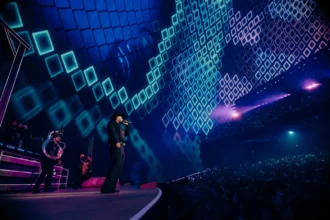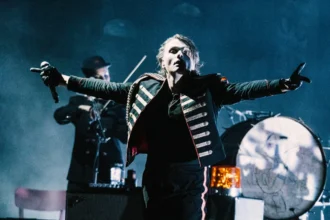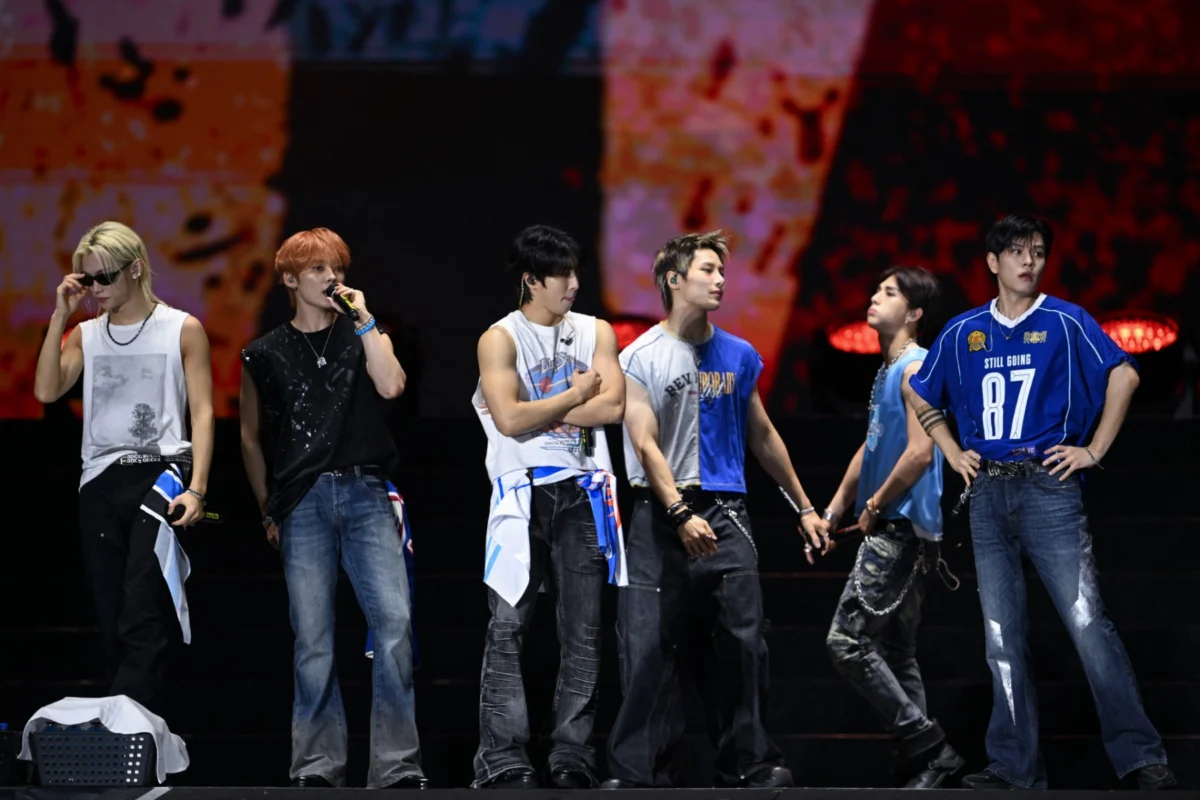
The K-pop phenomenon Stray Kids made history on September 11, 2026, by becoming the first K-pop act to headline the prestigious Rock in Rio festival, electrifying the Palco Mundo (World Stage) with a performance that cemented their global impact. This groundbreaking appearance marks a significant milestone for the genre in Latin America’s largest music festival, signifying a growing recognition of K-pop’s widespread appeal and influence.
Stray Kids Shatters Barriers at Rock in Rio
For years, major music festivals in Brazil have been slow to proportionally accommodate the burgeoning strength of K-pop on the global stage. Rock in Rio, a titan of the festival circuit, decisively shifted this paradigm on Friday, September 11, by dedicating an entire night of its main stage to the genre for the first time in its history. The responsibility of closing out this historic night fell to the internationally acclaimed group Stray Kids, a testament to their immense popularity and standing in the music industry.
The eight members of Stray Kids – Bang Chan, Lee Know, Changbin, Hyunjin, Han, Felix, Seungmin, and I.N. – were undeniably the most anticipated act of the day. Long before their set, the dedicated fanbase, known as STAYs, had transformed the Cidade do Rock (City of Rock) into a vibrant sea of custom lightsticks, group-branded merchandise, and palpable excitement. This fervent anticipation was a clear indicator of the deep connection Stray Kids shares with their Brazilian supporters, a connection that was about to be amplified on one of the world’s most iconic stages.
An Explosive Performance Ignites the Crowd
The group’s performance lived up to the extraordinary hype, delivering an explosive set that captivated the massive audience. Stray Kids commanded the Palco Mundo with a relentless display of intense choreography, seamlessly weaving together hits from across their diverse discography. Their constant engagement with the crowd, which responded with unceasing cheers and screams, created an electrifying atmosphere that reverberated throughout the festival grounds.
This reunion with their Brazilian fans was something the members had eagerly anticipated. In a pre-festival interview with Billboard Brasil, the group expressed their profound eagerness to perform for their Brazilian audience once again. The scene at Rock in Rio, with thousands of fans unified in their support, clearly demonstrated that the feeling was unequivocally mutual. "We’ll make sure there’s a lot of passion," the members had promised, a promise they more than fulfilled.
The concert kicked off with a powerful sequence featuring "DOMINO" and "BOUNCE BACK," immediately elevating the energy levels to soaring heights within the first few minutes. The momentum continued with the high-octane performances of "Thunderous" and "MANIAC," showcasing their signature precise choreography and drawing an overwhelming singalong from the packed Cidade do Rock.
Visual Storytelling and Cultural Homage
During this initial segment, Stray Kids donned streetwear-inspired outfits that blended blue, black, and white in athletic pieces, jeans, tank tops, and accessories. This styling maintained individual member aesthetics while preserving the group’s cohesive visual identity. The members frequently moved across different areas of the expansive stage, taking moments to interact playfully with fans and maintain a dynamic connection with the audience.

The performance then transitioned into a different aesthetic for "DIVINE" and "God’s Menu." The members swapped their sporty attire for predominantly white outfits that subtly incorporated traditional Korean elements. Dancers complemented this theme with black-and-white clothing and long fabric sashes, expertly woven into their choreography, adding a layer of artistic depth to the visual presentation.
A particularly engaging moment occurred during "Chk Chk Boom," when the members playfully incorporated samba steps into their performance, eliciting even louder cheers and screams from the Brazilian audience. This gesture, along with other nods throughout the show, demonstrated a thoughtful effort to connect with and celebrate the local culture.
A Journey Through Stray Kids’ Evolution
Throughout their set, Stray Kids masterfully revisited different phases of their career. Anthemic tracks like "S-Class," "LALALALA," and "God’s Menu" transported the audience through their musical evolution, while songs from their most recent era, such as those featured on "THIS & THAT," showcased their continued artistic growth and innovation. This deliberate curation of their discography allowed fans to experience the breadth and depth of Stray Kids’ journey.
The inclusion of samba steps during "Chk Chk Boom" served as a highlight in the series of cultural acknowledgments aimed at the Brazilian audience. As the concert approached its climax, the group further amplified the intensity, creating an unforgettable final stretch.
A Spectacle of Lights, Fireworks, and Fan Connection
The stage erupted with a spectacular display of fireworks, pyrotechnics, and a dazzling light show. The members showcased their boundless energy, running, jumping, and fully immersing themselves in their final moments with their Brazilian STAYs. The visual spectacle perfectly complemented the high-energy musical performances, creating a truly immersive experience for everyone in attendance.
Adding another layer of heartfelt connection, Bang Chan surprised the crowd by singing a snippet of "Ai Se Eu Te Pego," a massive hit by Brazilian artist Michel Teló. The audience immediately recognized the iconic melody, erupting into a unified chorus and even louder screams, underscoring the profound bond between the artist and their fans. This spontaneous moment of shared joy highlighted the universal language of music and the power of cultural exchange.
A Historic Debut Paves the Way for the Future
Stray Kids’ debut headlining performance at Rock in Rio was nothing short of historic. It was loud, energetic, and most importantly, it left the Cidade do Rock yearning for more. This landmark event signifies a pivotal moment, not only for Stray Kids and K-pop but also for the broader landscape of global music festivals. It is widely hoped that this successful integration of K-pop will pave the way for many more nights dedicated to the genre at Rock in Rio and other major international festivals, further broadening the horizons of popular music. The performance served as a powerful testament to the genre’s global reach and its ability to captivate audiences across diverse cultural backgrounds.