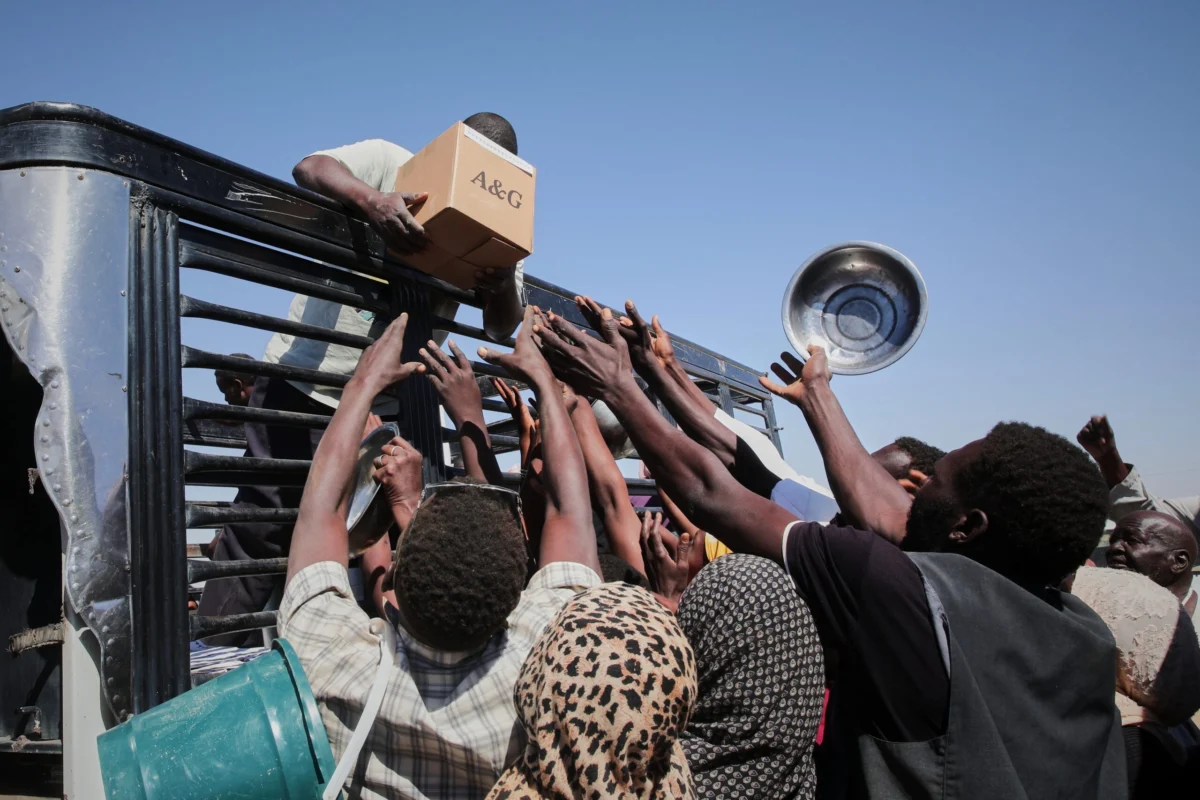
As war-torn Sudan grapples with a catastrophic food crisis, the specter of past famines looms large, with historians and humanitarian workers warning that a devastating cycle of starvation may be repeating itself. The ongoing conflict, which erupted in April 2023 between the Sudanese army and the paramilitary Rapid Support Forces (RSF), has plunged the nation into one of its most severe modern food crises, with conditions worsening dramatically since the start of 2024. This latest humanitarian disaster, marked by widespread famine conditions, is a stark reminder of Sudan’s long and painful history of hunger, but unlike many previous episodes, this crisis is overwhelmingly man-made.
Sudan’s collective memory is deeply etched with the trauma of famine, events often exacerbated by environmental shocks like prolonged drought. However, the current widespread hunger, which has led to declarations of famine in various regions in 2024 and 2025, is primarily a direct consequence of relentless warfare. This man-made catastrophe has disrupted agricultural systems, displaced millions, and crippled aid delivery, pushing the nation to the brink of a humanitarian abyss.
A Legacy of Starvation: Echoes of Past Famines
The history of Sudan is punctuated by periods of severe food scarcity, a testament to the fragility of its agricultural systems and the devastating impact of conflict and climate. One of the earliest recorded major food crises in the region, then part of the Funj Sultanate, occurred in 1684. This multi-year ordeal resulted in critical grain shortages across central Sudan, driving people to extreme measures, including the consumption of dog meat. The widespread hunger also triggered mass displacement and, tragically, a deadly outbreak of smallpox.
Further climate-induced crises were documented in 1750 and again between 1835 and 1838, during the Ottoman-Egyptian rule. These periods were marked by severe drought and critically low water levels in the Nile River, conditions that amplified existing vulnerabilities.
However, the famine most profoundly imprinted on the Sudanese popular consciousness occurred between 1888 and 1889, under the rule of Khalifa Abdullahi al-Taashi. This devastating period was a confluence of drought, widespread locust infestations, and ongoing conflict. Historical estimates, though difficult to verify precisely, suggest that this famine claimed the lives of over one million people. Accounts from the time paint a grim picture of desperation, with some families choosing to seal themselves in their homes to die rather than face the public humiliation of begging for sustenance.
The 20th century continued to witness periods of food insecurity. During the colonial era, particularly in the first half of the century, recurrent droughts and poor harvests necessitated foreign grain imports by the authorities. A more recent and acutely felt famine struck in 1984, during the presidency of Jaafar Nimeiri. A devastating drought ravaged western Sudan, particularly the regions of Darfur and Kordofan, leading to extensive losses of crops and livestock. This disaster forced hundreds of thousands of people to abandon their rural homes and seek refuge in the capital, Khartoum, straining the city’s resources and exacerbating existing social tensions.
The Man-Made Catastrophe of Today’s Famine
In stark contrast to many of Sudan’s historical famines, which were often primarily triggered or exacerbated by environmental factors, the current food crisis is unequivocally a man-made catastrophe. The ongoing war has systematically dismantled the nation’s agricultural infrastructure, disrupted vital trade routes, and forced countless farmers to abandon their fertile lands. The conflict has also severely hampered the movement of essential food supplies and humanitarian aid across the country, creating a complex web of access challenges.
Abdullah al-Tijani, a respected social historian and humanitarian activist, has emphasized the unprecedented scale and nature of the current disaster. "Most previous famines were often confined to specific regions, as happened in 1984, or areas in southern Sudan before its secession in [2011], while the capital and major cities continued to have the necessities of life and services," al-Tijani stated.
He elaborated that the current crisis, however, has a far more pervasive reach. "This time, hunger and the collapse of basic services have spread across the entire country," al-Tijani explained. "A comprehensive food crisis has struck the heart of major urban and agricultural centers in the states of Khartoum, Gezira, Sennar, Darfur, and Kordofan, causing millions of citizens to be displaced inside and outside the country."
Al-Tijani pointed to the deliberate and systematic destruction of infrastructure as a key factor. "The systematic destruction of infrastructure, disruption of large agricultural projects, and targeting of markets, bakeries, and crops, along with disrupting the banking system and communication networks, which isolated entire regions," have all contributed to the severity of the crisis. Furthermore, he highlighted the deliberate obstruction of humanitarian access, including stringent restrictions and delays in granting transit permits for relief workers. Al-Tijani accused the warring parties of weaponizing food supplies, exploiting control over essential resources as a tactic of war, while international funding has fallen woefully short of the immense needs on the ground.
The Devastating Impact on Agriculture
The sheer scale of the current food crisis is particularly poignant given Sudan’s immense, yet largely unfulfilled, agricultural potential. The country possesses vast resources, including an estimated 200 million acres (81 million hectares) of arable land, significant water access from the Nile River, and extensive livestock populations. Despite this potential, Sudan has historically struggled to achieve food self-sufficiency and has failed to emerge as a global breadbasket.
Mohammed Abdul Rahman, an economic researcher specializing in the region, attributes the current food security crisis to a clear developmental gap and a long-standing weakness within Sudan’s agricultural sector, now severely compounded by war. "Wars and armed conflicts are among the most influential factors on food production," Abdul Rahman stated, "along with the displacement of farmers from their lands, the absence of political stability and agricultural policies, weak funding and government guarantees, and reliance on traditional farming methods."
The disruption of farming seasons, destruction of irrigation systems, and the inability of farmers to access their fields due to active fighting have crippled food production. The loss of livestock, a vital source of income and sustenance for many Sudanese families, further exacerbates the crisis. The displacement of skilled agricultural workers also represents a significant loss of human capital, essential for rebuilding the sector.
The Global Ramifications of Sudan’s Famine
The escalating famine in Sudan carries profound implications not only for the millions of Sudanese citizens facing starvation but also for regional and global stability. The country’s strategic location in Northeast Africa means that widespread instability and mass displacement can have ripple effects across neighboring nations, potentially straining resources and fueling further conflict.
The international community faces a dual challenge: addressing the immediate humanitarian needs through massive aid efforts while also working towards a sustainable peace that can allow for the rebuilding of Sudan’s shattered infrastructure and economy. The failure to adequately respond to this crisis risks not only a devastating loss of life but also the further entrenchment of poverty and instability in a region already facing numerous challenges.
The prolonged conflict and its devastating humanitarian consequences also threaten to reverse decades of development gains. The destruction of schools, hospitals, and other essential services means that future generations will bear the brunt of this crisis. The long-term impact on public health, education, and economic recovery will be immense, requiring sustained international commitment and support.
International Response and the Road Ahead
Humanitarian organizations on the ground are struggling to deliver life-saving assistance amidst perilous security conditions and severe logistical hurdles. Access to affected populations remains a critical concern, with numerous reports of aid convoys being blocked or looted. The United Nations and various NGOs have repeatedly appealed for unimpeded humanitarian access and an immediate cessation of hostilities to allow for the delivery of aid and essential services.
The international community’s response has been characterized by calls for peace negotiations and substantial financial aid pledges. However, the scale of the crisis far outstrips the current level of funding. The reliance on traditional farming methods, coupled with the ongoing conflict, means that even if peace were to break out tomorrow, the recovery of Sudan’s agricultural sector would be a long and arduous process.
The current famine in Sudan is a stark warning about the devastating human cost of protracted conflict. It highlights the urgent need for a concerted international effort to not only provide immediate relief but also to address the root causes of the conflict and support the long-term reconstruction of a nation grappling with a profound and deeply rooted hunger crisis. The echoes of past famines serve as a somber reminder of what lies ahead if immediate and decisive action is not taken.