Norway concluded nearly two weeks of national mourning on Wednesday as the country held a final, solemn tribute to King Harald V, the unassuming and deeply popular monarch who guided the nation through three decades of rapid social and political change. The funeral ceremonies in Oslo brought together world leaders, European royalty, and a massive domestic audience, marking the end of a 13-day period of grief that followed the King’s death at the age of 89.
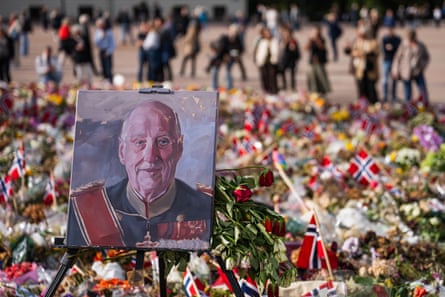
The day began with a profound silence that swept across the Scandinavian nation, a collective moment of reflection for a man who was often described as the "people’s king." In the capital city, the atmosphere was one of quiet reverence as citizens from all walks of life gathered to witness the final journey of a sovereign who had become a symbol of stability and inclusion. The scale of the event was unprecedented in modern Norwegian history, reflecting the deep personal connection many felt toward the late monarch.

Tens of Thousands Line the Streets as Norway Bids Farewell to King Harald V
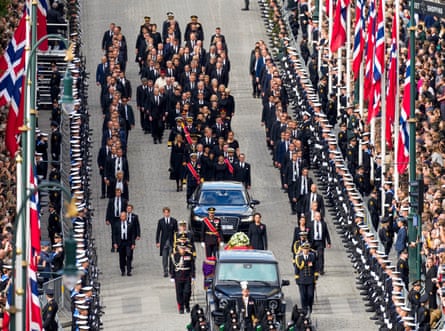
From the early hours of the morning, crowds began to swell along the historic route from the Royal Palace to Oslo Cathedral. Security was at its highest level in the nation’s history, with police officials confirming that the funeral represented the largest planned security operation ever undertaken by the force. Despite the tight security, the mood remained peaceful and respectful, with many attendees holding Norwegian flags or single white roses.
The funeral cortege was led by a horse-drawn artillery carriage, upon which rested the King’s casket. Draped in the vibrant red royal banner of Norway and adorned with a simple arrangement of white flowers, the casket moved slowly down Karl Johans gate, the city’s main thoroughfare. The rhythmic thud of the 21-gun salute, fired from the historic ramparts of the Akershus Fortress, echoed across the fjord, signaling the start of the final procession.
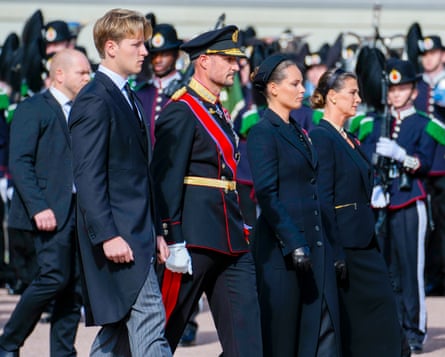
Behind the casket walked the new sovereign, King Haakon VIII, who assumed the throne immediately upon his father’s passing last month. He was joined on foot by other members of the royal family, including his children, Crown Princess Ingrid Alexandra and Prince Sverre Magnus, and his sister, Princess Martha Louise. In a poignant display of the family’s current health challenges, the King’s widow, Queen Sonja, 89, and the new Queen Mette-Marit followed the procession in a black limousine. Queen Mette-Marit continues to recover from a complex lung transplant performed in June.
World Leaders and Global Royalty Gather at Oslo Cathedral
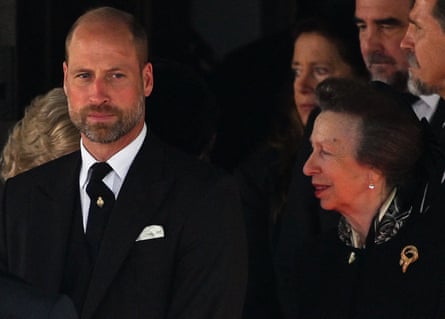
The funeral service at Oslo Cathedral drew a distinguished assembly of international dignitaries, underscoring the high regard in which King Harald was held on the world stage. The pews were filled with representatives from nearly every reigning royal house in Europe and beyond. Among the mourners were Prince William and Princess Anne from the United Kingdom, King Felipe VI and Queen Letizia of Spain, and the entire Swedish royal family led by King Carl XVI Gustaf.
Scandinavian solidarity was on full display as King Frederik X and Queen Mary of Denmark arrived to pay their respects, alongside King Willem-Alexander and Queen Maxima of the Netherlands. Representing the East, Crown Prince Akishino of Japan attended the service, highlighting the long-standing ties between the two maritime nations. The presence of such a high-profile international delegation necessitated a logistical feat for the city of Oslo, which saw its airspace restricted and its streets transformed into a secure zone.
In addition to the royal guests, political leaders from more than 20 countries were in attendance. Ukrainian President Volodymyr Zelenskyy made a notable appearance, reflecting the strong support Norway provided to Ukraine during King Harald’s final years. The service was not merely a display of statecraft but a testament to the personal friendships the King had cultivated over 33 years on the throne.
The End of an Era: The Legacy of King Harald V
During the service, speakers highlighted the qualities that defined Harald’s reign: humility, humor, and a steadfast commitment to a modern, inclusive Norway. Masud Gharahkhani, the Speaker of the Norwegian Parliament, delivered a moving tribute that resonated with the crowds outside. He recalled a monarch who was "not afraid to meet his people with his rubber boots on," a reference to the King’s famous habit of engaging directly with citizens during natural disasters and local visits.
Prime Minister Jonas Gahr Støre also spoke, emphasizing the King’s ability to bridge the gap between the ancient traditions of the monarchy and the realities of a 21st-century social democracy. Støre noted that Harald had successfully struck a balance between being "stately and being down-to-earth," ultimately making the nation feel more cohesive. "He spoke of a ‘we’ in Norway where everyone is there for each other," the Prime Minister said, referencing the King’s landmark 2016 speech that championed LGBTQ+ rights and religious diversity.
King Harald V’s reign, which began in 1991, was characterized by a gradual modernization of the royal house. He was the first Norwegian-born prince to become king in 567 years, and he famously fought for nearly a decade for the right to marry Sonja Haraldsen, a commoner, a move that many credit with saving the Norwegian monarchy by bringing it closer to the people.
Navigating a Stormy Succession and Royal Scandals
While the funeral was a moment of national unity, it also took place against a backdrop of significant internal strife for the House of Glücksburg. The transition to King Haakon VIII comes at a time when the royal family has faced intense public and media scrutiny. The new Queen Mette-Marit has been the subject of sharp criticism, including from government figures, regarding her past associations with the late American sex offender Jeffrey Epstein—a controversy that has lingered despite her public apologies and explanations.
Further complicating the family’s image was the presence of Marius Borg Høiby, Queen Mette-Marit’s son from a previous relationship. Høiby, who is currently under house arrest and wearing an electronic ankle monitor while appealing a conviction for rape and domestic violence, was granted special leave by judicial authorities to attend the funeral. He served as a pallbearer during the private transfer of the casket to the royal chapel, a decision that sparked debate among the Norwegian public regarding the intersection of royal privilege and the criminal justice system.
These scandals have tested the resilience of the institution. However, polling suggests that the "Harald effect"—the deep-seated affection for the late King—has largely protected the monarchy’s standing. A recent survey by the public broadcaster NRK revealed that 72% of Norwegians continue to support the monarchy, while only 20% favor transitioning to a republic. The high approval rating is seen as a parting gift from Harald to his son, providing Haakon with a reservoir of goodwill as he begins his reign.
A Final Salute and the Future of the Monarchy
As the cathedral service concluded, the military paid its final respects with a spectacular aerial display. Four F-35 fighter jets roared over the spires of the cathedral in a "missing man" formation, with one aircraft breaking away and climbing steeply into the clouds to symbolize the King’s departure. The visual tribute was a reminder of Harald’s role as the Commander-in-Chief of the Norwegian Armed Forces and his personal interest in the nation’s defense.
The casket was then transported to the Akershus Fortress, a site that has stood as a guardian of Oslo for centuries. In a private ceremony away from the television cameras and the public gaze, King Harald V was lowered into the royal crypt. He now rests alongside his parents, King Olav V and Princess Märtha, and his grandparents, King Haakon VII and Queen Maud, in a tradition that links the modern Norwegian state to its historical roots.
The conclusion of the funeral ceremonies marks the beginning of a new chapter for Norway. King Haakon VIII faces the dual challenge of maintaining his father’s legacy of inclusivity while addressing the modern controversies that have shadowed his family. As tens of thousands line the streets as Norway bids farewell to King Harald V, the focus now shifts to whether the new monarch can maintain the same "rubber boots" connection with a changing and increasingly skeptical public. For now, however, the nation remains in a state of quiet transition, honoring the man who for 33 years was the steady heart of the country.