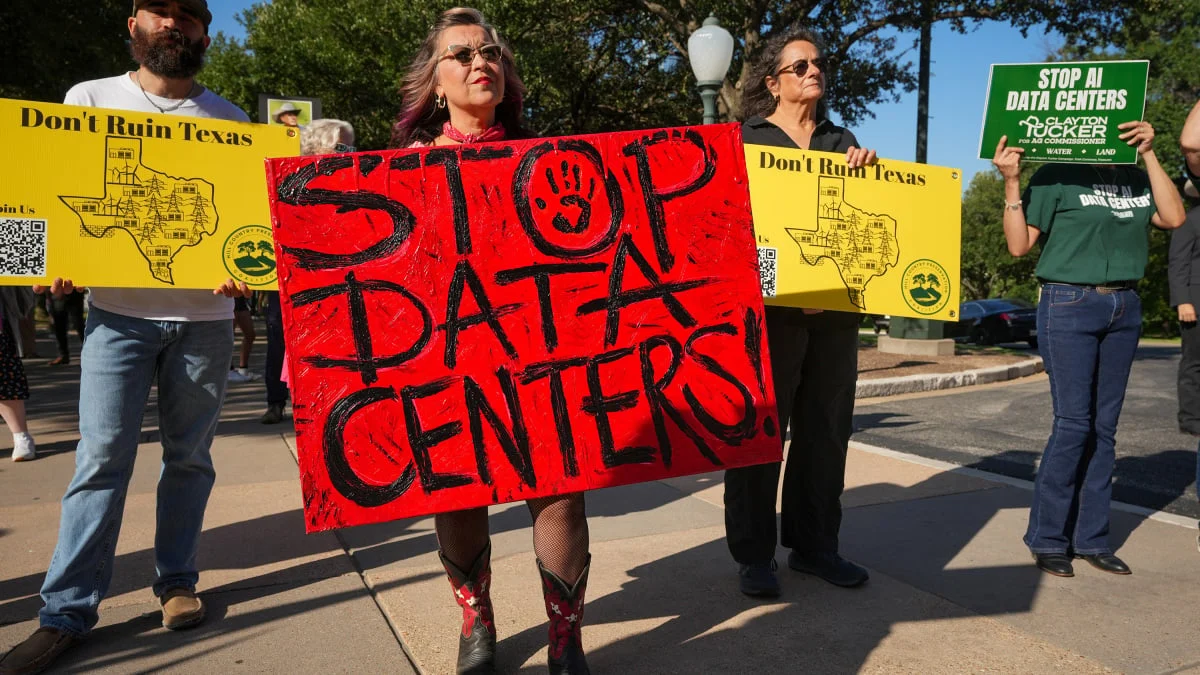
Governor Greg Abbott has issued a sweeping executive order mandating that state utility regulators halt the connection of new data center projects to the power grid until they undergo a rigorous comprehensive audit. The directive, aimed at protecting the stability of the Texas electrical infrastructure, requires the Public Utility Commission of Texas (PUCT) and the Electric Reliability Council of Texas (ERCOT) to verify the financial and operational details of developers before granting them access to public utilities.
Under the new regulations, developers seeking to join the state’s independent power grid must provide exhaustive documentation regarding their projects. This includes detailed reports on state and local tax incentives, grants, abatements, and any other forms of public financial assistance they have received. Furthermore, the state now requires transparency regarding the controlling interests and ownership structures of these massive facilities, alongside projected water and electricity consumption metrics.
The decision comes as Texas faces an unprecedented surge in demand for high-capacity computing facilities, driven largely by the global expansion of artificial intelligence and cryptocurrency mining. According to the governor’s office, there are currently 1,800 projects in the ERCOT queue awaiting approval to join the state grid. Approximately 90 percent of these applications are for data centers, representing a potential cumulative demand of 474 gigawatts of electricity.
To put that figure in perspective, the projected demand from these pending projects is more than five times the current peak record for the entire Texas grid. State officials have warned that allowing such a massive influx of energy-intensive industry without oversight could lead to catastrophic failures. The governor’s order emphasizes that the safety and quality of life for Texas residents must remain the primary consideration for utility regulators.
Texas Governor Pumps Brakes on Data Centers to Address Grid Stability
The move to implement a strict audit process reflects a growing anxiety over the resilience of the Texas Interconnect, the state’s largely self-contained power grid. Texas has been plagued by recurring power outages and reliability concerns, most notably during the 2021 winter storm that left millions of residents without heat or electricity for days. That crisis, which resulted in hundreds of deaths and billions of dollars in property damage, led to intense scrutiny of ERCOT’s management and the state’s energy policies.
By requiring these audits, the governor is signaling that the era of unchecked growth for energy-heavy industries in Texas may be coming to an end. The new order specifies that any project failing to meet the stringent requirements set by the PUCT and ERCOT, or those found to be in violation of state law, will be denied connection to the grid. The administration’s mantra, "Texans must come first," serves as the guiding principle for this regulatory shift.
The rapid proliferation of data centers has turned Texas into one of the most concentrated hubs for digital infrastructure in the world. Currently, the state is home to more than 500 active data center projects, ranking it second in the nation only to Virginia. While these facilities bring investment and technical prestige, their immense thirst for power has increasingly put them at odds with the public’s need for a reliable consumer energy supply.
The Magnitude of the Energy Demand Challenge
The 474-gigawatt figure cited by the governor’s office has sent shockwaves through the energy sector. For years, Texas marketed itself as a business-friendly environment with low regulation and an independent grid that allowed for rapid industrial scaling. This environment attracted tech giants and bitcoin miners alike, but the sheer scale of the current queue suggests a demand that the state’s existing infrastructure was never designed to handle.
Data centers are unique in their energy profile; unlike residential neighborhoods or traditional office buildings, they operate at a high-intensity "baseload" 24 hours a day. The cooling systems required to keep thousands of servers from overheating also consume vast amounts of water, another resource that is frequently under strain in the Texas climate. The new audit process will force developers to disclose exactly how much of these resources they intend to pull from the public supply.
Critics of the previous hands-off approach argue that the state’s regulatory framework contained significant loopholes. Recent investigations have highlighted how companies were able to build massive, energy-intensive facilities without providing the kind of public notice typically required for large industrial developments. This lack of transparency has led to "stealth" construction projects that appear in rural or suburban areas with little to no community input.
New Audit Requirements for Data Center Developers
The mandated audits are not merely financial in nature; they include a wide array of community impact assessments. Developers must now present concrete plans for noise mitigation, light controls, and traffic improvements. The governor’s office noted that every community in Texas is "unique," and as such, data center projects must be tailored to minimize their footprint on the surrounding environment and the lives of nearby residents.
Furthermore, the requirement to disclose controlling interests is seen as a national security and transparency measure. As data centers become more critical to the nation’s digital economy, state officials want to ensure they know exactly who owns and operates the infrastructure that is drawing so heavily from the state’s power supply. This includes vetting for international interests and ensuring that developers are not obfuscating their corporate structures to avoid local taxes or regulations.
Emergency response coordination is another pillar of the new audit. Data centers often house volatile battery backup systems and large diesel generators. The state now requires that developers coordinate closely with local fire and emergency services to ensure that the presence of these facilities does not create an unmanaged risk for the local population.
Historical Context: The Fragility of the Texas Interconnect
The context for the governor’s decision is rooted in a decade of volatile energy performance. While Texas leads the nation in wind energy and has seen a massive increase in solar capacity, the grid has struggled to balance intermittent renewable sources with the steady, high-volume demand of the digital age. The 2021 crisis forced a series of reforms, but many experts believe the grid remains vulnerable to extreme weather events.
The influx of data centers is seen by some as a threat to the progress made since 2021. If the grid is forced to prioritize industrial server farms over residential heating and cooling during a peak event, the political and social fallout could be severe. By "pumping the brakes," the governor is attempting to decouple the state’s economic ambitions from its immediate safety requirements.
Industry leaders have expressed concern that these new hurdles could drive investment to other states. However, the sheer volume of projects currently in the ERCOT queue suggests that the demand for Texas land and power remains high. The state’s challenge will be to manage this growth without compromising the basic utility services that 30 million Texans rely on.
Addressing the Regulatory Loophole and Community Backlash
The public outcry against data center expansion has reached a fever pitch in several parts of the state. Residents in various counties have reported being blindsided by the construction of massive windowless warehouses that hum with the sound of industrial cooling fans 24 hours a day. This noise pollution, combined with the visual impact of high-voltage substations built to serve these sites, has led to the formation of several statewide coalitions.
These groups have been calling for a moratorium on data center initiatives until better zoning and environmental laws are in place. They argue that the current system allows tech companies to bypass the "good neighbor" policies that other industries must follow. The governor’s new audit requirements address several of these concerns directly, particularly the mandates for noise and light mitigation.
The issue of tax abatements has also become a point of contention. Many data centers receive millions of dollars in local tax breaks in exchange for the promise of jobs and economic development. However, once built, these facilities are often highly automated and employ relatively few people compared to their massive physical and environmental footprint. The new requirement to disclose these incentives will likely fuel the debate over whether the state is getting a fair return on its investment.
Environmental Advocacy and the Brockovich Data
Environmental advocates have also played a significant role in bringing these issues to the forefront. Data compiled by advocate Erin Brockovich’s team has highlighted a disturbing trend in residential complaints related to data centers in Texas. According to crowdsourced data, there have been more than 1,300 residential complaints in the state tied to utility usage and environmental health concerns—more than double the number in Pennsylvania, the state with the next highest complaint volume.
These complaints range from the depletion of local aquifers to the "low-frequency hum" that residents say causes sleep deprivation and anxiety. By including water use in the mandatory audit, the state is acknowledging that the environmental impact of data centers goes beyond just the electricity grid. In many parts of Texas, water is as precious a resource as power, and the competition for it is becoming increasingly fierce.
Specific Local Conflict: The Case of Sulphur Springs
A prominent example of this tension can be found in Sulphur Springs, Texas. The community has become the epicenter of the data center debate due to a controversial campus project led by MSB Global. Residents there have submitted nearly 400 complaints, focusing on the scale of the project and its proximity to residential areas.
A judge’s order recently blocked construction at the Sulphur Springs site temporarily, reflecting the legal challenges that these projects now face. The MSB Global case has become a cautionary tale for developers who fail to engage with local communities or provide transparent plans. Under the governor’s new order, projects like the one in Sulphur Springs will face much higher hurdles before they can ever hope to connect to the state’s power lines.
Balancing Economic Growth with Public Safety
The state’s new posture represents a significant shift in the balance between economic development and regulatory oversight. For years, the message from Austin was that Texas was "open for business" with minimal interference. However, the reality of a grid pushed to its breaking point has forced a more cautious approach.
The Public Utility Commission and ERCOT are now tasked with the monumental job of processing the 1,800 pending projects through this new audit lens. This process is expected to be slow, effectively creating a bottleneck that will prevent any immediate strain on the grid. While this may frustrate tech developers, it provides the state with the breathing room necessary to evaluate how much more demand the system can truly handle.
As the state moves forward, the results of these audits will likely shape the future of Texas energy policy. If the audits reveal that the grid cannot support the 474 gigawatts of requested power, the state may have to implement more permanent caps or tiered priority systems for energy usage. For now, the governor’s order serves as a definitive signal that the "wild west" era of data center expansion in Texas is over, replaced by a mandate that prioritizes the stability of the grid and the well-being of the public.