The city of Belfast descended into a state of coordinated chaos on the evening of Monday, June 8, 2026, following a violent altercation on Kinnaird Avenue that served as the catalyst for the most significant civil unrest the region has seen in decades. What began as a localized assault quickly metastasized into the Belfast race riots, a series of targeted attacks against minority communities that have left the city’s social fabric in tatters. The violence, which saw homes torched and families forced to flee, was fueled by a volatile mixture of digital misinformation, deep-seated sectarian structures, and the involvement of seasoned paramilitary organizations.
The initial incident occurred shortly after 10:30 p.m. under the lingering summer twilight. Witnesses reported seeing a man repeatedly stabbing another figure on the ground in a brutal assault that only ceased when bystanders intervened. Within minutes, grainy cameraphone footage of the attack was uploaded to social media platforms, including X, WhatsApp, and Telegram. By the following morning, the images had been viewed hundreds of thousands of times, with commentators emphasizing that the assailant was a person of color and the victim was white.

While police quickly took a suspect into custody—initially identified as a Somali refugee before being corrected to Sudanese—the arrest did little to quiet the growing digital storm. Far-right agitators and high-profile social media figures, including Elon Musk and Stephen Yaxley-Lennon, known as Tommy Robinson, amplified the incident to their global audiences. The discourse rapidly shifted from the crime itself to broader, more inflammatory questions regarding the vetting of "military-age" foreign men and the alleged importation of "alien cultures" into Northern Ireland.
The Mobilization of the Belfast Race Riots
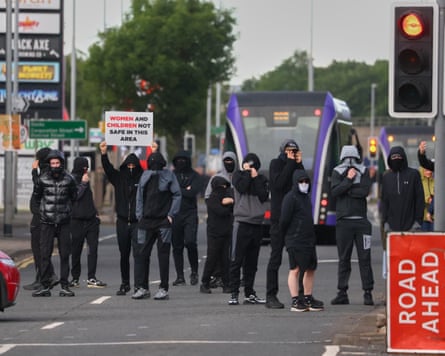
By 9:30 a.m. on Tuesday, June 9, a highly organized directive began circulating through encrypted messaging apps and public forums. The message was a clear exhortation for mass mobilization, instructing all businesses to close by 5:30 p.m. "No excuses." It listed 25 specific gathering points across Northern Ireland and called for men aged 18 and over to wear dark clothing and be "prepared to fight or be arrested." This was not a spontaneous protest; it was a carefully choreographed invitation to a city-wide pogrom.
As the 7:00 p.m. deadline approached, the infrastructure of the city began to buckle. Schools dismissed children early, public transportation ground to a halt, and foreign-owned businesses—from barber shops to grocery stores—clanged down their steel shutters. In loyalist strongholds, crowds began to gather at designated intersections. On the Shankill Road, a woman with a megaphone led a crowd of several hundred in the Lord’s Prayer, many of them draped in Union flags, before the group began a march through narrow terraced streets toward the homes of immigrant families.
The ensuing violence was marked by a chilling level of discipline. Unlike previous disturbances where rioters often filmed their own exploits, organizers of the Belfast race riots issued strict orders to leave mobile phones at home and deactivate dashcams and doorbell cameras. In one instance, a teenager who attempted to film the destruction was physically dragged away and reprimanded by older men. This tactical evolution was designed to minimize the digital footprint available to the Police Service of Northern Ireland (PSNI) for later prosecutions.
Targeted Attacks and the Shift in Sectarian Focus
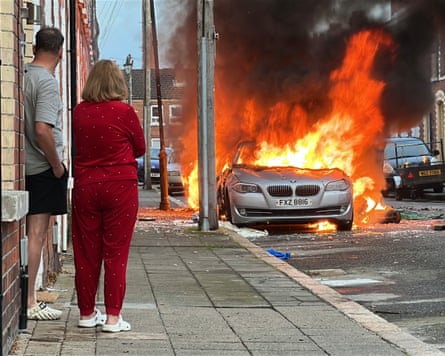
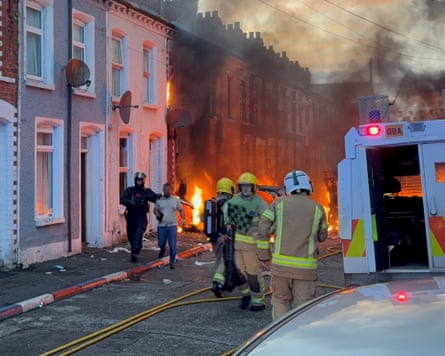
The violence that night was visceral and highly targeted. In West Belfast, a mob descended upon the home of a Romanian family that had already been attacked twice in previous years. Despite the stabbing incident having no connection to the family, the crowd viewed their presence as "the last straw." Masked men launched bricks through windows and shoved lit fireworks through letterboxes while the family watched helplessly from inside. The attack culminated in the family’s car being torched and the front door being battered down by men in balaclavas.
Similar scenes of devastation played out in East Belfast and along the city’s arterial roads. Families from Ukraine, Sudan, Poland, and Ethiopia were forced to abandon their homes as plumes of smoke from burning vehicles and properties rose into the night sky. In the Sandy Row area, a Syrian supermarket was gutted by arsonists, while Chinese and Ethiopian residents fled under the cover of darkness. On Crumlin Road, Ugandan healthcare workers and Nigerian families sought refuge in community centers as mobs established illegal roadblocks to "question" anyone they suspected of being a foreigner.
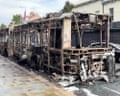
This explosion of racial animosity represents a significant shift in the region’s traditional sectarian dynamics. For decades, the "peace walls" of Belfast served to separate Catholic and Protestant neighborhoods. However, as the traditional threat from the IRA has waned, loyalist paramilitary groups like the Ulster Volunteer Force (UVF) and the Ulster Defence Association (UDA) have sought new adversaries to justify their continued existence and control over working-class communities. Academic experts note that the pivot from opposing Irish nationalism to targeting migrants is internally consistent with a reactionary ideology focused on excluding "foreign" influence.
Paramilitary Orchestration and the "Northern Ireland Model"
Evidence of paramilitary coordination was pervasive throughout the Belfast race riots. While PSNI Chief Constable Jon Boutcher described the involvement of these groups as "inconsistent," community workers and witnesses on the ground reported a much more organized presence. Firefighters reportedly had to seek "permission" from local paramilitary leaders before entering certain areas to tackle blazes. Furthermore, the systematic ferrying of teenagers to and from flashpoints suggested a logistical operation far beyond the capabilities of a spontaneous mob.
Chris Quinn, Northern Ireland’s children’s commissioner, highlighted the disturbing trend of child criminal exploitation during the unrest. Reports emerged of paramilitary groups paying boys as little as £100 to join the rioting, while others were coerced into participating to settle drug debts. These children, while legally responsible for their actions, are also seen as victims of a system where paramilitary factions maintain coercive control over vulnerable neighborhoods, trading on the legacy of the Troubles to maintain their grip on power.
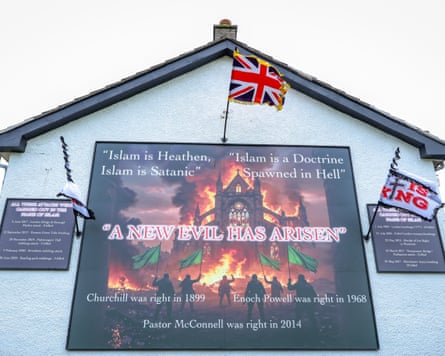
This "Northern Ireland model" of rioting has drawn the attention of international far-right groups. Activists from the United States and England have reportedly visited the region to study how local agitators combine the tactical lessons of the Troubles with modern social media mobilization. The use of AI-generated anti-Islam murals in areas like Moygashel and Newtownabbey—featuring slogans such as "Islam is Satanic" and "Not welcome, not wanted, not here"—demonstrates how global extremist rhetoric is being localized within the specific cultural landscape of Northern Ireland.
Political Fallout and the Call for Legislative Reform
The aftermath of the June riots has sparked a fierce debate over the perceived inaction of the Stormont Executive. Critics argue that the government failed to prepare for a crisis that was years in the making. The June 2026 eruption was the third consecutive summer of racial disturbances in the region, following a copycat riot in August 2024 and a violent outbreak in Ballymena in 2025. Despite these clear warning signs, advocacy groups like the Committee on the Administration of Justice (CAJ) claim the state’s response has been woefully inadequate.
One of the primary points of contention is the lack of updated hate crime and race equality legislation in Northern Ireland. While England, Scotland, and Wales have modernized their legal frameworks, Northern Ireland continues to rely on what experts describe as "antiquated" laws from the 1970s. Liz Griffith of the Northern Ireland Law Centre noted that the devolved government has consistently delayed the implementation of new protections, leaving minority communities vulnerable to systematic harassment.
The political vacuum has led to calls for direct intervention from Westminster. With the Stormont Executive accused of downplaying the gravity of the "racist pogrom," many community leaders are looking to Prime Minister Andy Burnham to ensure that legal protections and consequences for such behavior are standardized across the United Kingdom. There is a growing sense of urgency to implement emergency measures before the next "marching season" provides another opportunity for mass mobilization.
A Fragile Peace and an Uncertain Future
As the smoke cleared over Belfast, a poll by the think tank More in Common revealed a deeply divided public. While the majority of residents condemned the violence, a staggering 8% of respondents in Northern Ireland said it was "justified" to burn migrants out of their homes, and 11% supported the use of intimidation to force them out of local areas. These figures suggest that while the physical riots have ceased, the underlying sentiments that fueled them remain a potent threat to regional stability.
For the victims of the Belfast race riots, the path to recovery is fraught with fear. Suleiman Abdulahi, director of Horn of Africa People’s Aid Northern Ireland, has reported a dozen attacks on his organization and its members, yet none have resulted in a successful prosecution. While he remains optimistic about the hospitality of the majority of Northern Irish people, the lack of accountability for those who orchestrated the June violence leaves a lingering sense of dread.
The night Belfast burned was not merely an isolated incident of criminal disorder; it was a manifestation of an evolving form of extremism that leverages historical trauma to target the region’s newest residents. Without significant legislative reform and a concerted effort to dismantle the remaining structures of paramilitary control, the cycle of summer violence appears likely to continue, threatening the hard-won peace of a city still struggling to reconcile its past with an increasingly diverse future.