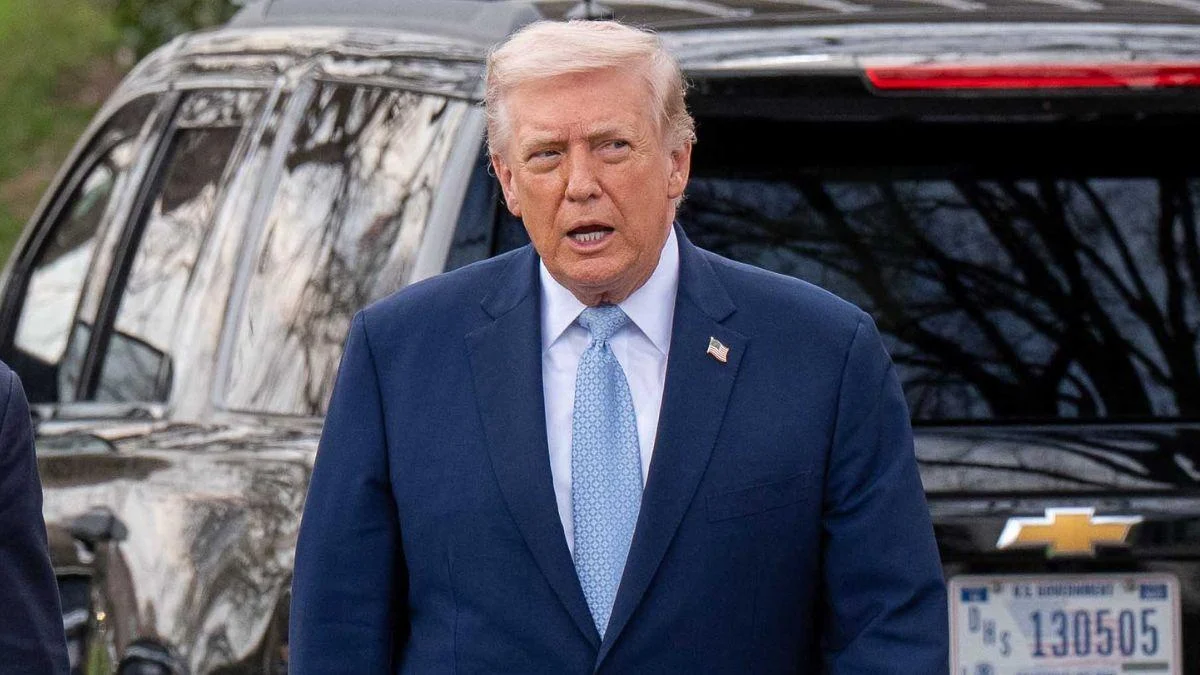
Former President Donald Trump was observed descending the stairs of Air Force One with pronounced caution upon his arrival at his Mar-a-Lago estate on Saturday, March 21, igniting renewed public discussions regarding his physical stamina and overall health. The 79-year-old meticulously navigated each step, gripping the handrail firmly as he disembarked the presidential aircraft in Palm Beach, Florida, an image that quickly circulated online and intensified ongoing scrutiny into the fitness of prominent political figures.
The incident marks another moment in a series of public appearances that have drawn attention to the former president’s physical demeanor, particularly his gait and stability. The careful descent was captured on video, showing Trump focusing intently on his footing, a visual in stark contrast to the often vigorous public image he cultivates. This observation feeds into a broader national conversation about the age and health of leading presidential candidates, a topic that has become increasingly salient in recent political cycles.
The Enduring Scrutiny of Presidential Fitness
The physical and mental fitness of presidential candidates has long been a subject of intense public interest and media examination in the United States. Historically, presidents and those aspiring to the highest office have faced relentless scrutiny over their health, often leading to public releases of medical records or carefully orchestrated appearances designed to project vigor and capability. In an era where the two leading contenders for the presidency are both in their late seventies or early eighties, these concerns have amplified significantly.
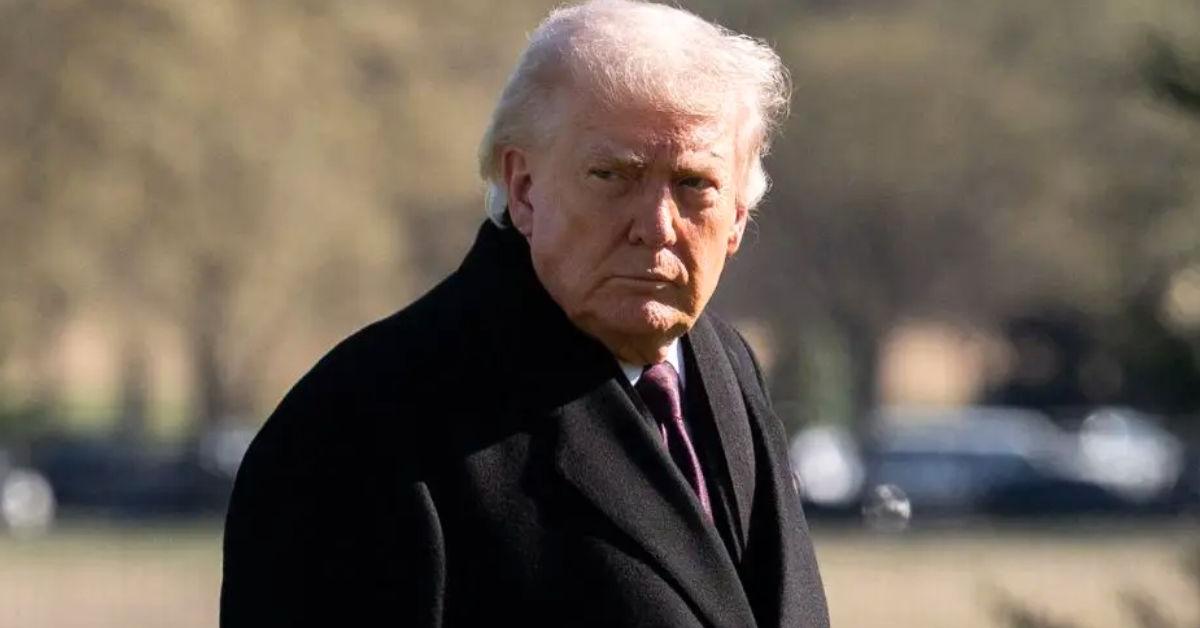
Air Force One’s retractable stairs, in particular, have become an inadvertent stage for such observations. The ascent and descent of these steps are frequently filmed and photographed, providing a highly visible, albeit brief, glimpse into a leader’s physical condition. For many, the manner in which a president navigates these stairs can be interpreted as a microcosm of their overall health and readiness for the demanding rigors of the office.
A Deliberate Descent at Mar-a-Lago
The Saturday arrival at Mar-a-Lago saw Trump taking the Air Force One steps at an exceptionally slow pace, described by some observers as "turtle-like." His eyes were fixed downward, suggesting a concentrated effort to maintain balance and prevent any misstep. This methodical approach to a routine action typically performed with ease by younger individuals prompted immediate commentary across social media platforms and news outlets. The image, sourced from various media, became a focal point for those questioning the former president’s physical resilience.
This event comes amidst a political landscape where both major parties’ presumptive nominees face consistent questioning about their age. For Donald Trump, who is currently the president, the focus on his physical actions is particularly acute as he navigates the demanding schedule of the commander-in-chief while also contending with the pressures of public perception.
Echoes of Past Criticisms and Perceived Irony

The slow descent garnered particular attention because of Trump’s previous remarks concerning the physical state of his political rival, President Joe Biden. Just weeks prior, at a rally in Kentucky, Trump had openly mocked Biden’s instances of stumbling and falling while in office. He notably recounted an episode where Biden fell multiple times while attempting to board Air Force One and another at the Air Force Academy, questioning the then-predecessor’s physical capability.
"Biden couldn’t even walk up the stairs," Trump quipped to rally-goers, adding, "He fell three times walking up, and the world watches… they say, what the h— is going on?" He further criticized a general for prioritizing paperwork over catching Biden during a fall, remarking that "Biden went down for the count." Trump also made a point of expressing admiration for former President Barack Obama’s ability to "bop" down stairs, implicitly contrasting it with Biden’s perceived difficulties. The recent footage of Trump’s own cautious descent has therefore led to widespread discussions about the perceived irony and the political implications of such public observations.
Trump’s Own Stance on Taking ‘Extra Care’
It is not the first time Donald Trump has addressed his careful approach to stairs. During the same Kentucky rally where he criticized Biden, the president acknowledged that he himself "could slip" and therefore takes stairs "very slowly." This statement suggests an awareness of the potential for public falls and a deliberate strategy to avoid them, particularly in an environment where every movement is scrutinized.
Trump has previously stated that he takes "extra care" on stairs, explaining that at his age, it is "not advisable" for him to bounce down them as he might have done in his younger years. This candid admission underscores a pragmatic recognition of the physical realities that come with advanced age. However, these explanations have not entirely quelled public speculation, with some social media users humorously suggesting he "needs an escalator" given his repeated displays of extreme caution on staircases.
A Pattern of Public Observations Fueling Health Rumors
Beyond his careful stair navigation, other physical observations have contributed to the ongoing public discussion about Trump’s health. Reports and images circulating in recent months have highlighted what some have termed "bulging cankles," "bruised hands," and more recently, a "mysterious neck rash." These seemingly minor physical details, when aggregated, contribute to a broader narrative about the former president’s well-being and fuel speculation about underlying health conditions.
Instances of Trump appearing to nod off in public, particularly during Cabinet meetings, have also drawn considerable media attention, earning him the moniker "Dozy Don" from some critics. Photographers have captured multiple occasions where he seemed to fall asleep, prompting questions about his energy levels and cognitive alertness. These occurrences, combined with his cautious movements, have collectively led to a heightened public and media focus on his overall physical and mental state.
Official Responses and Counter-Narratives to Health Concerns
Despite the persistent public and media scrutiny, the Trump administration and his campaign have consistently and emphatically shut down concerns about his apparent physical and cognitive decline. Officials and surrogates frequently praise his "unmatched energy" and dismiss any suggestions of ill health as politically motivated attacks. White House Press Secretary Karoline Leavitt and Vice President J.D. Vance, among others, have been vocal in defending the president’s stamina and mental acuity.
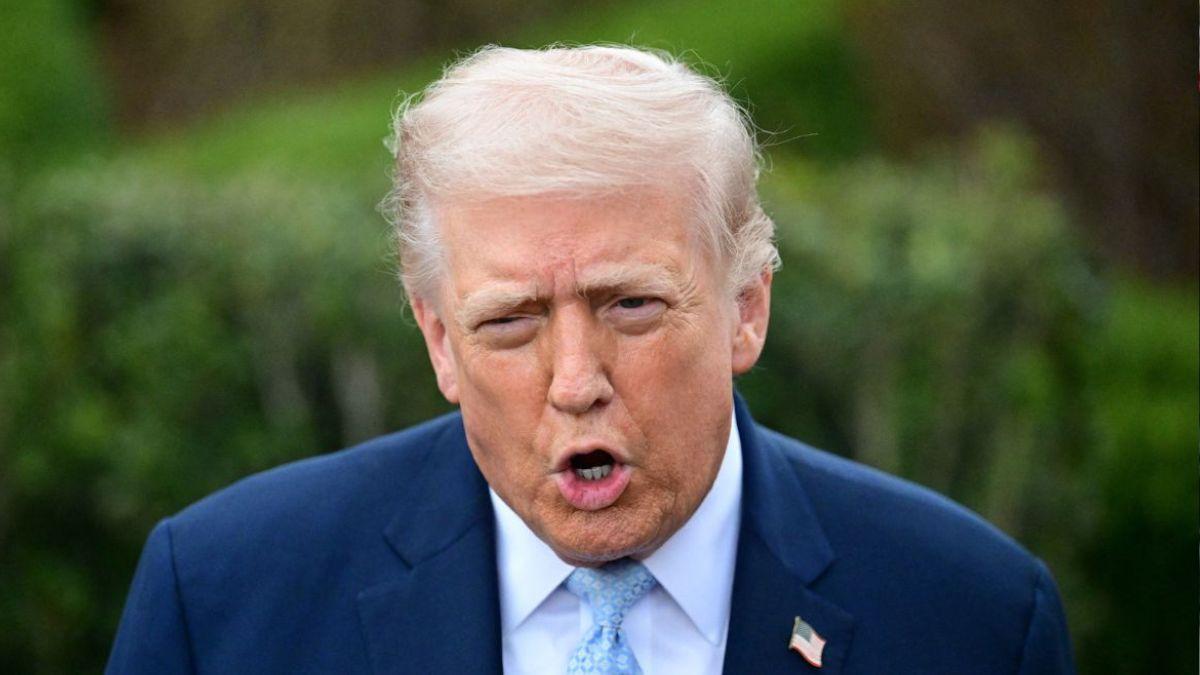
President Trump himself has maintained a steadfast position of being in "perfect health." He often boasts about his physical examinations and cognitive tests, asserting his superior fitness compared to his political opponents. In a recent statement, he even claimed that his former White House physician, Texas congressman Ronny Jackson, had told him he "could live to be 200 years old" with a "better diet." These counter-narratives aim to project an image of robust health and boundless energy, directly challenging the observations that fuel public speculation.
Public Perception and the Digital Echo Chamber
The rapid dissemination of images and videos on social media platforms like X plays a significant role in amplifying and shaping public perception around such incidents. Within hours of Trump’s slow descent from Air Force One, the footage became a viral talking point, eliciting a wide range of reactions. Commenters expressed varying sentiments, from genuine concern for his well-being ("He’s tired, he needs some rest") to pointed political criticism ("Not much spring in grandpa’s step," "He looks like a sad old sack of s—").
This digital discourse highlights how minor physical cues can be magnified and interpreted through different political lenses, influencing public opinion in real-time. The constant stream of observations, both supportive and critical, underscores the intense scrutiny political figures face in the modern media environment, where every gesture and movement is subject to immediate analysis and commentary.
Broader Implications for the Political Landscape
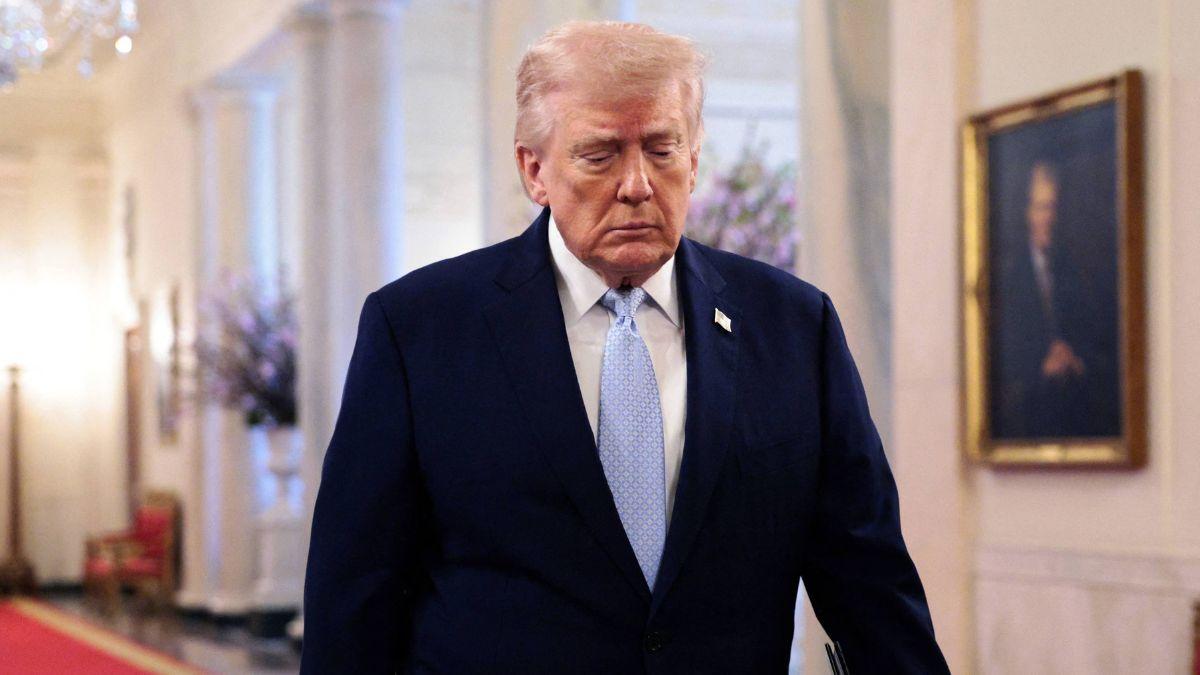
The ongoing focus on Donald Trump’s physical and cognitive health carries significant implications for the broader political landscape, particularly as the nation heads into another election cycle. Perceptions of a candidate’s vigor can heavily influence voter confidence, with many citizens seeking a leader who projects strength, resilience, and an ability to withstand the immense pressures of the presidency.
For Trump, these incidents could become fodder for political opponents seeking to highlight perceived vulnerabilities, potentially impacting his campaign messaging and strategy. Conversely, his campaign will likely continue to emphasize his stamina and dismiss any concerns as biased media narratives. The public’s interpretation of these events, whether as genuine health concerns or mere age-related caution, will undoubtedly play a role in the ongoing dialogue surrounding presidential fitness as the political calendar progresses.
The Unfolding Narrative of Presidential Vigor
As Donald Trump continues his public appearances and campaign activities, the narrative surrounding his health and physical stamina remains a potent, if often speculative, element of political discourse. The cautious descent from Air Force One, along with other reported observations, serves as a recurring reminder of the intense scrutiny placed on presidential candidates, particularly those of advanced age. This continuous public and media watchfulness ensures that the question of presidential vigor will remain a prominent feature of the political conversation leading up to future elections.