Two years after a devastating blaze tore through the Spectrum Building in Dagenham, dozens of former residents remain trapped in a financial and legal stalemate, forced to continue monthly mortgage payments on homes that no longer exist. The August 26, 2024, fire, which displaced more than 80 people and reduced the east London apartment complex to a charred skeleton, has become a flashpoint for the ongoing building safety crisis in the United Kingdom. Despite government promises to accelerate the removal of flammable cladding, the survivors of the Spectrum Building find themselves caught between bankrupt freeholders, slow-moving insurance adjusters, and the rigid demands of high-street lenders.
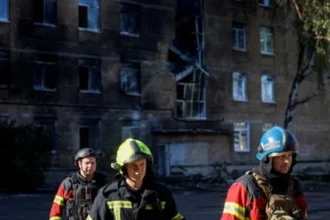
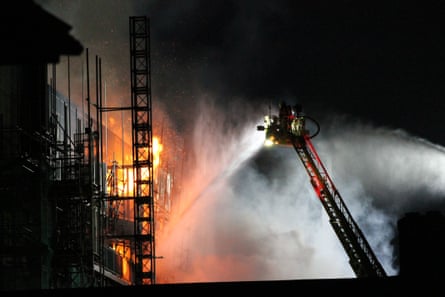
The nightmare began in the early hours of a Monday morning when a fire broke out at the Dagenham site. At the time, the building was undergoing remediation work to remove dangerous, combustible cladding—the same material responsible for the 2017 Grenfell Tower tragedy that killed 72 people. Ironically, the scaffolding erected to fix the building served as a bridge for the flames, allowing the fire to bypass internal safety barriers and engulf the structure with terrifying speed. Today, the site remains a hollowed-out reminder of a systemic failure that has left families homeless and nearly bankrupt.
Two Years in Limbo: The Residents Still Paying Mortgages on Flats Destroyed in East London Fire
For leaseholders like Sarah Williams, the fire was the culmination of a decade-long struggle with the London property market. In 2016, Williams joined a 24-hour queue, camping in a car park to secure a deposit on what was then a flagship development in Dagenham. At the time, the Spectrum Building represented a rare opportunity for first-time buyers to enter a volatile market. However, within four years, the discovery of flammable cladding rendered her flat unsellable and unmortgageable. Four years after that discovery, the building was gone.
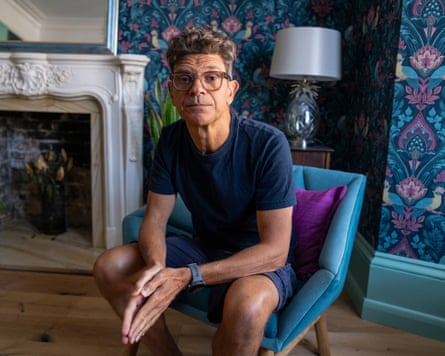
Williams, a charity worker, now describes her life as being in a state of suspended animation. She is among those still paying a full mortgage to her bank every month, despite the fact that her home was demolished following the blaze. While insurance payouts have covered temporary emergency accommodation for a period of three years, that safety net is rapidly approaching its expiration date. If a final compensation settlement is not reached within the next twelve months, Williams and her neighbors face the prospect of paying both market-rate rent for new housing and a mortgage for a pile of rubble.

The financial burden is compounded by the bankruptcy of the building’s freeholder, Arinium Ltd. The company entered insolvency shortly after the fire, handing over control of the site and its assets to court-appointed administrators. This move has added layers of bureaucratic complexity to the insurance claim process. The administrators are now tasked with distributing any remaining funds and insurance settlements, but they have provided no firm timeline for when leaseholders might see a return of their equity.
The Spectrum Building Disaster and the Cladding Trap
The plight of the Dagenham residents highlights a broader issue within the British housing sector known as the "cladding trap." Since the Grenfell Tower disaster, hundreds of thousands of leaseholders across the UK have discovered that their homes were built with substandard materials. The cost of fixing these issues often falls on the residents rather than the developers or the government, leading to years of litigation and anxiety.
James Allchurch, who owned two units in the Spectrum Building—one as a primary residence and one as a rental investment—recalled the night of the fire as a moment of pure survival. Waking to the sight of blue emergency lights and glowing embers outside his third-floor window, he and his partner fled with nothing but the clothes on their backs. Like many others, he assumed the displacement would be temporary. Instead, he has spent the last two years watching his investment disappear while his debt remains.
Allchurch noted that the psychological trauma of the fire is frequently reactivated by the ongoing legal battles. He described a persistent "underlying sense of anxiety" that stems from the lack of accountability. There is a growing fear among the survivors that if the freeholder is found liable for safety breaches and fined by regulators, those fines might be deducted from the insurance pot intended to compensate the victims. This creates a perverse incentive where justice for safety violations could directly result in further financial loss for the residents.
Political Promises and the Reality of Remediation
In the immediate aftermath of the Dagenham fire, high-ranking government officials visited the site to offer support. Angela Rayner, then serving as Deputy Prime Minister, stood before the smouldering ruins and declared that the pace of cladding remediation across the country was "far too slowly." She vowed that the new Labour administration would prioritize building safety and "speed up the process" to ensure such a disaster would never happen again.
However, data released two years into the current government’s term suggests that progress remains incremental. Since the 2024 fire, the number of buildings identified as needing urgent cladding remediation where work has either started or been completed has only moved from 50% to 53%. For the residents of the Spectrum Building, these statistics are a source of profound frustration. They argue that the government’s focus has shifted toward ambitious new housing targets, such as the pledge to build 1.5 million homes, while the existing safety crisis is "swept under the carpet."
Advocacy groups like "End Our Cladding Scandal" have been vocal in their criticism. Giles Grover, a representative for the group, stated that while small steps have been taken, the response remains "piecemeal." He warned that the Dagenham fire was a clear signal that the time for transitional policies has passed. According to Grover, hundreds of thousands of people are still sleeping in buildings that are essentially tinderboxes, waiting for a remediation process that is bogged down in legal disputes and funding shortages.
Economic and Social Consequences for Leaseholders
The long-term economic impact on the Dagenham leaseholders is severe. Many had invested their life savings into their Spectrum Building flats, viewing them as a stepping stone to larger family homes. Now, with their credit tied up in mortgages for non-existent properties, they are unable to move on with their lives. Starting a family, changing careers, or relocating for work has become impossible for those tethered to the Dagenham site.
Furthermore, the fire has exposed the fragility of the leasehold system in England and Wales. Under this system, residents own the right to live in their flats for a set period, but the building itself and the land it sits on belong to a freeholder. When the freeholder goes bankrupt or disappears, leaseholders often find themselves with very few legal avenues to force repairs or claim compensation. The Dagenham case is being watched closely by legal experts as a potential precedent for how the state handles "orphan buildings" where no solvent owner exists to take responsibility.
The Ministry of Housing, Communities and Local Government has issued statements urging administrators to resolve insurance settlements "as quickly as possible." The government has also pointed to the introduction of a new legal duty to remediate, which aims to force those responsible for unsafe buildings to fix them or face criminal prosecution. Yet, for those currently paying for "ghost flats," these future legal protections provide little comfort in the present.
The Path Forward for Dagenham Survivors
As the second anniversary of the blaze passes, the residents of the Spectrum Building are calling for more direct state intervention. They are seeking a government-backed guarantee that would allow them to exit their mortgages without penalty or a bridge fund that would provide immediate equity release while insurance claims are processed. Without such measures, the survivors remain "two years in limbo," their financial futures dictated by a slow-moving legal system and the remnants of a failed building.
The story of the Spectrum Building serves as a grim reminder that the lessons of Grenfell Tower have yet to be fully implemented. While the physical fire in Dagenham was extinguished in 2024, the financial and emotional fire continues to burn for the leaseholders left behind. They continue to pay for the mistakes of developers, the negligence of freeholders, and the slow response of a regulatory system that has failed to protect its citizens.
The residents are no longer just asking for sympathy; they are demanding the "fast and urgent action" they were promised. As Sarah Williams concluded, no one else should have to stand in front of a smouldering building and be told their life is a priority, only to be forgotten once the cameras stop rolling. The resolution of the Spectrum Building case will be a litmus test for whether the UK can truly resolve its building safety crisis or if more residents are destined to remain in a permanent state of limbo.