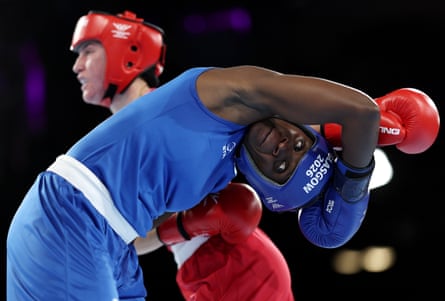
The departure of a scheduled flight from Glasgow to Entebbe on Tuesday marked the conclusion of a high-stakes international competition, but for the Ugandan national team, the journey home was defined by four empty seats. Following a period of intense preparation and the conclusion of their competitive duties in the United Kingdom, four members of the Ugandan boxing squad failed to report for their return travel, triggering a multi-agency search and reigniting a long-standing debate regarding the defection of international athletes during major sporting events.
The missing athletes have been identified as Ibrahim Kemis, Emily Nakalema, Angel Katushabe, and the team captain, Nuhu Batte. Out of a six-person boxing contingent, only two returned to Uganda as scheduled. The disappearance occurred during a brief window of leisure time granted to the athletes for sightseeing after the pressure of the tournament had subsided.
According to reports from NBS Sport, a Ugandan news outlet, at least one of the missing boxers indicated an intention to seek asylum within the United Kingdom. The primary motivation cited was the pursuit of superior training facilities and professional opportunities not available in their home country. However, Ugandan sports officials have expressed confusion and frustration over the move, claiming there were no prior indications of dissatisfaction or political distress among the squad members.
Official Response and Investigation into the Missing Ugandan Boxers
Godwin Kayangwe, the Ugandan team’s chef de mission, told reporters that the management was blindsided by the disappearances. He emphasized that the move did not appear to be motivated by political persecution or gender-based discrimination. "I have absolutely no idea why they would be doing that," Kayangwe stated, noting that the athletes had not voiced any concerns regarding their safety or well-being in Uganda.
The first signs of trouble emerged when team officials discovered that the athletes’ mobile phones had been deactivated. This was a direct violation of the Ugandan team’s strict protocol, which requires athletes to maintain communication and seek explicit permission before leaving the team’s designated camp. When the boxers failed to reappear by the time of the flight’s departure, the situation was escalated to local authorities.
Police Scotland confirmed that it has received reports of the missing participants and is currently working in coordination with the UK Home Office to determine their whereabouts. While initial reports suggested the group may have been sheltered by a local boxing gym in Glasgow, current intelligence indicates they have since moved to an undisclosed location outside of Scotland. The owner of the facility in question has declined to comment on the matter, further complicating the search for the Ugandan boxers.
A Recurring Pattern: The History of Athlete Defections in the UK
The disappearance of the Ugandan boxers is far from an isolated incident; rather, it is part of a decades-long trend of "vanishing athletes" at major international tournaments held on British soil. The UK Home Office has historically implemented enhanced background checks and security measures for participants of large-scale events due to the high frequency of asylum claims and overstaying.

Historical data illustrates the scale of the phenomenon:
- 2002 Manchester Commonwealth Games: An estimated 27 athletes and officials failed to return to their home countries.
- 2012 London Olympics: Multiple athletes from various nations, including the Ethiopian flag bearer and competitors from Sudan and Cameroon, sought refuge in the UK.
- 2014 Glasgow Commonwealth Games: Approximately 66 individuals were reported missing or sought asylum following the event.
- 2022 Birmingham Commonwealth Games: At least 17 participants vanished from the athletes’ village or failed to board return flights.
These incidents often involve athletes from nations experiencing economic instability, civil unrest, or limited professional infrastructure. For many, a sports visa represents a rare and legal pathway into a Western nation, providing a window of opportunity to escape hardship or pursue a lucrative career in professional sports.
The Professional Risks and Economic Realities for Ugandan Boxers
While the allure of the UK’s professional sports circuit is significant, experts warn that the transition from an amateur international competitor to a successful professional immigrant is fraught with peril. Pete Carvill, a prominent boxing commentator and author, noted that many athletes who defect struggle to replicate their amateur success in an unregulated environment.
According to Carvill, the loss of the structured environment provided by national amateur programs often leads to "lifestyle issues." Without the oversight of national coaches and the support of a team framework, defecting athletes frequently face challenges with discipline, weight management, and social isolation. Furthermore, the lack of legal status or professional representation can lead to exploitation by unscrupulous promoters or managers.
"A lot of them get taken advantage of, signing contracts that they don’t understand and blowing the purses that they receive," Carvill explained. He noted that the transition often involves a shift away from rigorous training toward a lifestyle of partying or inconsistent work, which can prematurely end a promising athletic career.
Success Stories and the Path to Integration
Despite the risks, the UK has seen numerous instances where athletes who remained after international events successfully integrated and thrived. These success stories serve as a powerful motivator for those currently in hiding, such as the missing Ugandan boxers.
One of the most notable examples is Cyrille Tchatchet, a Cameroonian-born weightlifter who disappeared after the 2014 Commonwealth Games in Glasgow. Tchatchet experienced a period of extreme hardship, including homelessness and severe depression, before being granted refugee status in 2016. He eventually rebuilt his life, becoming a mental health nurse in the West Midlands while continuing his athletic career. Recently, he represented England at the Commonwealth Games, winning a silver medal in the same city where he had once slept rough.
Similarly, Weynay Ghebresilasie, an Eritrean-born runner, sought asylum after the 2012 London Olympics. He eventually settled in Glasgow and became a standout figure in the Scottish athletic community, recording the fastest time for a Scottish man at a recent London Marathon. These cases highlight a potential path from displacement to national representation, though they are often the exception rather than the rule.
Legal Consequences and Public Safety Concerns
The decision to remain in the UK without legal authorization carries significant risks, including the potential for criminal involvement or legal prosecution. Authorities have pointed to past cases where athletes who overstayed their visas became entangled in the criminal justice system.
In a high-profile case from last year, Philip Pariyo, a former Ugandan rugby player who remained in the UK after the 2014 Games, was sentenced to prison for a violent offense in Cardiff. In another instance, Nazeer Ullah Khan, a boxer from Pakistan who failed to return home after the 2022 Birmingham Games, was convicted of harassment while working in the service industry. These incidents are often cited by immigration hardliners as a reason for stricter controls on athletic visas.
The Home Office maintains that while it recognizes the talent and contributions of international athletes, the integrity of the immigration system must be upheld. "We work closely with event organizers to ensure that all participants are aware of their visa conditions and the consequences of overstaying," a government spokesperson said in a general statement regarding sports-related migration.
Looking Ahead to Future UK Sports Events
As Glasgow prepares to host the 2026 Commonwealth Games, organizers are already coordinating with Police Scotland, the Border Force, and UK Visas and Immigration to mitigate the risk of further disappearances. The 2026 event is expected to host 3,000 athletes from 74 nations, and security protocols are being designed to ensure the safety of participants while preventing unauthorized stays.
A spokesperson for the Glasgow 2026 organizing committee emphasized that the goal is to provide a secure environment where athletes can compete at the highest level. However, the recurring nature of these disappearances suggests that as long as there is a significant disparity in economic and professional opportunities between nations, the phenomenon of the "vanishing athlete" will likely persist.
For the families and teammates of Ibrahim Kemis, Emily Nakalema, Angel Katushabe, and Nuhu Batte, the situation remains a mix of concern and uncertainty. While the Ugandan sports federation hopes for their safe return, the reality of the situation points toward a long and complex legal battle for the athletes as they attempt to forge a new life in the United Kingdom. The search for the Ugandan boxers continues, as authorities monitor ports and transport hubs for any sign of the four individuals who chose a leap of faith over a flight home.