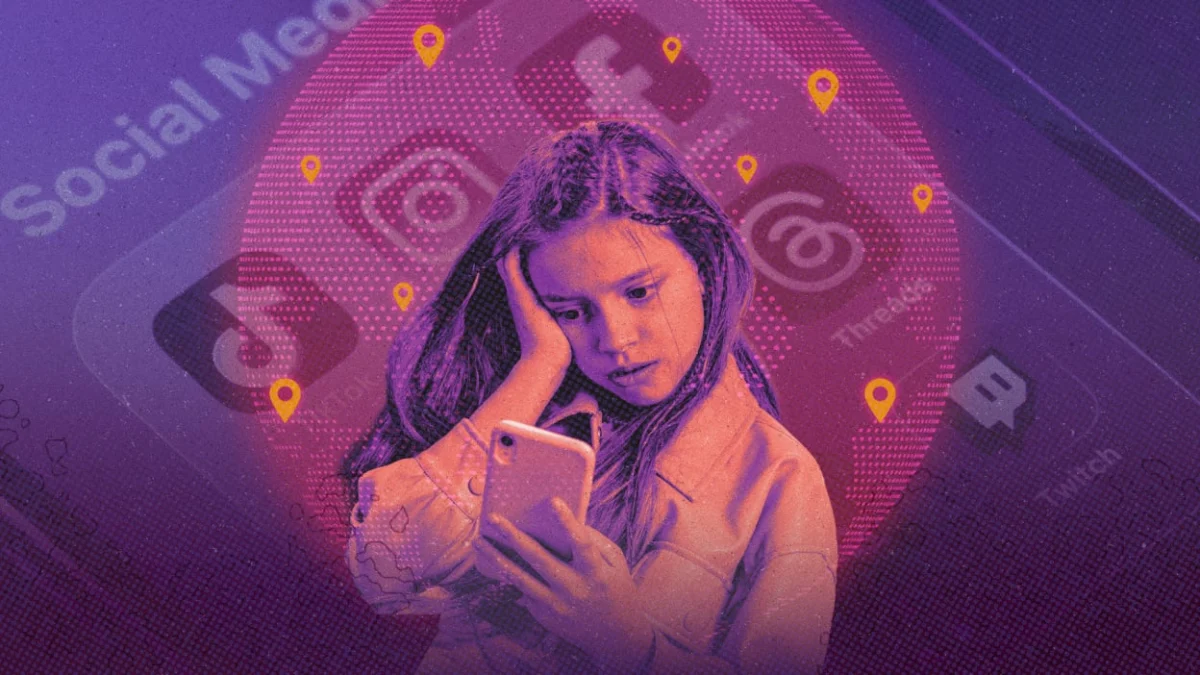
Governments worldwide are rapidly advancing legislation to restrict or entirely prohibit minors from accessing social media platforms, citing a growing crisis in adolescent mental health and online safety. Led by a landmark move in Australia, a wave of "digital age" laws has swept through Europe, South America, and Southeast Asia, aiming to sever the link between children and the algorithms of Big Tech. These measures represent a fundamental shift in how nations view the "Digital Wild West," moving from voluntary industry guidelines to strict, legally enforceable age mandates.
The Australian Blueprint for Social Media Regulation
Australia established a global precedent in December 2025 by passing the Online Safety Amendment (Social Media Minimum Age) Act. This world-first legislation effectively bans children under the age of 16 from holding accounts on major platforms including TikTok, Instagram, Facebook, X, and Snapchat. Under this law, social media companies are required to implement robust age verification systems and take "reasonable steps" to ensure underage users cannot bypass registration barriers.
The Australian model does not penalize children or parents but instead places the legal and financial burden on the technology companies. Failure to comply can result in fines reaching tens of millions of dollars. However, the implementation has faced immediate challenges; a July 2026 government study suggested that the ban has been largely ineffective in its early stages as tech companies struggle with the technical requirements of age assurance.
Furthermore, the Australian legislation has triggered significant pushback from the industry. Reddit recently filed a lawsuit against the Australian government, arguing that the broad definitions within the law could stifle open discourse and community-based platforms that do not use the same algorithmic engagement models as larger competitors. Despite these hurdles, the Australian approach remains the primary reference point for other nations drafting similar bans.
European Nations Accelerate Legislative Restrictions
Following the Australian example, European lawmakers have moved to implement their own variations of a social media ban for kids. France is currently positioned to become the first European nation to officially enact such a ban, with legislation expected to pass in late July 2026. The French bill targets children under 15, requiring platforms to block new account creation starting September 1, 2026, with a full sweep of existing accounts scheduled for January 2027.
The United Kingdom has also confirmed its intention to implement a social media ban for under-16s. British officials announced in June 2026 that they would adopt a model nearly identical to Australia’s, while also exploring more aggressive measures. These include potential "overnight curfews" for 16- and 17-year-olds and a legal prohibition on "infinite-scroll" mechanisms for all minors, which psychologists argue contribute to platform addiction.

Other European countries are moving at varying speeds:
- Austria: Announced a bill in March 2026 to ban social media for children under 14, while simultaneously introducing a "Media and Democracy" subject into the national school curriculum.
- Greece: Proposed a ban for kids under 15, with Prime Minister Kyriakos Mitsotakis citing "addictive design" as a primary driver for childhood anxiety and sleep deprivation.
- Spain: Plans to hold social media executives personally liable for harmful content accessed by children under 16.
- Poland and Slovenia: Both nations are drafting legislation to set a minimum age of 15 for social media access, accompanied by steep fines for non-compliant tech firms.
Regional Developments in the Americas and Southeast Asia
In North America, the Canadian government introduced the Safe Social Media Act in June 2026. This proposed law would ban users under 16 from social media but adds a modern layer of complexity by including artificial intelligence companies. Under the Canadian framework, AI chatbots such as ChatGPT, Gemini, and Claude would be required to implement the same age verification and safety standards as traditional social media platforms.
Brazil enacted the Digital Statute of Children and Adolescents in March 2026. Rather than an outright ban, the Brazilian law requires children under 16 to link their accounts to a legal guardian. It also forces platforms to disable features designed to artificially extend screen time, such as autoplay videos and push notifications, for all minor users.
Southeast Asia has seen some of the most aggressive enforcement actions. Indonesia announced in early 2026 that it would deactivate all accounts belonging to children under 16 on "high-risk" platforms, specifically naming YouTube, TikTok, and Roblox. Malaysia followed suit with the Online Safety Act 2025, which prohibits account creation for those under 16 on any platform with more than eight million active users.
The Drivers of Global Social Media Bans for Children
The primary catalyst for this legislative surge is a growing body of research linking prolonged social media use to a decline in adolescent well-being. Lawmakers across these countries consistently cite the need to address child sexual exploitation, cyberbullying, and self-harm content. By implementing a social media ban for kids, governments hope to reduce the exposure of vulnerable populations to harmful material that algorithms often amplify.
Public health officials have also raised alarms regarding the "addictive" nature of modern social media interfaces. Features such as likes, streaks, and infinite scrolling are designed to trigger dopamine responses, which can be particularly potent in the developing brains of teenagers. Legislators argue that the industry has failed to self-regulate, necessitating state intervention to "give children their childhood back," as phrased by British government officials.
Beyond mental health, data privacy is a significant concern. Many of these bans are coupled with stricter age verification laws that require users to provide sensitive information, such as government IDs or biometric data, to prove their age. While intended to protect children, these requirements have sparked a secondary debate regarding the digital privacy of all citizens.

Technical Challenges and Industry Opposition
Despite the political momentum, the implementation of a social media ban for kids faces massive technical and legal obstacles. Age verification remains a central point of contention. Methods such as facial age estimation, credit card checks, and government database cross-referencing all carry risks regarding data security and accuracy. Critics argue that tech-savvy minors can easily circumvent these bans using Virtual Private Networks (VPNs) or by creating accounts with falsified information.
Big Tech companies have largely opposed these bans, advocating instead for enhanced parental controls and age-appropriate experiences rather than total exclusion. Industry trade groups argue that a social media ban for kids infringes on the rights of young people to access information and participate in digital culture. They also warn that such laws could lead to a fragmented internet, where different rules apply in every jurisdiction, making compliance nearly impossible for global platforms.
Privacy advocates have also expressed concern that mandatory age verification will lead to "de facto" identity requirements for every internet user. They argue that the move to protect children may inadvertently destroy the anonymity and free expression that have been cornerstones of the internet since its inception.
Future Outlook and Enforcement
As 2026 progresses, the world is watching to see how these laws are enforced and whether they result in measurable improvements in youth mental health. Turkey recently passed a bill blocking kids under 15 from platforms, and the European Union is currently debating an EU-wide ban for children under 13. These developments suggest that the trend of restricting digital access for minors is not an isolated phenomenon but a coordinated shift in global digital policy.
The year 2027 is expected to be a critical turning point, as several major nations—including France, Greece, and the UK—will begin full enforcement of their respective bans. During this period, the legal battles between governments and tech giants are likely to intensify, potentially reaching supreme courts and international tribunals.
Ultimately, the success of a social media ban for kids will depend on the ability of governments to balance safety with technological reality. While the legislative intent is clear, the practical application of these bans remains one of the most complex challenges facing the modern regulatory environment. As more countries join the list, the global digital landscape for the next generation is being fundamentally redefined.