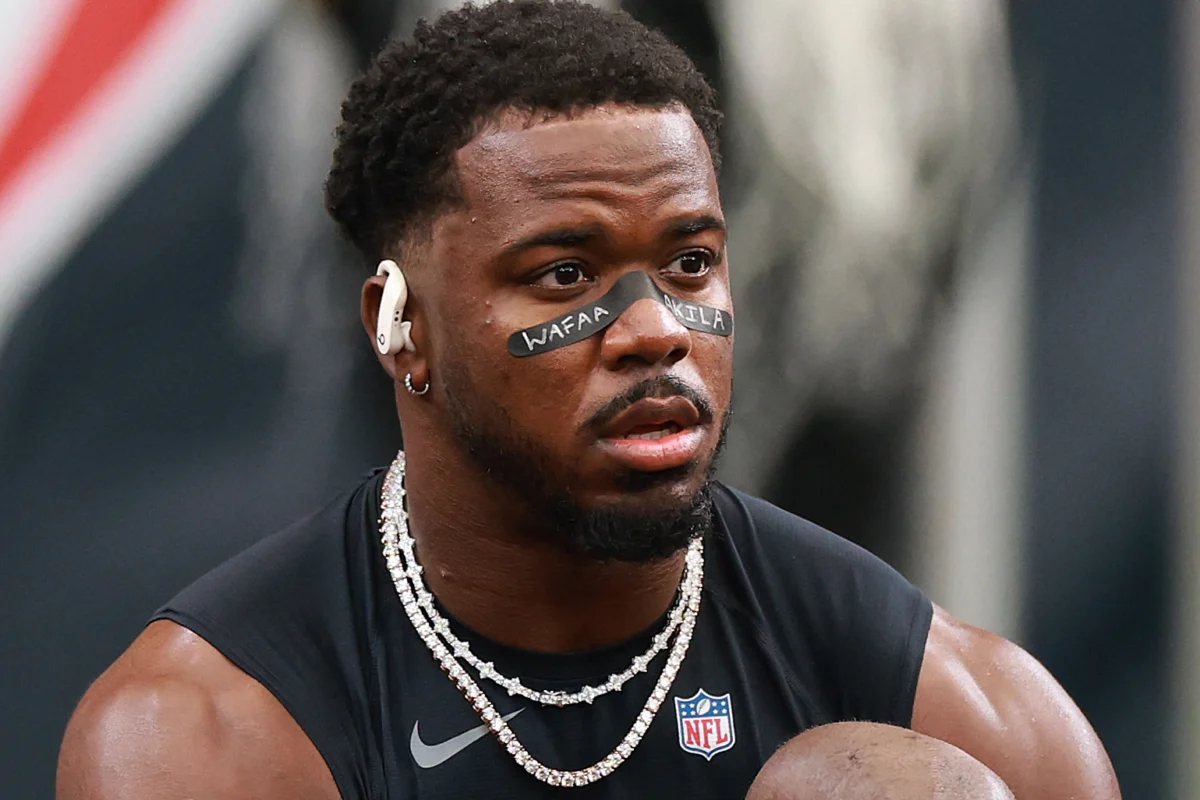
American football player Azeez Al-Shaair has once again defied the National Football League’s (NFL) regulations, choosing to honor the memory of a slain Palestinian child by wearing eye black bearing the name of Wafaa Akila. The Houston Texans linebacker’s persistent advocacy for raising awareness about the plight of children in Gaza comes despite previous fines and a clear league code of conduct that restricts personal messages on equipment.
Al-Shaair’s latest display of solidarity occurred during a recent game against the Cincinnati Bengals. He adorned his eye black with the name "Wafaa Akila," an eight-year-old girl who, according to reports, was killed by Israeli forces in Gaza. This act follows a similar tribute just days prior, when Al-Shaair displayed the name of another young victim, Hind Rajab, on his eye black during a game against the Buffalo Bills.
The NFL’s strict rules regarding player attire and equipment are designed to maintain a standardized and professional image, prohibiting any form of political or social messaging. Al-Shaair’s repeated breaches of this code have resulted in financial penalties, underscoring the league’s stance on enforcing its established regulations.
A Stand Against Injustice: Al-Shaair’s Motivation
The fine Al-Shaair incurred for displaying Hind Rajab’s name amounted to $11,941. The NFL cited violations of its established code of conduct concerning player clothing and equipment during matches. Despite the financial repercussion, Al-Shaair has expressed a profound commitment to his cause, viewing the monetary penalty as insignificant compared to the value of a human life.
"It’s bigger to me; what’s a life worth? Is a life worth $11,000? No, I think it’s priceless," Al-Shaair stated in remarks to reporters following the initial fine. This sentiment highlights his deeply held conviction that raising awareness about the loss of innocent lives in Gaza outweighs adherence to league regulations and financial penalties.
His decision to continue wearing tributes to fallen Palestinian children demonstrates an unwavering resolve. The choice to honor Wafaa Akila, particularly in the wake of the fine for acknowledging Hind Rajab, signals a strategic continuation of his message and a refusal to be silenced by league sanctions.
The Tragic Stories of Wafaa Akila and Hind Rajab
Wafaa Akila’s life was tragically cut short on September 6, the same day she was set to begin her first day of school. Reports indicate she was killed along with her father in an Israeli attack in western Gaza as they were traveling home. Their car was reportedly struck by an Israeli drone, leaving it severely damaged. Amidst the devastation, only a few pages of Akila’s schoolbooks reportedly survived the attack, a stark reminder of the interrupted innocence and shattered dreams. A photograph captured earlier that day showed a smiling Akila, full of anticipation for her first day of school, a poignant contrast to the tragic end that awaited her.
The broader context of the conflict in Gaza paints a grim picture for its child population. The ongoing Israeli actions have severely impacted educational infrastructure, with an estimated 90 percent of schools in the Strip either damaged or destroyed. This has left approximately 660,000 children without access to consistent education. According to the Palestinian Ministry of Health in Gaza, Israel has been responsible for the deaths of at least 21,500 children since October 7, 2023.
The circumstances surrounding Hind Rajab’s death bear a chilling resemblance to Wafaa Akila’s. Rajab, aged five, was killed in Gaza on January 29, 2024, after Israeli soldiers allegedly opened fire on her family’s stranded car. Her final moments were reportedly captured in a phone call by the Palestine Red Crescent Society, a harrowing account that was later adapted into an Oscar-nominated docudrama, bringing international attention to the human cost of the conflict.
Public Support and Financial Assistance
The financial burden of Al-Shaair’s fines has not gone unnoticed, and support has emerged from prominent figures within the sports world. Basketball player Kyrie Irving, a nine-time NBA All-Star, publicly offered to cover Al-Shaair’s fine. Al-Shaair later confirmed that he had been in communication with Irving, acknowledging the solidarity shown by the fellow athlete.
This gesture of support from Irving underscores a growing sentiment among some athletes who are using their platforms to advocate for causes they believe in, even if it means clashing with league regulations. It also highlights a potential divide within professional sports, where some athletes are willing to face penalties for their activism.
Al-Shaair has leveraged his social media presence to amplify his message, sharing posts about Wafaa Akila, including details about her mother’s reaction to the tragic loss. His Instagram account has become a platform for disseminating information and garnering support for his cause.
A Wider Movement: "Be Like Azeez Al-Shaair"
Following the Texans’ game against the Bengals, a social media video circulated showing Al-Shaair interacting with children on the sidelines. Some of these children were seen wearing keffiyehs, traditional Arab headdresses often associated with Palestinian solidarity, while others were amputees holding posters in support of the player. This interaction further solidified Al-Shaair’s image as a compassionate advocate for children affected by conflict.
Al-Shaair, a Black American Muslim athlete, has consistently spoken out about the plight of Palestinians and has, as the original report notes, "paid the price for it." This is not the first time he has faced consequences for his activism. In January of the previous NFL season, he was fined for displaying the message "Stop The Genocide" on his nose tape. While this message was not explicitly tied to a specific conflict, it was widely understood to be a reference to the situations in Gaza and Sudan.
Prominent American Muslim scholar Omar Suleiman has been a vocal supporter of Al-Shaair’s actions. Suleiman took to social media to praise Al-Shaair, highlighting his commitment to Palestinian refugees and children with missing limbs, and his consistent use of his NFL platform to honor Palestinian children despite facing fines. Suleiman’s message, "choose to be like Azeez Al-Shaair, Kyrie, and Macklemore," suggests a broader call to action for individuals in public life to use their influence for social justice.
League Policies and Broader Implications
The NFL’s imposition of fines on Al-Shaair for his displays of solidarity occurs within a larger context of athlete activism and the challenges faced by those who choose to speak out on sensitive political issues. The league’s stringent rules are often seen as an attempt to maintain a neutral stance and avoid controversy, but this can also stifle important conversations and limit the ability of athletes to express their personal convictions.
The situation also brings to light the influence of powerful figures within the sports and entertainment industries. The article notes that Robert Kraft, owner of the New England Patriots and a prominent businessman, reportedly pressured pop star Ed Sheeran to drop rapper Macklemore from his U.S. tour. Macklemore had been an outspoken advocate for Palestine, and Kraft’s alleged involvement suggests a broader pattern of influential individuals attempting to control the messaging of artists and athletes.
This dynamic raises questions about the extent to which financial interests and political pressures can shape public discourse, even within the seemingly apolitical realm of professional sports. Al-Shaair’s persistent efforts, in contrast to the pressures faced by others, underscore the courage required to stand firm in one’s convictions when confronted with institutional opposition.
The Value of a Voice: Al-Shaair’s Enduring Impact
Azeez Al-Shaair’s actions transcend the boundaries of the football field. By choosing to honor the memory of Wafaa Akila and Hind Rajab, he is not only raising awareness about the devastating impact of the conflict on children but also challenging the narrative and the silence that often surrounds such tragedies. His willingness to absorb financial penalties for his beliefs sends a powerful message about the prioritization of human life and dignity over league regulations.
The support he has received from figures like Kyrie Irving and the admiration expressed by scholars like Omar Suleiman indicate that his message resonates with a significant audience. The call to "Be like Azeez Al-Shaair" suggests that his activism is inspiring others to consider their own roles and responsibilities in advocating for humanitarian causes.
As Al-Shaair continues to navigate the pressures of the NFL, his commitment to amplifying the voices of those silenced by conflict serves as a potent reminder of the impact that one individual’s voice can have. His continued tributes, undeterred by fines, highlight the profound importance of bearing witness to injustice and ensuring that the memories of those lost are not forgotten.