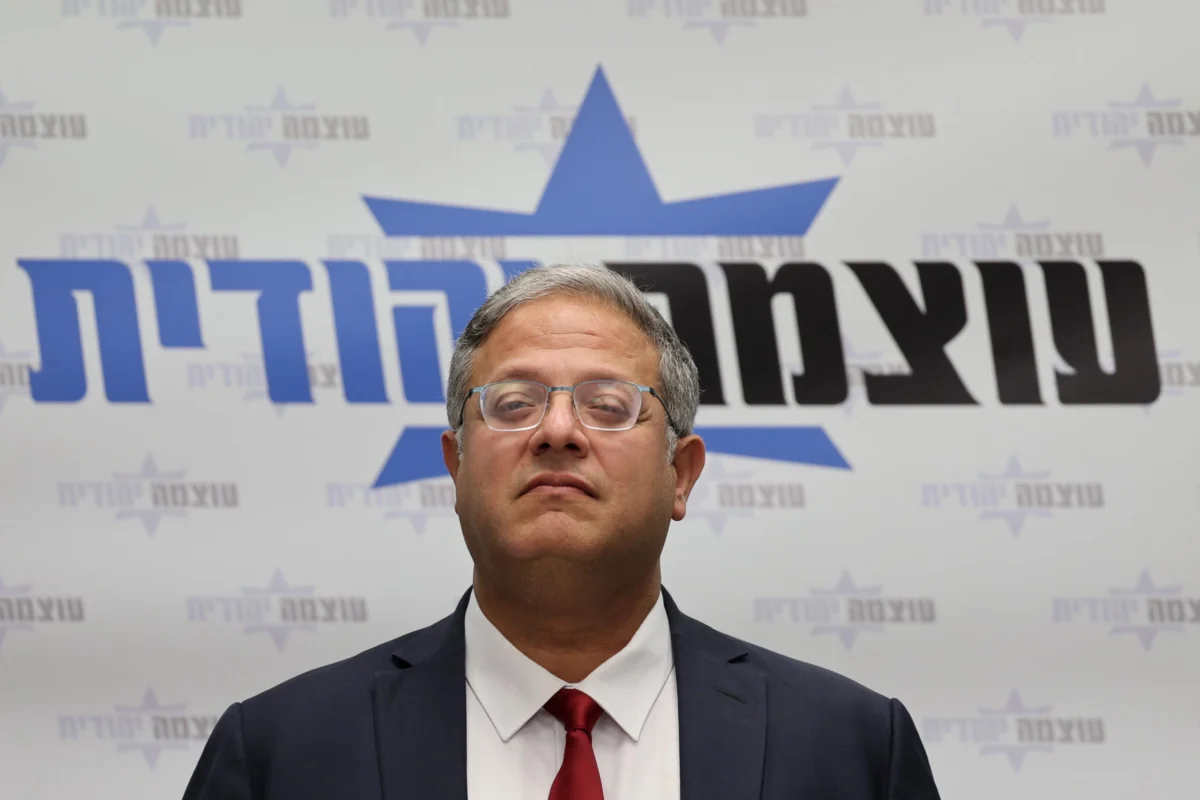
Palestinian officials and groups have vehemently condemned Israeli National Security Minister Itamar Ben-Gvir for posting footage online showing him confronting a jailed Hamas figure, Hassan Salama, in his prison cell and stating his desire to kill him. The incident, captured and shared by Ben-Gvir on social media platform X, has ignited further outrage and amplified concerns over the treatment of Palestinian detainees within Israeli correctional facilities.
The Palestinian Commission of Detainees and Ex-Detainees Affairs issued a strong statement on Monday, labeling Ben-Gvir’s actions as a demonstration of "degradation and depravity" reaching unprecedented levels. Raed Abu al-Hummus, the head of the Palestinian Authority agency, characterized the conditions within Israeli prisons as "organized terrorism," underscoring the deep-seated anxieties surrounding the welfare of Palestinian prisoners.
Minister Ben-Gvir’s Provocative Video Emerges
The controversial footage, uploaded by Ben-Gvir on Sunday, depicts the minister inside the solitary confinement cell of Hassan Salama, who has been incarcerated by Israel for approximately three decades. Surrounded by security personnel, Ben-Gvir is heard directly addressing Salama, stating, "I want to kill you… I want you executed." The minister indicated the video was filmed two weeks prior to its public release.
Hassan Salama is serving multiple life sentences for his alleged involvement in a string of Hamas-orchestrated attacks in 1996, including deadly bus bombings that claimed numerous lives. His extended imprisonment and the nature of his alleged crimes have made him a significant figure in the ongoing Israeli-Palestinian conflict and the complex issue of prisoner exchanges.
Palestinian Reactions and Accusations of Political Stunt
The Palestinian Prisoners Media Office swiftly denounced Ben-Gvir’s behavior, characterizing it as a "cheap political and electoral stunt." They asserted that the minister’s actions were timed to coincide with the upcoming October 27 elections in Israel and described the confrontation as a "cowardly act of bullying against a defenceless and handcuffed prisoner." The office also placed full responsibility for Salama’s life on the Israeli authorities, highlighting the precarious situation of all Palestinian detainees.
The militant group Hamas also weighed in on the incident, stating that Ben-Gvir’s explicit threat to kill Salama "signals new crimes" against Palestinian detainees. The group reaffirmed its commitment to continuing efforts to secure the release of all Palestinian prisoners held in Israeli jails, framing them as symbols of Palestinian resistance.
A Pattern of Inflammatory Rhetoric and Hardline Policies
Ben-Gvir’s video and his pronouncements about executing Palestinian prisoners are not isolated incidents. They are part of a broader pattern of incendiary rhetoric and hardline policies that the Israeli National Security Minister has consistently employed towards Palestinians in detention. These actions underscore his established reputation for advocating extreme measures against Palestinians.
This latest incident follows other recent instances where Ben-Gvir has directly threatened or intimidated Palestinian prisoners. In August, he released a video showing himself entering the prison cells of Palestinian women, where he reportedly boasted about the allegedly inadequate conditions of their confinement. Last year, he was also documented taunting Marwan Barghouti, a prominent Fatah leader who has been imprisoned for many years.
Escalation of Death Penalty Legislation
The actions and pronouncements of Itamar Ben-Gvir are further contextualized by recent legislative developments in Israel. In March, the Knesset, Israel’s parliament, approved legislation that allows for the death penalty for Palestinian prisoners in specific cases. This measure, strongly supported by Ben-Gvir and his far-right party, Jewish Power, has been a key demand of his political agenda. Notably, the law does not permit the death penalty for Jewish Israelis, raising concerns about discriminatory application.
The passage of this death penalty legislation drew significant criticism and widespread protests from countries across the region, many of which expressed deep concern over its potential implications for Palestinian prisoners and the broader peace process. International human rights organizations have also voiced strong opposition, arguing that the death penalty is a cruel and unusual punishment and that its application in this context is politically motivated and discriminatory.
Ben-Gvir’s Broader Political Agenda: "Emigration" and Annexation
Beyond his direct interactions with prisoners, Itamar Ben-Gvir has also been a vocal proponent of policies aimed at fundamentally altering the demographic and political landscape of the Palestinian territories. On the same Sunday that he released the video of his confrontation with Salama, Ben-Gvir reiterated his calls for the "emigration" of Palestinians from both the Gaza Strip and the occupied West Bank.
This concept of "voluntary emigration" has been a recurring theme in Ben-Gvir’s political discourse. In July, he unveiled a seven-year plan, dubbed "Disengagement 710," which outlines a strategy to encourage the departure of Gaza’s approximately two million residents. He has also stated that if re-elected, he intends to establish a dedicated ministry to oversee the expulsion of Palestinians from these territories.
Ben-Gvir’s advocacy for Palestinian "emigration" is part of a larger vision that includes the re-establishment of Israeli settlements in the Gaza Strip, a move that would reverse Israel’s 2005 disengagement. In July, he participated in a march towards Gaza alongside other Israeli cabinet members and parliamentarians to publicly advocate for the rebuilding of Jewish settlements in the besieged Palestinian territory.
Furthermore, the Israeli minister has been a driving force behind plans to annex significant portions of the occupied Palestinian territory. These annexationist ambitions have consistently met with strong condemnation from both European and Arab leaders, who view such actions as a violation of international law and a major impediment to a two-state solution.
In line with his annexationist agenda, Ben-Gvir has also authorized the issuance of gun licenses to Israelis residing in an additional 18 settlements located in the occupied Palestinian territory. These settlements are widely considered illegal under international law, and their expansion further entrenches Israeli control over Palestinian land, exacerbating tensions and undermining prospects for peace.
Implications for Palestinian Detainees and Regional Stability
The escalating rhetoric and actions of Itamar Ben-Gvir have profound implications for the welfare of Palestinian prisoners and the broader stability of the region. His confrontational approach and explicit threats against detainees create a climate of fear and insecurity within Israeli prisons, raising serious questions about compliance with international humanitarian law and basic human rights standards.
The Palestinian leadership and various advocacy groups have consistently highlighted the dire conditions faced by prisoners, including overcrowding, inadequate medical care, and systematic mistreatment. Ben-Gvir’s public displays of aggression serve to legitimize and intensify these concerns, potentially leading to increased unrest and further straining already fragile relations between Israelis and Palestinians.
The international community’s response to these developments remains a critical factor. While many countries have condemned Ben-Gvir’s statements and policies, the lack of decisive action or enforcement mechanisms has allowed such rhetoric to persist, emboldening hardline elements within the Israeli government. The ongoing cycle of provocation and condemnation risks further entrenching animosity and hindering any genuine progress toward a lasting resolution of the conflict. The future of Palestinian detainees, and indeed the broader prospects for peace, hinges on a concerted effort to uphold human rights and international law in the face of escalating political tensions.