Copenhagen, Denmark — Director Christoffer Boe’s historical crime drama, Special Unit – The First Murder (original Danish Rejseholdet – Det første mord), is expanding its international reach following a successful domestic run and a notable screening at the International Film Festival Rotterdam (IFFR). The film, which reimagines the origins of Denmark’s elite investigations unit, often dubbed the "Danish FBI," captivated audiences last year, emerging as the fifth-largest homegrown movie in Danish cinemas. Now, with global distribution deals secured, the movie is poised to introduce its gripping narrative and a fresh take on historical crime to a wider audience, spearheaded by Vikings actor Alex Høgh Andersen.
Reinventing a National Institution for the Big Screen
Special Unit – The First Murder delves into the genesis of the Rigspolitiets Rejsehold, a renowned Danish national police unit established in 1927. This elite squad operated until 2002, providing crucial assistance to local police forces nationwide on complex and challenging cases. While the unit remains a well-known entity in Denmark, particularly among older generations due to its historical impact and previous adaptations, director Boe aims to reintroduce its legacy to a contemporary, younger audience through a cinematic lens.
The unit’s story has previously been adapted for television, most notably in a popular series from 2000-2004 that starred Mads Mikkelsen, and an earlier adaptation in the 1980s. Boe’s film marks a significant theatrical reinvention, seeking to blend historical accuracy with modern storytelling techniques. He co-wrote the screenplay with Lasse Kyed Rasmussen, crafting a narrative that explores the early days of criminal investigation in Denmark.
A Star-Driven Ensemble and Period Setting
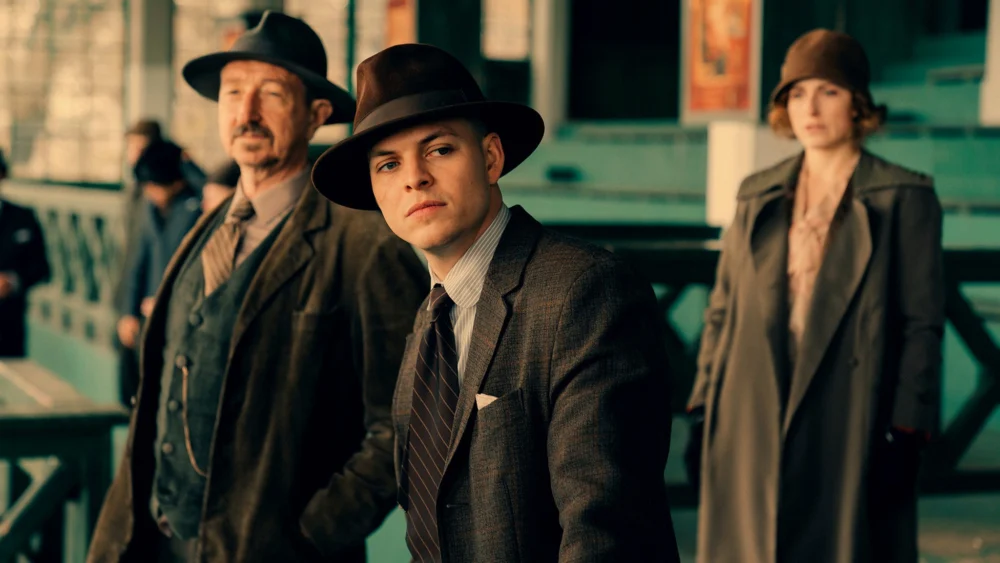
Alex Høgh Andersen, recognized globally for his role in the hit series Vikings, takes on the lead as Otto Himmelstrup, the ambitious first head of the newly formed special unit. He is joined by Mathilde Arcel as Camilla and Nicolaj Kopernikus as PR, forming a compelling investigative trio. Boe’s casting strategy deliberately opted for a younger ensemble compared to previous Danish crime series, aiming to infuse the historical setting with a dynamic and relatable energy. Andersen’s portrayal of Himmelstrup provides a fresh perspective on a character central to Danish law enforcement history, showcasing the actor in a significant lead role.
The film transports viewers back to the 1920s, specifically to the port city of Esbjerg, for the unit’s inaugural case. Here, the investigators confront a world where political and commercial elites wield significant power, resorting to extreme measures, including murder, to protect their potentially corrupt enterprises. This setting allows Boe to explore universal themes of crime, power, and justice, while grounding the narrative in specific Danish historical and societal contexts.

The Allure of Old-Fashioned Investigations
Director Christoffer Boe articulated his vision for Special Unit – The First Murder, emphasizing a desire to create a film that feels deeply local yet resonates with universal themes. "It’s based in Denmark, and it has some of the issues that Denmark had 100 years ago, and the feeling of being a small country," Boe explained. "So, it’s rooted in something very local and regional, but then the grander issues are quite universal. Somebody is killed, there is sex, there is money. These are grand old themes that never go out of fashion."
A key element of the film’s appeal, according to Boe, is its focus on the "OG of crime investigations" – a period before advanced forensics like DNA analysis and ubiquitous technology. The 1920s setting places the unit at the dawn of fingerprinting technology, presenting a unique challenge and opportunity for the investigators. This approach allows audiences to witness the foundational techniques of detective work, where intuition, meticulous observation, and the nascent application of scientific methods were paramount. Boe expressed a hope that audiences would appreciate seeing the "old-fashioned investigation," much like enjoying the process of food preparation.
Casting for Chemistry and Modern Sensibilities
Boe’s casting process prioritized dynamic chemistry among the lead actors. He specifically sought out Alex Høgh Andersen, having observed his work in Vikings and various smaller roles. "I knew immediately I wanted to have Alex involved in it," Boe stated, noting his belief in Andersen’s untapped potential for a grand lead role. The director tailored aspects of the script around Andersen’s involvement after confirming his interest.
Mathilde Arcel joined the cast after a successful chemistry test with Andersen, impressing both the director and her co-star with her talent and comedic timing. Nicolaj Kopernikus, a long-time acquaintance of Boe, completed the trio, bringing his experience to the role of PR. The deliberate selection aimed to create an investigative team that audiences would genuinely enjoy spending time with, fostering a sense of camaraderie and believability.
A notable aspect of the film is its portrayal of Camilla, Mathilde Arcel’s character, as a remarkably modern woman for her time. While acknowledging the historical context of women’s roles, Boe ensured Camilla was depicted as proactive, daring, and capable of challenging societal norms. "We wanted the women not to just live in an age where they are suppressed, but where they react to it in a way that is modern," Boe explained. This approach allows the character to initiate actions and display courage, avoiding the trope of women being mere victims of their era.
Visual Storytelling and Historical Authenticity

The visual aesthetic of Special Unit – The First Murder was a crucial component of Boe’s vision to present a fresh historical narrative. Collaborating with cinematographer Lasse Frank, Boe aimed for a visually distinctive film that combines atmospheric richness with a strong sense of color. The goal was to imbue the historical setting with a modern sensibility, making the past feel vibrant and engaging rather than dull or antiquated.
Boe emphasized the meticulous attention to detail in recreating the investigative tools of the era. The production team consulted with the Danish police museum to ensure that many of the instruments used by the character PR were authentic to the special unit’s equipment from a century ago. This commitment to authenticity in the physical world is balanced by a modern narrative drive, moving away from conventional historical drama aesthetics. Boe specifically sought to differentiate the film from typical Agatha Christie adaptations, aiming for a distinct look and feel despite sharing a genre.
International Expansion and Franchise Potential
The international reception for Special Unit – The First Murder has been promising, with TrustNordisk securing sales to key territories. The film will be distributed in Spain by Filmin, in France by Family Films, and in Ukraine by Svoe Kino. These deals underscore the film’s universal appeal and the growing interest in European crime dramas globally. The screening at the 55th edition of the International Film Festival Rotterdam, within its prestigious Limelight section, further elevated the film’s profile on the international stage.
The title itself, Special Unit – The First Murder, hints at broader ambitions. Director Boe confirmed that a sequel is already in development, with him actively engaged in the writing process. The domestic success of the film in Denmark has provided strong impetus for this expansion, lining up the necessary resources for future installments. Boe expressed a deep affection for the world and characters he has created, indicating that he has multiple storylines ready to unfold in subsequent movies.
Boe also articulated a broader ambition for Danish cinema, particularly concerning historical narratives. He aims to challenge the perception that Danish historical films often portray the past as uninteresting or drab. Instead, he seeks to create inspiring and atmospheric historical pieces that captivate audiences, much like acclaimed international historical productions. Special Unit – The First Murder serves as a testament to this goal, striving to make the past intriguing and visually compelling for contemporary viewers. The potential for a multi-film franchise centered around the "Danish FBI" not only solidifies its place in Danish cinematic history but also expands its reach as a significant international crime drama.