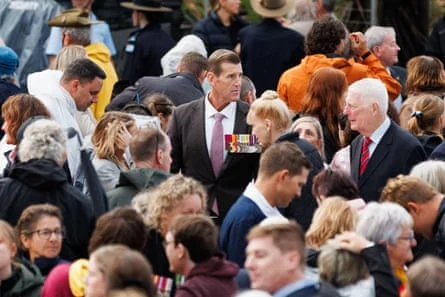
Disruptions at Anzac Day commemorations across Australia’s major cities on Saturday highlighted deep-seated social divisions as Indigenous speakers were met with boos from small groups of protesters during traditional ceremonies. The solemnity of the nation’s most significant day of military remembrance was further complicated by the public appearance of Ben Roberts-Smith, the country’s most decorated living soldier, who attended a service on the Gold Coast just weeks after being charged with multiple counts of war crimes.
In Sydney, Melbourne, and Perth, the traditional "Welcome to Country" and "Acknowledgment of Country"—protocols that recognize the traditional Indigenous owners of the land—were targeted by hecklers. The incidents have sparked national outrage and prompted senior political and military leaders to condemn what they described as a "disgraceful" lack of respect for both Indigenous veterans and the sanctity of the April 25 holiday.
Confrontation at the Dawn Services
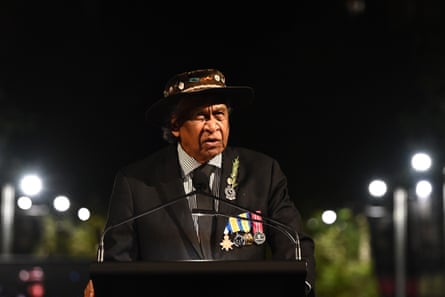
The most prominent disruption occurred at the Sydney dawn service held at Martin Place. As Uncle Ray Minniecon, a respected Indigenous elder, began his acknowledgment of the land, a small but vocal group began booing. The interruption was brief but jarring, cutting through the pre-dawn silence typically reserved for reflection on the fallen.
The interjection was quickly met with a counter-response from the vast majority of the crowd. After the initial disturbance was quieted, a sustained chorus of applause and cheering broke out, lasting for an extended period to signal support for Minniecon. New South Wales police later confirmed the arrest of a 24-year-old man for an "alleged act of nuisance," while several other individuals were forcibly moved on from the service area.
Uncle Ray Minniecon, speaking to the media following the event, noted that his family has a long history of military service dating back to World War I. He characterized the heckling as a symptom of long-standing racial tensions. "We have experienced this type of racism for over 230-odd years," Minniecon said. "It really is a whitefella problem, not a blackfella problem." He emphasized that those who interrupted the service needed to accept that the land "always was and always will be Aboriginal land."
Far-Right Extremism and the Campaign Against Indigenous Recognition
The coordinated nature of the booing suggests it was not a series of isolated incidents. Investigative reports and social media monitoring have linked the disruptions to far-right nationalist groups. "Fight for Australia," an organization previously known as "March for Australia," had actively encouraged its followers to contact local branches of the Returned and Services League (RSL) to demand the removal of Indigenous protocols from Anzac Day ceremonies.

In the days leading up to the holiday, the group posted inquiries online asking supporters if they intended to boo the Welcome to Country. This campaign follows a similar incident in 2025, where members of the National Socialist Network, a neo-Nazi organization, were identified among those heckling Indigenous speakers in Melbourne.
In Melbourne’s 2026 service, Bunurong and Gunditjmara man Uncle Mark Brown was also subjected to booing. As in Sydney, the broader crowd attempted to drown out the protesters with applause. Victorian Premier Jacinta Allan did not mince words in her assessment of the behavior, labeling the interruptions as "bastardry." She argued that politicizing a sacred day of remembrance disrespects every soldier who fought and died for Australian freedoms.
Political Leaders Condemn ‘Disgraceful’ Interruptions
The backlash from Australia’s political establishment was swift and bipartisan. New South Wales Premier Chris Minns remarked that while he had never heard such booing at a dawn service, he was heartened by the spontaneous applause that followed. He stated that the reaction of the general public made it clear where the vast majority of Australians stand on the issue of Indigenous recognition.
Deputy Prime Minister Richard Marles described the behavior as "deeply disappointing" and "disgraceful." Speaking on national television, Marles noted that Anzac Day is defined by respect, and that acknowledging the traditional owners of the land is a fundamental act of respect that aligns with the spirit of the day.
Military leadership also weighed in, with Acting Chief of Army Major General Richard Vagg describing the heckling as "disgraceful behavior." RSL officials across various states echoed these sentiments. Vincent Williams, the acting president of RSL NSW, called the booing the most appalling act he had ever witnessed at a dawn service, noting that the "louts" responsible had likely never contributed anything constructive to the nation.
Ben Roberts-Smith and the Shadow of War Crimes Charges
While the mainland services grappled with protests, a different kind of controversy unfolded on the Gold Coast. Ben Roberts-Smith, a recipient of the Victoria Cross, attended the dawn service at Currumbin Beach. His presence was highly scrutinized following his recent indictment on five counts of murder related to his service in the Special Air Service Regiment (SAS) in Afghanistan.
The charges against Roberts-Smith are unprecedented in Australian military history. He is accused of killing unarmed and handcuffed Afghan civilians between 2009 and 2012. Court documents allege that these individuals were in custody and posed no threat to Australian forces at the time of their deaths. The allegations suggest a pattern of extrajudicial executions, some of which Roberts-Smith is accused of carrying out personally, while others were allegedly ordered by him to be performed by subordinates.
Despite the gravity of the charges, which carry a maximum penalty of life imprisonment, Roberts-Smith remained defiant during his appearance. "I never thought about not coming. I was always going to be here," he told reporters. He stated that his focus was on the "sons" of those who gave their lives for the country, calling their sacrifice "enduring."
The Changing Face of Australia’s Most Sacred Military Holiday
Saturday’s events marked the 111th anniversary of the Gallipoli landing, an event that serves as the foundation of the Anzac legend. Over 8,000 Australian soldiers died in the 1915 campaign, and the day has since evolved to honor all Australians who have served in military conflicts. However, the recent friction over Indigenous acknowledgments highlights a struggle over how that history is told and who is included in the national narrative.
For decades, the contributions of Indigenous soldiers were largely omitted from public commemorations, despite Aboriginal and Torres Strait Islander people serving in every major conflict since the Boer War. The inclusion of the Welcome to Country and Acknowledgment of Country in recent years was intended to bridge this gap. The pushback from nationalist groups suggests a growing ideological divide regarding the integration of Indigenous heritage into traditional state ceremonies.
The tension is expected to continue into the weekend. A rally in support of Ben Roberts-Smith is scheduled to take place in Melbourne on Sunday, organized by the National Workers Alliance. The group, which describes itself as an organization dedicated to the "preservation of European culture and identity," has called for all charges against the Victoria Cross recipient to be dropped. While Roberts-Smith’s representatives have stated that he and his family are not involved in the rally, the event is being heavily promoted by the same far-right circles that encouraged the booing at the dawn services.
Impact on National Unity and Next Steps
The fallout from this year’s Anzac Day ceremonies has left many questioning the state of national unity. While the vast majority of attendees at the services across the country remained respectful, the visibility of the disruptions has forced a conversation about the influence of extremist ideologies in mainstream public spaces.
The RSL and various state governments are expected to review security protocols for future commemorations to prevent similar disturbances. There is also a renewed call for educational initiatives to highlight the specific history of Indigenous military service, aimed at countering the narrative that Indigenous recognition is a "political" intrusion into military tradition.
As the legal proceedings against Ben Roberts-Smith move forward, his role as a public figure on Anzac Day will likely remain a point of contention. For a nation that prides itself on the "Anzac spirit" of mateship and sacrifice, the dual controversies of racial heckling and war crimes allegations present a challenging moment of reflection on what the holiday represents in a modern, multicultural Australia.