The highly anticipated T20 World Cup clash between India and Pakistan on Sunday is steeped in more than just cricketing rivalry; it is a stark reflection of the deeply strained political climate between the two nuclear-armed South Asian neighbors, a tension that has spilled over and significantly impacted their sporting interactions. For decades, the nations have navigated a turbulent relationship marked by conflict and animosity, with the echoes of a recent four-day cross-border skirmish in May 2025 still resonating. This prolonged history of hostility has intensified their sporting encounters, transforming cricket matches into arenas where political undertones often overshadow the game itself, leading at times to boycotts, cancellations, and a palpable sense of unease.
While the on-field action between these cricketing giants has historically been electric, often featuring heated exchanges between players, it has also been punctuated by moments of camaraderie off the field. However, the lingering bitterness from recent political tensions has cast a long shadow over cricket, the region’s most passionately followed sport, creating a tangible impact on the sport’s bilateral relations. This examination delves into the deteriorating cricket ties between India and Pakistan in the aftermath of the May conflict, charting the course of politically charged events that have defined their recent encounters.

The "No Handshake" Controversy: A Precursor to Further Discord
The simmering political tensions first manifested overtly on September 14, when India’s Suryakumar Yadav notably abstained from the customary pre-toss handshake with Pakistan’s captain, Salman Ali Agha, during an Asia Cup fixture. This deviation from established protocol immediately ignited speculation among fans and observers about potential political motivations.
The suspicion solidified at the conclusion of the match. After securing the winning runs, Yadav and his batting partner Shivam Dube departed the field without engaging in the traditional post-match handshakes with the Pakistani captain and his team. The Pakistani players, having walked off as a unit, found themselves waiting for their Indian counterparts, who proceeded directly to their dressing room after exchanging handshakes only amongst themselves.
Yadav later confirmed that the decision to forgo handshakes was pre-meditated, directly linking it to an attack in Indian-administered Kashmir on April 22, which preceded the May conflict. He articulated his stance by stating, "A few things in life are above sportsman’s spirit," underscoring the gravity of the geopolitical situation in his view.

Pakistan’s Protest: Match Referee Controversy and Delays
The repercussions of the "no handshake" incident continued to ripple through the Asia Cup. In Pakistan’s subsequent group game against the United Arab Emirates on September 17, the team initially refused to take the field. This protest was directed at match referee Andy Pycroft, whom Pakistan’s Cricket Board (PCB) insisted should be removed from their fixture.
The PCB argued that Pycroft had been instrumental in facilitating India’s request to disallow handshakes at the toss during their match. "Andy Pycroft had barred the captains of India and Pakistan from shaking hands during their match," the PCB stated in a formal release, highlighting their perception of his role.
The ensuing negotiations behind closed doors led to a one-hour delay in the Pakistan-UAE match. Ultimately, Pycroft issued an apology for the "miscommunication," allowing the game to proceed.

On-Field Volatility: Heated Exchanges and Political Taunts
The rivalry reached a new crescendo during the teams’ second encounter in the Asia Cup on September 21, where players from both sides were observed engaging in heated verbal exchanges on the pitch. Pakistan’s bowler Haris Rauf confronted Indian batter Abhishek Sharma, who later commented that his match-winning innings of 74 runs was a direct response to the perceived provocation from the Pakistani players.
"The way they were coming at us without any reason, I didn’t like it at all," Sharma remarked after the game, emphasizing the confrontational atmosphere. Rauf himself was seen making gestures to Indian supporters while fielding near the boundary. He held up his fingers to signify the numbers six and zero, a clear reference to Pakistan’s claims of downing six Indian jets during the May conflict. The fast bowler further amplified the message with gestures depicting an aircraft in a nosedive.
In the aftermath of this charged encounter, the Board of Control for Cricket in India (BCCI) lodged a complaint with the International Cricket Council (ICC) against Rauf and Pakistani batter Sahibzada Farhan, who celebrated his half-century with a simulated gun gesture. Pakistan reciprocated by filing a complaint against India’s captain Yadav for referencing Indian missile attacks in Pakistan during his post-match press conference.

The Trophy Snub: India’s Refusal to Accept from Pakistani Official
The controversial tournament culminated on September 28 with India’s refusal to accept the Asia Cup trophy after their five-wicket victory over Pakistan in the final. The Indian team’s decision stemmed from the trophy being presented by Mohsin Naqvi, who holds dual roles as the President of the Asian Cricket Council (ACC) and the Chairman of the PCB. Naqvi also serves as Pakistan’s federal interior minister.
Devajit Saikia, Chairman of the BCCI, explained the rationale behind their protest: "We have decided not to take the Asia Cup trophy from the ACC chairman, who happens to be one of the main [political] leaders of Pakistan." This stance led to a significant delay of over an hour in the award ceremony, as India maintained its refusal and Naqvi insisted on presenting the trophy. The Indian team, in a symbolic gesture, celebrated their victory by playfully pretending to hold a trophy.
Captain Yadav later affirmed that the decision to refuse the trophy was a collective one by the team, stating, "no one told us to do it," reinforcing the unified stance against the perceived political entanglement.

Echoes in Women’s Cricket and ICC Sanctions
The acrimonious tone extended to the ICC Women’s Cricket World Cup 2025 in Sri Lanka. On October 5, when the Indian women’s team faced Pakistan, they mirrored the precedent set by the men’s side by not extending handshakes to the opposition.
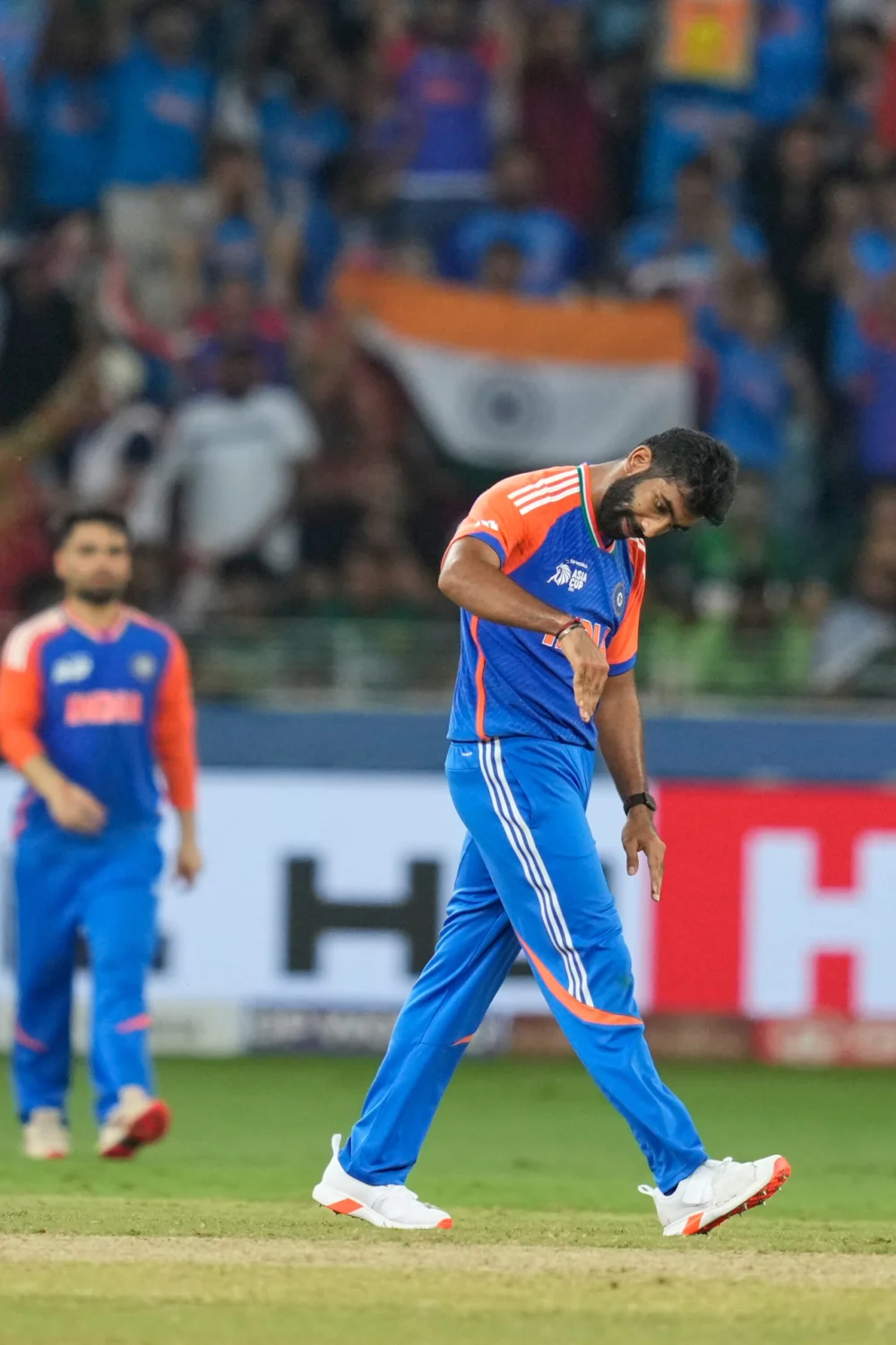
Further disciplinary actions followed on November 4, when the ICC announced sanctions against several Indian and Pakistani players for breaches of its code of conduct, which brought the game into disrepute. Yadav and Rauf were each fined 30 percent of their match fees from the September 14 match and received two demerit points. Farhan was issued a warning and one demerit point. Rauf faced the same penalty for a similar offense in the final, resulting in a two-match ban. Indian pacer Jasprit Bumrah also received one demerit point for a celebratory gesture in the final that mimicked a plane crashing, an act seen as a response to Rauf’s earlier taunts.
Pakistan’s T20 World Cup Participation in Doubt
The geopolitical fallout continued to affect international cricket scheduling. On January 25, following Bangladesh’s unexpected ouster from the T20 World Cup, Pakistan indicated it would reassess its own participation in the tournament. PCB chief Naqvi stated, "The prime minister is not in Pakistan right now. When he returns, I’ll be able to give you our final decision."

A Brief Boycott and a Reversal
In an unprecedented move for a World Cup, Pakistan’s government announced on February 1 that its team would not compete against India on February 15. A few days later, Prime Minister Shehbaz Sharif clarified that this boycott was an act of solidarity with Bangladesh.
However, this stance proved short-lived. On February 9, Pakistan reversed its decision, with the government ordering the team to take the field for the match. The reversal was attributed to "formal requests extended by the Bangladesh Cricket Board, as well as the supporting communications from Sri Lanka, the United Arab Emirates, and other member nations," seeking a resolution to "recent challenges" concerning their boycott. The episode highlighted the deep intertwining of political considerations with sporting commitments for Pakistan.
The unfolding events leading up to the T20 World Cup underscore a critical juncture for India-Pakistan cricket relations. The sport, once a potential bridge between the nations, has become increasingly ensnared in the complexities of their enduring political animosity. As the T20 World Cup commences, the upcoming fixture between these two formidable teams will undoubtedly be scrutinized not only for its on-field drama but also as a barometer of the strained diplomatic and sporting ties between India and Pakistan.